Moreau River
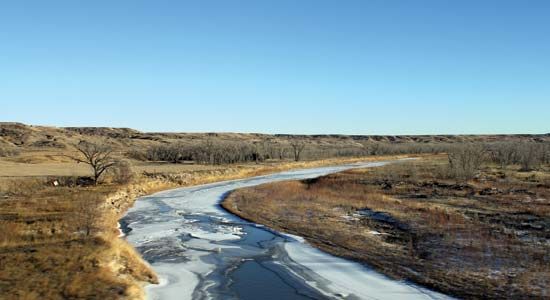
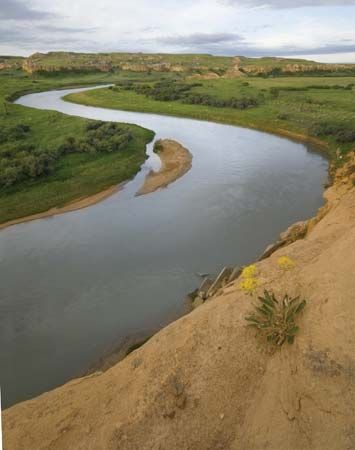
The Moreau River is a waterway in northwestern South Dakota, U.S., formed by the confluence of the North Fork and South Fork Moreau rivers in Perkins County.…
What is Moreau River?
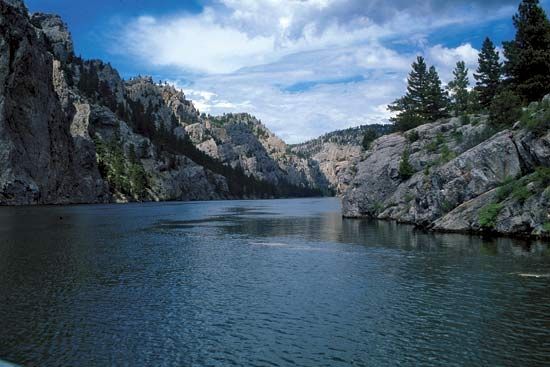
The Moreau River is a waterway in northwestern South Dakota, U.S., formed by the confluence of the North Fork and South Fork Moreau rivers in Perkins County. It flows approximately 250 to 290 miles eastward through the Cheyenne River Sioux reservation before emptying into the Missouri River south of Mobridge.12
The river receives several tributaries, such as the Little Moreau River and Thunder Butte Creek. Its lower basin was inundated by the Oahe Dam—a significant flood-control project—and is now part of Lake Oahe. The river derives its name from an early French trader.1
What is the history of the Cheyenne River Sioux reservation?
The history of the Cheyenne River Sioux reservation is deeply intertwined with the broader struggles of the Sioux people and their relationship with the U.S. government. The reservation is located in western South Dakota, where the Cheyenne River joins the Missouri River.3
Following the military conquest of the region, which concluded with the massacre at Wounded Knee in 1890, the Sioux faced decades of federal policies that suppressed their culture. From 1883 to 1934, the Sun Dance was criminalized, forcing many to practice their traditions in secret or adopt blended religious forms.4
In the mid-20th century, the federal Pick-Sloan plan resulted in the construction of major dams on the Missouri River, including Oahe Dam. This project flooded vast areas of Native American land, forcing the relocation of approximately 1,000 households. By the 1970s, the American Indian Movement gained momentum, highlighted by the 1973 occupation of Wounded Knee, which spurred national reform and increased federal support for self-determination.4
How does the Oahe Dam affect the Missouri River ecosystem?
The Oahe Dam, completed in 1959, significantly altered the Missouri River ecosystem by creating Lake Oahe, a reservoir extending approximately 225 miles. This transformation reflects broader environmental impacts associated with large-scale dam construction.789
Key ecological and environmental effects include:
- Habitat Inundation: The creation of the reservoir resulted in the flooding of vast areas of land, leading to the loss of local flora and fauna and the destruction of natural landscapes.9
- Disruption of Migratory Species: Dams often impede or block the movement of migrating and spawning fish, which can devastate their populations.9
- Environmental Transformation: While the dam system provides critical benefits—such as flood control, irrigation for millions of acres of cropland, and the generation of hydroelectric power—it fundamentally changes the river’s natural character.89
- Social and Cultural Impact: Beyond ecological changes, the reservoir inundated the cultural homelands of Native peoples, forcing the relocation of communities.9
The role of such dams remains a subject of ongoing debate, as they balance human needs for water resources and energy against the preservation of riparian ecosystems and natural heritage.9
What are the main tributaries of the Missouri River?
The Missouri River features a vast network of tributaries that feed into its main course from various directions. These rivers are categorized by the side from which they enter the main channel:
Major Tributaries
- From the South and West: The Cheyenne, Kansas, Niobrara, Osage, Platte, and Yellowstone rivers.
- From the North: The James and Milk rivers.
Additional Tributaries
- From the South and West: The Bad, Blackwater, Cannonball, Gasconade, Grand, Heart, Judith, Knife, Little Missouri, Moreau, Musselshell, and White rivers.
- From the North and East: The Big Sioux, Chariton, Little Platte, Marias, Sun, and Teton rivers.
The Missouri River itself is formed by the confluence of the Jefferson, Madison, and Gallatin rivers in southwestern Montana.8
Sources
- Moreau River — Encyclopædia Britannica
- Moreau — Merriam-Webster
- Cheyenne River — Encyclopædia Britannica
- Cheyenne — Encyclopædia Britannica
- South Dakota - Settlement and gold rush — Encyclopædia Britannica
- South Dakota - Progressivism and conservatism — Encyclopædia Britannica
- Oahe, Lake — Merriam-Webster
- Missouri River — Encyclopædia Britannica
- dam - Rise of environmental and economic concerns — Encyclopædia Britannica
Published on · 3 min read