Madison River
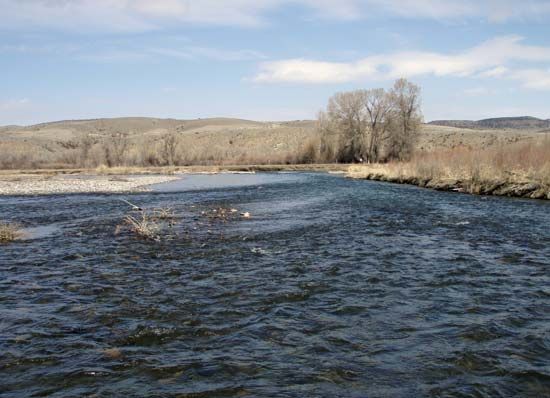
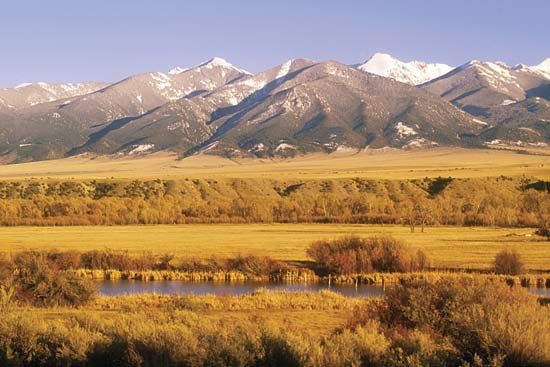
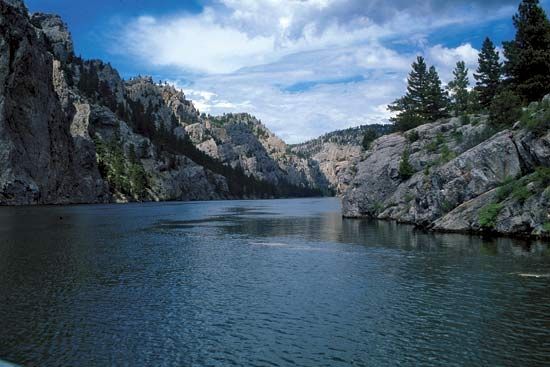
The Madison River is a 183-mile-long (294 km) waterway located in southwestern Montana and northwestern Wyoming, U.S.
What is Madison River?
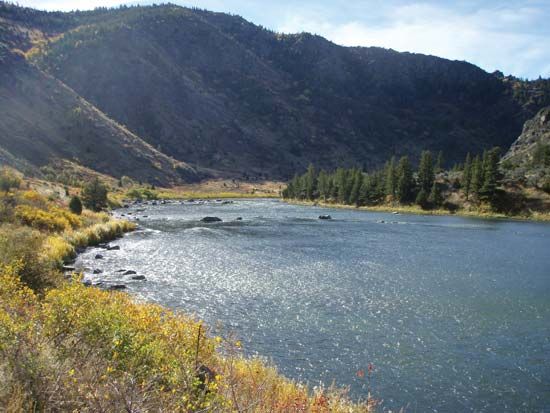
The Madison River is a 183-mile-long (294 km) waterway located in southwestern Montana and northwestern Wyoming, U.S.1
It originates in the northwestern corner of Yellowstone National Park at the confluence of the Gibbon and Firehole rivers. The river flows west through Hebgen Lake and then turns north, passing through Ennis Lake, Bear Trap Canyon, and the Lee Metcalf Wilderness. Near Three Forks, Montana, the Madison joins the Gallatin and Jefferson rivers to form the headwaters of the Missouri River. headwaters of the Missouri River.1
How does the Madison River contribute to the Missouri River?
The Madison River serves as a vital component of the Missouri River system by acting as one of its three primary headstreams.12
After traveling 183 miles from its source in Yellowstone National Park, the Madison River reaches a location just northeast of Three Forks, Montana. At this point, it converges with the Gallatin and Jefferson rivers. This confluence marks the official beginning of the Missouri River, which then flows eastward and southward across the United States to eventually join the Mississippi River.132
What wildlife can be found in Yellowstone National Park near the river?
The riparian zones along the streams and rivers of Yellowstone National Park support a diverse array of wildlife, characterized by lush vegetation such as cottonwoods and willows that provide essential habitat.5
Mammals
- Beavers: These animals have made a significant recovery and are commonly found living along the park’s streams and lakes.5
- River Otters: Frequently found in watercourses throughout the region.51
- Moose: These solitary mammals are often seen frequenting northern lakes, streams, and marshy areas, where they feed on willow foliage and aquatic plants.1
Birds
- Waterfowl: The park’s waterways host various species, including trumpeter swans and Canada geese.51
- Raptors: Species such as bald eagles and ospreys rely on these aquatic environments for hunting and nesting.51
- Summer Breeders: Sandhill cranes, white pelicans, and common loons are also notable inhabitants of the park’s water-rich areas.5
Fish The park’s streams contain both indigenous species, such as cutthroat trout, Arctic grayling, and Rocky Mountain whitefish, as well as various nonnative trout species introduced in previous decades.5
What are the environmental impacts of dams like the one at Hebgen Lake?
Dams, such as the one impounding Hebgen Lake, significantly alter the natural environment by transforming river systems to serve human needs. These structures can have several notable environmental impacts:
- Disruption of Aquatic Life: Dams often block or impede the movement of migrating or spawning fish. By altering flow patterns and creating physical barriers, they can lead to dramatic population declines in native species.71
- Sedimentation and Erosion: When streamflow is impounded, the water’s velocity decreases, causing sediment to deposit in the reservoir. This reduces the reservoir’s storage capacity over time. Conversely, the water released from a dam often has a renewed capacity to transport sediment, which can lead to significant erosion of the stream channel downstream.8
- Habitat Alteration: The creation of a reservoir can inundate large areas of land, destroying local ecosystems and displacing flora and fauna. In some cases, this leads to the loss of picturesque landscapes or cultural homelands.78
- Water Loss: Reservoirs are subject to water loss through evaporation and seepage into surrounding soil or dam foundations, which can be particularly significant in arid regions.8
Sources
- Madison River — Encyclopædia Britannica
- Jefferson River — Encyclopædia Britannica
- Missouri River — Encyclopædia Britannica
- Three Forks — Merriam-Webster
- Yellowstone National Park - Plant and animal life — Encyclopædia Britannica
- Rocky Mountains - Animal life — Encyclopædia Britannica
- dam - Rise of environmental and economic concerns — Encyclopædia Britannica
- reservoir — Encyclopædia Britannica
- dam - Fish passes — Encyclopædia Britannica
Published on · 3 min read