Milk River
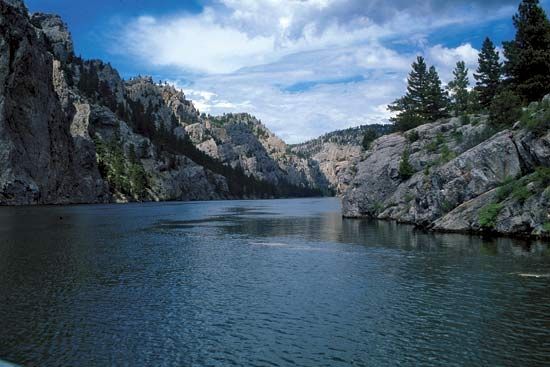
The Milk River is a 625-mile-long (1,006 km) river that flows through the U.S. state of Montana and the Canadian province of Alberta.
What is Milk River?
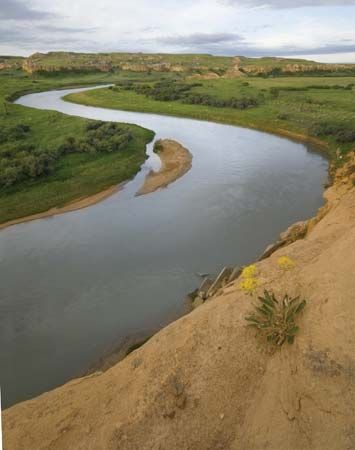
The Milk River is a 625-mile-long (1,006 km) river that flows through the U.S. state of Montana and the Canadian province of Alberta.12
It originates from two headstreams in the Blackfeet Indian Reservation within the Rocky Mountain foothills of northwestern Montana. These streams flow northeast into Alberta, where they unite as the Milk River. After traveling east for approximately 100 miles, the river bends southeast to reenter Montana, eventually joining the Missouri River below Nashua, near the Fort Peck Dam.1
The river serves as a vital resource for the region; near Havre, Montana, water stored by the Fresno Dam is utilized for irrigation. It is recognized as one of the northern tributaries of the Missouri River system.13
Why is the river named the Milk River?
Sorry, the provided search results do not contain information explaining why the Milk River was given its name. While the articles confirm the river’s location and its role in the Missouri River system, they do not document the origin of its name.124
How do dams like the Fresno Dam help with irrigation?
Dams like the Fresno Dam facilitate irrigation by creating reservoirs that store water, which can then be released as needed to support agricultural production. This process is essential for managing water supplies, particularly in regions where rainfall is inconsistent or insufficient for crop growth.567
By regulating the flow of a river, dams provide several key benefits for agriculture:
- Water Storage: Reservoirs act as a reliable supply of water, allowing farmers to access irrigation resources during dry periods or low-flow seasons.57
- Distribution: Dams are often paired with canal systems that distribute stored water across agricultural fields, extending the reach of water to otherwise nonproductive or arid land.58
- Flood and Drought Management: By impounding water, dams protect downstream crops from the risks of extreme flooding while simultaneously providing a buffer against drought by maintaining a steady, guaranteed flow of water.87
While these projects are vital for agricultural expansion, they can also present challenges, such as potential ecological impacts, the need for land leveling, and the risk of soil salinity if water management is not carefully controlled.587
What is the role of the Missouri River in the North American ecosystem?
The Missouri River serves as a vital component of the North American ecosystem, acting as a primary drainage system for the Great Plains and supporting diverse habitats across its 529,400-square-mile basin.3
Its ecological and environmental roles include:
- Habitat Support: The river and its adjacent lands provide essential environments for a wide variety of wildlife. Areas such as the Charles M. Russell National Wildlife Refuge and the Missouri National Recreational River protect significant stretches of the river, offering havens for numerous species of fish, birds, and mammals.3
- Water Resource Management: By regulating flow through a system of dams and reservoirs, the river supports irrigation for millions of acres of cropland, which has fundamentally altered the landscape from its original prairie state to cultivated land.39
- Geological Influence: Known as the “Big Muddy,” the river carries significant amounts of suspended solid matter, which plays a major role in erosion and sedimentation processes throughout its course.3
- Recreational Value: Beyond its industrial and agricultural utility, the river is a major recreational resource, featuring federally designated wild and scenic segments that preserve natural riverine conditions.3
Sources
- Milk River — Encyclopædia Britannica
- Milk — Merriam-Webster
- Missouri River — Encyclopædia Britannica
- Lewis and Clark Expedition - Expedition from May 14, 1804, to October 16, 1805 — Encyclopædia Britannica
- Origins of agriculture - Irrigation — Encyclopædia Britannica
- water infrastructure in India - Dams — Encyclopædia Britannica
- dam - The Middle East — Encyclopædia Britannica
- Nile River - Dams and reservoirs — Encyclopædia Britannica
- Missouri - Drainage and soils — Encyclopædia Britannica
- Missouri - Plant and animal life — Encyclopædia Britannica
Published on · 3 min read