Morelet’s Crocodile
Morelet’s crocodile (Crocodylus moreletii) is a medium-sized crocodilian native to the forests and wetlands of Belize, northern Guatemala, and parts of…
What is Morelet’s crocodile?
Morelet’s crocodile (Crocodylus moreletii) is a medium-sized crocodilian native to the forests and wetlands of Belize, northern Guatemala, and parts of Mexico. Unlike most crocodiles, it possesses a blunted, rounded snout similar to that of an alligator.
Typically reaching lengths of 1.5–3 meters, these apex predators are grayish brown with dark banding. They are primarily freshwater inhabitants and are known to be bioindicator species, as their sensitivity to heavy metal contamination helps researchers assess environmental health.
Though once endangered due to overhunting for their hides, the species has recovered significantly and is currently listed as a species of least concern. While generally elusive, they can be aggressive toward humans, with documented attacks occurring in parts of Mexico.
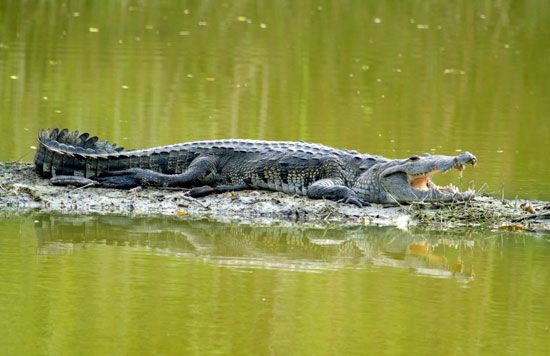
Where does the Morelet’s crocodile live?
Morelet’s crocodile (Crocodylus moreletii) is native to Belize, northern Guatemala, and states in Mexico that border the Gulf of Mexico.1
Within these regions, the species inhabits a variety of environments, including forests, wetlands, and coastal freshwater or brackish waterways. While their range overlaps with the American crocodile, Morelet’s crocodiles typically prefer inland freshwater habitats, whereas American crocodiles are more commonly found in brackish, coastal environments.1
What does a Morelet’s crocodile look like?
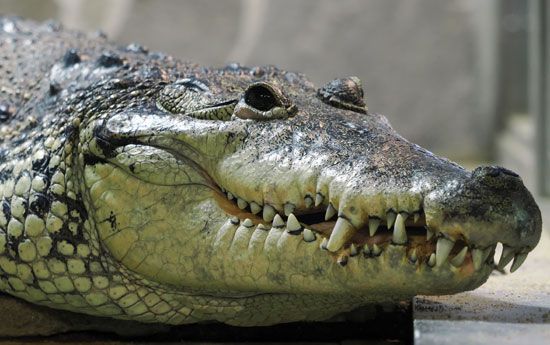
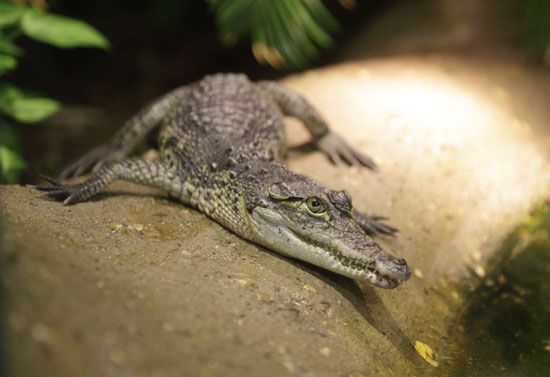
Morelet’s crocodile (Crocodylus moreletii) is a medium-sized crocodilian with a distinct appearance that sets it apart from most other crocodiles. Its most notable feature is a blunted, rounded snout, which is more similar to that of an alligator than the typical triangular snout found in other crocodile species.1
Key physical characteristics include:
- Size: Most adults measure 1.5–3 meters (4.9–9.8 feet) in length and weigh approximately 50 kg (110.2 pounds), though the largest individuals can reach up to 4.7 meters.1
- Coloration: The body is grayish brown with a lighter-colored underside. Many individuals feature dark bands and spots across their back, sides, and tail.1
- Eyes: They possess distinctive silvery-brown eyes.1
- Scales: The scales on their back and tail are characterized by smoother keels compared to other crocodilians.1
- Juveniles: Young crocodiles share the adult coloration but exhibit more pronounced black and yellowish banding along their tails.1
What do Morelet’s crocodiles eat?
As an apex predator, the Morelet’s crocodile has a varied diet that changes as it matures.1
- Adults: These crocodiles typically hunt larger prey, including fishes, birds, and other reptiles. They are also known to consume dogs that venture too close to the water’s edge.1
- Juveniles: Younger crocodiles feed on smaller prey, such as snails, various invertebrates, and smaller fishes.1
- Opportunistic Feeding: Both adults and juveniles may consume carrion or even engage in cannibalism by eating smaller members of their own species.1
They generally hunt by lurking just beneath the water’s surface, waiting for prey to approach the shoreline.1
Sources
- Morelet’s crocodile — Encyclopædia Britannica
Published on · 2 min read