Mount Cenis
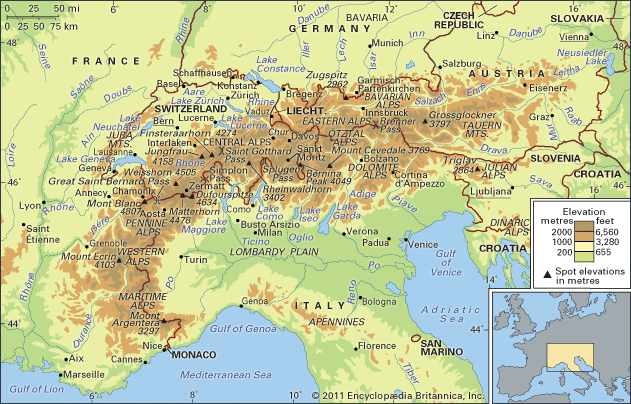
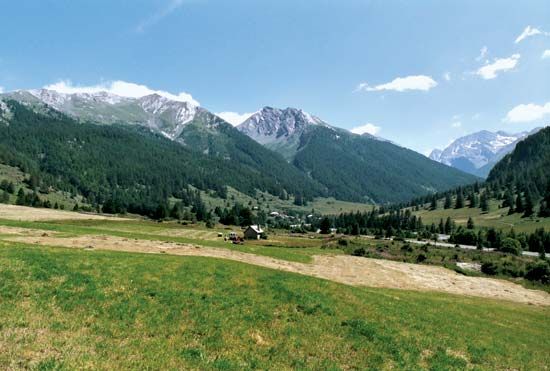
Mount Cenis is a massif and mountain pass situated in the Graian Alps. It serves as a geographic link between France and Italycom/place/France) and Italy.
Where is Mount Cenis located, and what countries does it border?
Mount Cenis is a massif and mountain pass situated in the Graian Alps. It serves as a geographic link between France and Italycom/place/France) and Italy.1
Located in the Savoie département of southeastern France, the pass is positioned northeast of Briançon and west of the Italian city of Turin. The historic route, which features a road commissioned by Napoleon I, connects Lanslebourg in the French Arc Valley with the Susa Valley in the Piedmont region of Italy. Additionally, the Mount Cenis Tunnel—often associated with the nearby Fréjus Pass—provides a vital rail connection between Modane, France, and Bardonnèche, Italy.21
How has Mount Cenis played a role in European history, particularly in transportation?
Mount Cenis has served as a vital corridor between France and Italy since ancient times, evolving from a strategic invasion route into a landmark of modern transportation engineering.1
In the early 19th century, Napoleon I commissioned a 24-mile road (1803–1810) to traverse the pass, significantly improving connectivity between the Arc Valley in France and the Susa Valley in Italy. The region later became the site of a revolutionary advancement in rail travel with the construction of the Mount Cenis Tunnel. Completed in 1871, it was the first great Alpine tunnel, pioneering techniques such as the use of dynamite, rail-mounted drill carriages, and hydraulic air compressors.13
These developments were part of a broader shift in the Alps, where the transition from simple mountain paths to complex tunnels and highways ended the isolation of alpine valleys. Today, the area remains a critical transit point, with the modern Fréjus road tunnel facilitating significant automobile traffic between the two nations.413
What is the significance of the Mont Cenis Pass in relation to the mountain?
The Mont Cenis Pass is significant as the primary transit corridor through the Mount Cenis massif, a mountain group located in the Graian Alps.12
The pass acts as a vital geographic link between France and Italy, situated at an elevation of 6,834 feet (2,083 meters) between two peaks that exceed 8,200 feet (2,500 meters) in height. Historically, this location has served as a strategic invasion route, and its importance was solidified in the early 19th century when Napoleon I commissioned a 24-mile road to traverse the pass, connecting the Arc Valley in France with the Susa Valley in Italy.12
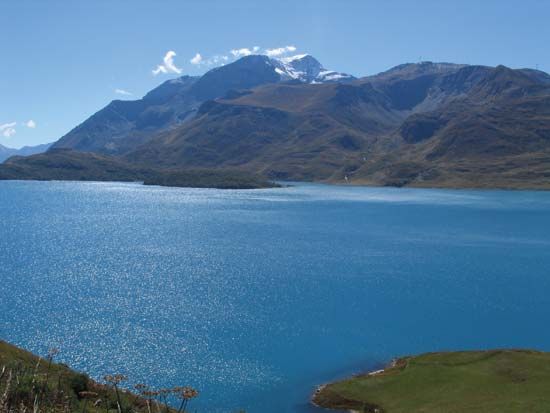
Beyond the pass itself, the massif is characterized by the Mount Cenis Plateau, which features a large reservoir and dam, and is distinct from the nearby Mount Cenis Tunnel (also known as the Fréjus Tunnel), which provides a separate, lower-elevation rail connection through the Fréjus Massif.12
How did the construction of the Fréjus Rail Tunnel impact travel through the Mount Cenis region?
The construction of the Mount Cenis Tunnel—also known as the Fréjus Rail Tunnel—was a transformative event for travel through the region. Completed in 1871, it was the first great Alpine tunnel, providing a reliable, year-round rail link between Modane, France, and Bardonnèche, Italy, that bypassed the difficulties of traversing the high-altitude mountain passes.36
Beyond its immediate impact on connectivity, the project served as a landmark of engineering that revolutionized how tunnels were built. Its construction introduced pioneering techniques that became standard for future infrastructure, including:
- Advanced Machinery: The use of rail-mounted drill carriages, hydraulic ram air compressors, and specialized air drills designed by Germain Sommeiller.31
- Innovative Blasting: It was among the first major projects to utilize dynamite for rock excavation.31
- Complex Engineering Solutions: Engineers successfully addressed ventilation challenges by implementing forced-air systems powered by water-driven fans and a horizontal diaphragm to manage exhaust.31
By demonstrating that long-distance rock tunnels could be driven from two headings without intervening shafts, the project paved the way for subsequent Alpine rail tunnels, such as the St. Gotthard Pass and the Simplon, fundamentally altering European transportation networks.31
Sources
- Mount Cenis — Encyclopædia Britannica
- Cenis, Mont — Merriam-Webster
- Mount Cenis Tunnel — Encyclopædia Britannica
- Alps - Transportation — Encyclopædia Britannica
- Italy - Rail transport — Encyclopædia Britannica
- tunnels and underground excavations - Canal and railroad tunnels — Encyclopædia Britannica
Published on · 3 min read