Queyras
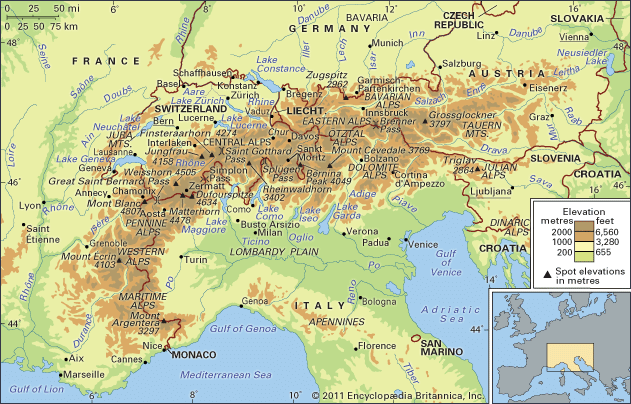
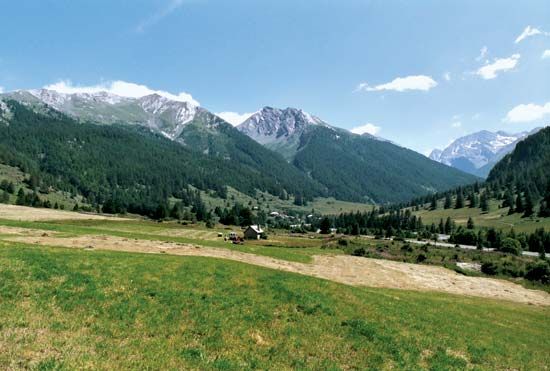
The Queyras is a high Alpine valley located in the Hautes-Alpes département of the Provence-Alpes-Côte d’Azur region in southwestern France.
What is Queyras?
The Queyras is a high Alpine valley located in the Hautes-Alpes département of the Provence-Alpes-Côte d’Azur region in southwestern France.1
Stretching approximately 30 miles (50 km) from the confluence of the Guil and Durance rivers toward the Italian border, the region is characterized by its dramatic geography, including the Combe de Queyras—a narrow canyon flanked by limestone precipices reaching 650 feet (200 metres) in height. The area is surrounded by over 100 peaks of the Cottian Alps and is renowned for its rich biodiversity, hosting roughly 2,000 species of flora that transition from Mediterranean to Alpine varieties.1
Today, the region is a popular destination for winter sports, featuring numerous villages with ski chalets. To protect its unique environment, the Queyras Regional Park was established in 1977 and covers approximately 150,000 acres (60,000 hectares).1
What are the Cottian Alps?
The Cottian Alps are a segment of the Western Alps that extend along the border between France and Italy.23
Geographically, the range is situated between the Maddalena Pass and the Maritime Alps to the south, and Mont Cenis and the Graian Alps to the north. The highest point in the range is Mount Viso, which reaches an elevation of 12,602 feet (3,841 meters). The western spurs of this mountain group are known as the Dauphiné Alps. Today, the region is primarily utilized for activities such as climbing and skiing.2
Historically, the area was organized as a Roman province known as Alpes Cottiae. Emperor Augustus appointed a local chieftain named Cottius to govern the region, which was later administered by a procurator with its capital at Eburodunum (modern-day Embrun).4
How does a regional natural park protect the environment?
Sorry, the Britannica knowledge base does not contain information specifically defining how a “regional natural park” functions to protect the environment.
While the provided search results discuss the role of national parks and nature reserves in conservation—noting that they protect land and wildlife by limiting human contact and managing habitats—they do not provide specific details on the administrative or protective mechanisms of regional-level parks.
What kind of plants and animals live in the high Alps?
The high-altitude regions of the Alps are characterized by distinct vegetation and wildlife adapted to harsh conditions, including cold temperatures, high winds, and limited moisture.
Plant Life
As elevation increases, forests transition from deciduous trees to hardy conifers. Spruce and larch dominate the higher forest zones, with the resilient Arolla pine reaching the upper tree line. Above the tree line, the landscape features lush Alpine meadows known as alpages. Iconic flora found in these high-altitude regions include edelweiss, alpine rose, heather, and gentian.78
Animal Life
Alpine fauna have evolved specialized behaviors and physical traits to survive:
- Adaptations: The ibex and chamois are highly agile on craggy terrain, while the mountain hare and ptarmigan change to white coats for winter camouflage.78
- Survival Strategies: Marmots survive the winter by hibernating in underground galleries.78
- Conservation: Species such as the brown bear, lynx, and the bearded vulture have been successfully reintroduced to the region.78
Sources
- Queyras — Encyclopædia Britannica
- Cottian Alps — Encyclopædia Britannica
- Cottian Alps — Merriam-Webster
- Alpes — Encyclopædia Britannica
- national park — Encyclopædia Britannica
- Africa - Conservation of Africa — Encyclopædia Britannica
- Alps - Plant and animal life — Encyclopædia Britannica
- Exploring 7 of Earth’s Great Mountain Ranges - Alps — Encyclopædia Britannica
- Tundra - Distribution — Encyclopædia Britannica
Published on · 2 min read