Mount Hood
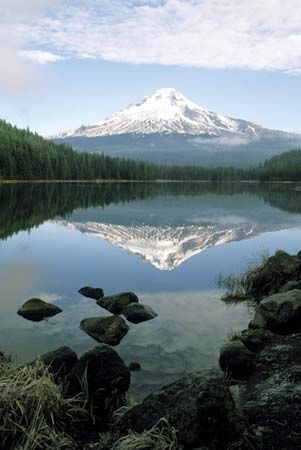
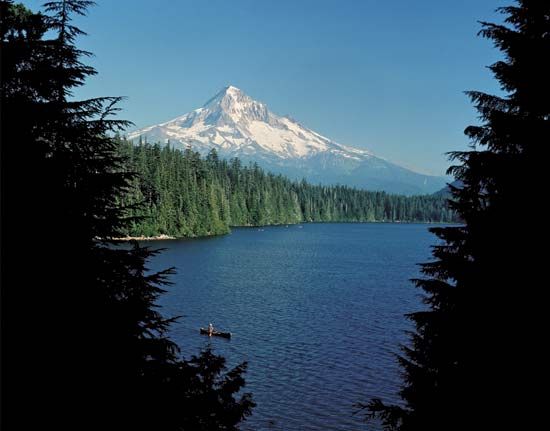
Mount Hood is located in northwestern Oregon, situated approximately 45 miles east-southeast of Portland within the Cascade Range.
Where is Mount Hood located, and what makes it significant in Oregon?
Mount Hood is located in northwestern Oregon, situated approximately 45 miles east-southeast of Portland within the Cascade Range.12
As the highest peak in Oregon, reaching an elevation of 11,239 feet (3,425 metres), the mountain holds significant status as a prominent geographic and historical landmark. Historically, it served as a vital guide for early settlers traveling the Oregon Trail. Geologically, it is a dormant volcano characterized by twelve glaciers and extensive snowfields that cover much of its upper cone.12
Today, the peak serves as the focal point of the Mount Hood National Forest, a major center for tourism and outdoor recreation, including mountain climbing and skiing1. The area also features the historic Timberline Lodge and is traversed by the Pacific Crest National Scenic Trail.2
What are some of the popular recreational activities available on Mount Hood?
Mount Hood and the surrounding Mount Hood National Forest offer a wide variety of outdoor recreational activities for visitors. Popular pursuits include:
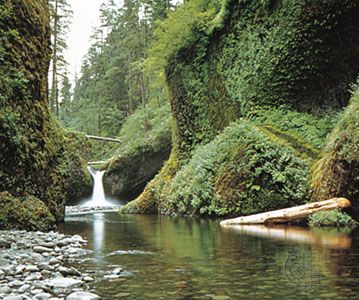
- Hiking and Backpacking: The region features extensive trail systems, including the Pacific Crest National Scenic Trail, which traverses the forest from north to south, and the Eagle Creek Trail, known for its numerous waterfalls.2
- Mountain Climbing: As the highest peak in Oregon, the mountain is a significant destination for mountain climbing enthusiasts.21
- Skiing: The area is a well-known hub for skiing, supported by the facilities and terrain found within the national forest.2
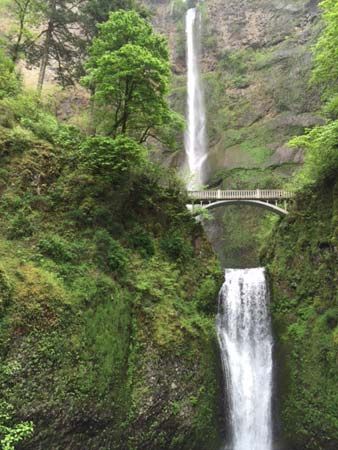
- Sightseeing and Exploration: Visitors can explore the historic Timberline Lodge, visit the scenic Multnomah Falls, or relax at natural sites like the Austin and Bagby hot springs and Timothy Lake.2
What is the height of Mount Hood, and how does it compare to other peaks in the Cascade Range?
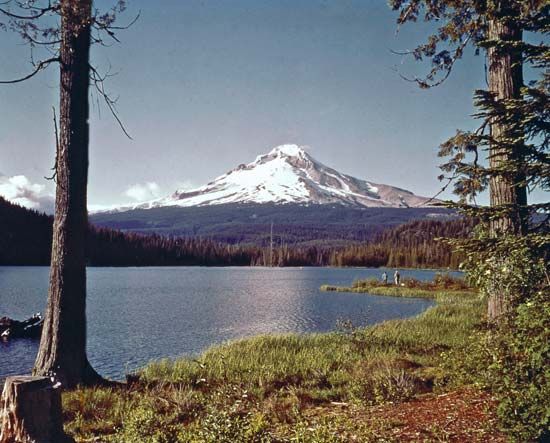
Mount Hood stands at an elevation of 11,239 feet (3,425 metres), making it the highest peak in Oregon. Within the broader Cascade Range, it ranks as the fourth-highest peak.13
To provide context on its scale, the Cascade Range includes several other notable summits that exceed 10,000 feet, such as Mount Rainier, which is the highest point in the entire range at 14,410 feet (4,392 metres), and Lassen Peak, which reaches 10,457 feet (3,187 metres). While Mount Hood is the tallest in Oregon, it remains significantly lower than the highest volcanic peaks found further north in Washington.21
How does Mount Hood impact the local economy and tourism industry in Oregon?
Mount Hood and the surrounding Mount Hood National Forest serve as a cornerstone of Oregon’s economy, primarily by acting as one of the state’s principal tourist destinations. The region’s natural beauty and diverse recreational opportunities—such as hiking, mountain climbing, and skiing—attract significant numbers of visitors, which has been a key driver of growth in the state’s tourism industry since the late 20th century.24
This influx of visitors directly supports a wide array of small businesses that provide essential services, including food, lodging, fuel, and other supplies. Beyond its role in tourism, the national forest also contributes to the regional economy through the provision of timber, water, and forage, while managing wildlife habitats. The presence of historic landmarks like the Timberline Lodge further enhances the area’s appeal, ensuring that the mountain remains a vital economic asset for the state.24
Sources
- Mount Hood — Encyclopædia Britannica
- Mount Hood National Forest — Encyclopædia Britannica
- Cascade Range — Encyclopædia Britannica
- Oregon - Services and taxation — Encyclopædia Britannica
Published on · 3 min read