Mount Rainier
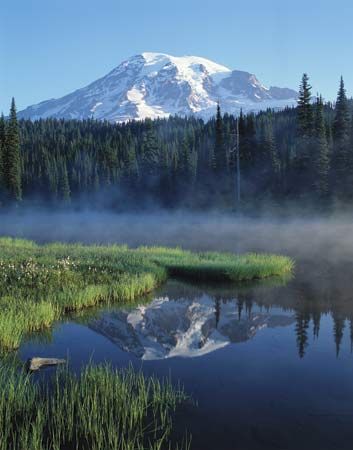
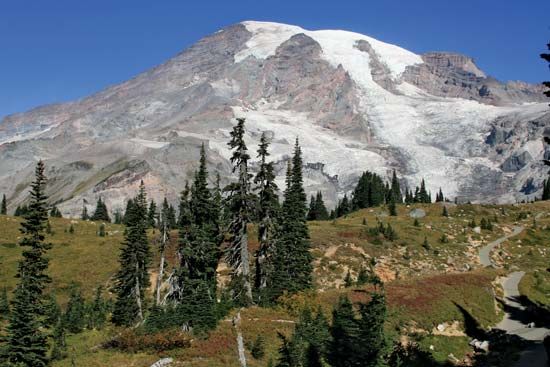
Mount Rainier stands at an elevation of 14,410 feet (4,392 meters). Located in the Cascade Range of Washington state, it is the highest mountain in that…
How tall is Mount Rainier and how does it compare to other mountains in the United States?
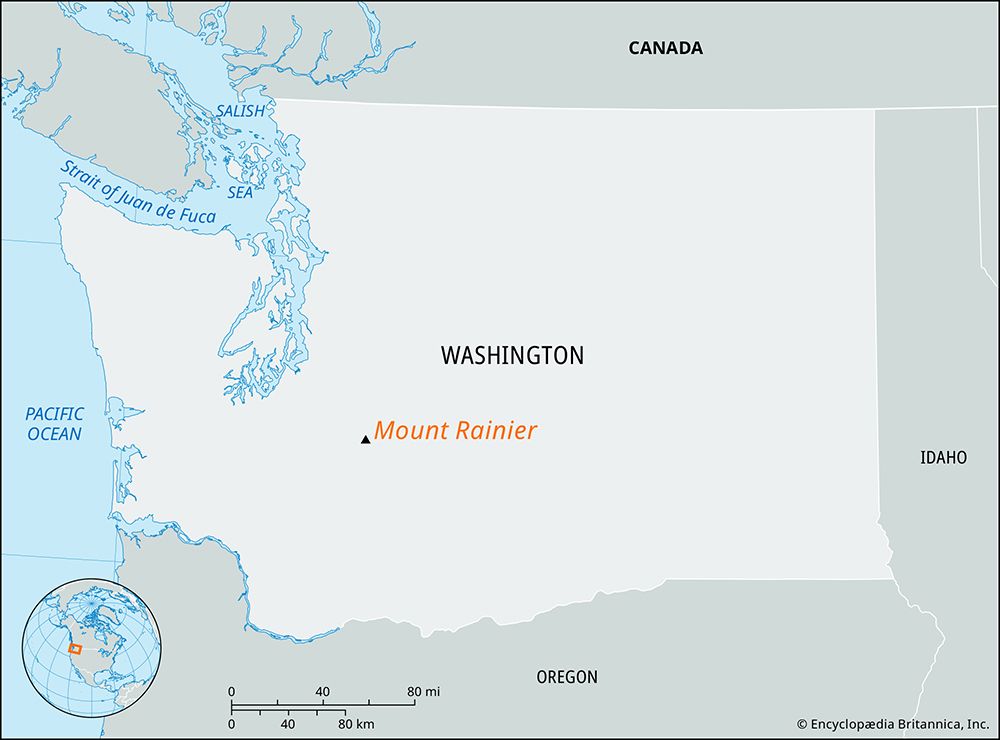
Mount Rainier stands at an elevation of 14,410 feet (4,392 meters). Located in the Cascade Range of Washington state, it is the highest mountain in that range.12
When compared to other peaks in the United States, Mount Rainier is one of the most prominent summits in the conterminous states. While it is exceptionally tall, it is slightly lower than Mount Whitney in the Sierra Nevada, which holds the title of the highest mountain in the conterminous United States at 14,494 feet (4,418 meters).3
Mount Rainier is distinct from many other U.S. peaks due to its volcanic origin and its dramatic rise from near sea level, which makes its stature particularly imposing. Additionally, it is surrounded by the largest single-mountain glacier system in the United States outside of Alaska, further setting it apart from the drier or less glaciated ranges found elsewhere in the country.31
What is the significance of Mount Rainier in Washington state’s culture and identity?
Mount Rainier serves as a defining icon of Washington state’s identity and cultural landscape. As the highest peak in the Cascade Range, it is deeply rooted in the region’s heritage, often referred to by its Native American names, Mount Tacoma or Tahoma.1
The mountain is central to the state’s outdoor culture, which is shaped by Washington’s diverse geography. Established in 1899, Mount Rainier National Park preserves this natural landmark, providing a premier destination for mountain climbing, hiking, and recreation. Its proximity to the Puget Sound urban area makes it a vital escape for residents, reinforcing a regional lifestyle that prioritizes engagement with the natural environment across all seasons.34
Beyond recreation, the mountain holds scientific significance; its glaciers have provided researchers with essential data to study patterns in Earth’s climate. Whether viewed as a majestic backdrop to urban life or a challenging summit for mountaineers, Mount Rainier remains a powerful symbol of the Pacific Northwest’s rugged natural beauty.1
How does the weather at Mount Rainier vary throughout the year?
The climate at Mount Rainier National Park is characterized as cool montane, with significant variations driven by elevation and season. Generally, the park experiences warm summers and cold winters, though the high altitude means that temperatures remain cool throughout the year.1
Precipitation is abundant across the region, particularly on the mountain’s western slope. During the winter months, this moisture falls primarily as heavy snow. The mountain is famous for its extreme snowfall, with the Paradise area on the southern slope recording some of the highest annual totals in the world, occasionally exceeding 80 feet (24 meters).1
As the seasons transition into warmer months, the snowpack begins to melt, revealing subalpine and alpine meadows that bloom with a profusion of wildflowers. These blooms progress to higher elevations as the summer passes. However, because of the extreme elevation, snow can occur at any time of year in the summit area, regardless of the season.31
What is the geological formation and history of Mount Rainier?
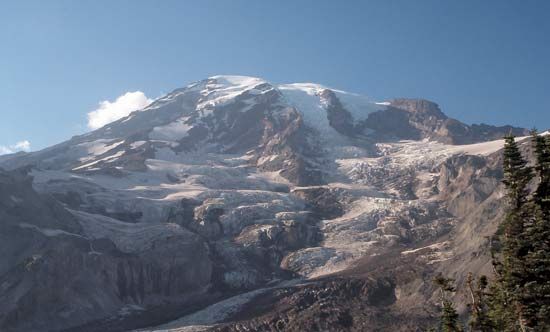
Mount Rainier is a geologically young volcano located in the Cascade Range. Its formation began approximately one million years ago, resulting from successive lava flows that built the mountain to its current height of 14,410 feet (4,392 meters).1
The mountain features three major peaks: Liberty Cap, Point Success, and Columbia Crest, the latter of which serves as the summit located on the rim of the volcano’s caldera. Throughout its history, the mountain has remained volcanically active, with its most recent eruption occurring about 150 years ago.1
Beyond its volcanic origins, the mountain is defined by extensive glaciation. It supports the largest single-mountain glacier system in the contiguous United States, with approximately two dozen named glaciers and numerous patches of permanent ice radiating from the summit. The ongoing retreat and advance of these glaciers, such as the Nisqually Glacier, have provided scientists with critical data for studying Earth’s climate patterns.1
Sources
- Mount Rainier — Encyclopædia Britannica
- United States - The Western Cordillera — Encyclopædia Britannica
- Mount Rainier National Park — Encyclopædia Britannica
- Washington - Sports and recreation — Encyclopædia Britannica
- Cascade Range — Encyclopædia Britannica
- Mount Saint Helens — Encyclopædia Britannica
Published on · 3 min read