Multnomah Falls
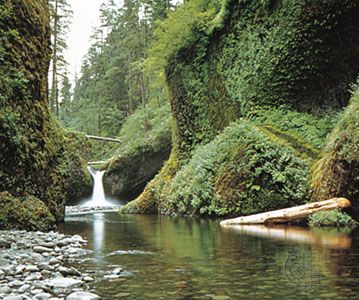
Multnomah Falls is a prominent waterfall located in northwestern Oregon, U.S., within the Columbia River Gorge National Scenic Area. Situated on a tributary…
What is Multnomah Falls?
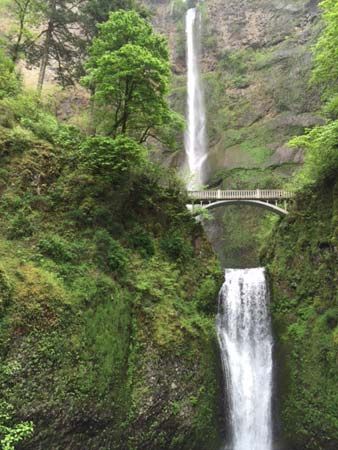
Multnomah Falls is a prominent waterfall located in northwestern Oregon, U.S., within the Columbia River Gorge National Scenic Area. Situated on a tributary of the Columbia River, the falls are recognized as one of the highest year-round waterfalls in the United States1.12
The site features both upper and lower falls that plunge into the Columbia River Gorge, reaching a combined height of 850 feet (260 metres). The primary drop of the falls measures 620 feet (190 metres), making it a major tourist destination in the region.12
How are waterfalls formed by geological processes?
Waterfalls are geological features where river flow is abruptly interrupted, causing water to drop vertically. While rivers naturally work to smooth their gradients through erosion and deposition, waterfalls persist where specific geological conditions prevent this smoothing process.3
Differential Erosion
One of the most common causes of waterfalls is the presence of rocks with varying resistance to erosion. When a river flows from a resistant rock bed to a softer one, it erodes the weaker rock more rapidly, steepening the gradient at the junction. Common arrangements include:3
- Cap Rock: Resistant horizontal layers (such as dolomite) overlie weaker strata (like shale), creating a protective ledge.4
- Inclined Strata: Alternating layers of varying resistance create steps as the softer material is worn away.4
- Non-sedimentary Arrangements: Dikes or veins of hard crystalline rock juxtaposed with weaker rock can also act as “falls makers”.4
Structural and Landform Processes
Waterfalls also form due to the shape or structure of the land:
- Tectonic Activity: Movement along a fault can create scarps or cliffs that interrupt drainage systems.35
- Glaciation: Glaciers can over-deepen main valleys, leaving tributary valleys “hanging” high above the floor. Once the ice retreats, streams from these hanging valleys must drop to join the main drainage.35
- Karst Topography: The solution of carbonate rocks can create caves and cavern systems where water may drop between different levels.5
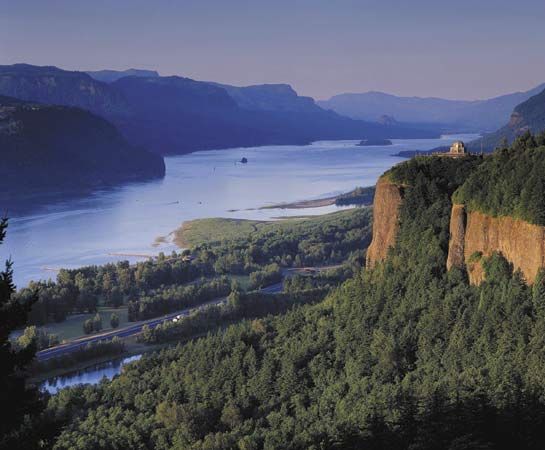
What is the significance of the Columbia River Gorge?
The Columbia River Gorge is a significant geographical and historical feature carved by the Columbia River as it cuts through the Cascade Range. Its importance is defined by several key factors:1
- Transportation Artery: Historically, the gorge served as the only sea-level route to the interior of the Pacific Northwest. Before the expansion of railroads, it was the primary transportation corridor for fur traders, early immigrants, and river steamers.6
- Geological Landmark: The gorge is a spectacular physical feature formed as the river traverses the Cascade Range on its path to the Pacific Ocean. It is also home to the Columbia River Gorge National Scenic Area, which includes iconic natural sites like Multnomah Falls.17
- Cultural and Economic History: The region has been inhabited by Native American peoples for thousands of years. Following European exploration, the river became a hub for the fur trade and later a center for the salmon industry, which was once a major global supplier.68
What other famous natural landmarks are found in Oregon?
Oregon is home to a diverse array of natural landmarks shaped by its unique geological history. Beyond the Columbia River Gorge, some of the state’s most famous sites include:
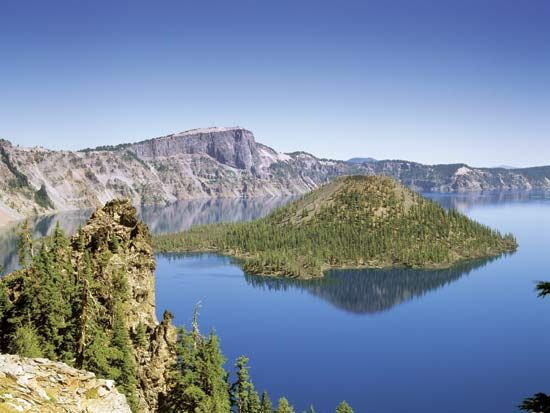
- Crater Lake National Park: Featuring the deepest lake in the United States, this site occupies a massive volcanic caldera formed by the collapse of Mount Mazama approximately 7,700 years ago.910
- Mount Hood National Forest: Home to Mount Hood, the state’s highest peak, this region offers extensive wilderness areas and the historic Timberline Lodge.1110
- Oregon Caves National Monument: A protected area known for its intricate cave systems.2
- Oregon Dunes National Recreation Area: A spectacular landscape of shifting sands located within the Siuslaw National Forest.10
- Newberry National Volcanic Monument: Located in the Deschutes National Forest, this area showcases significant volcanic features.10
- Cascade Range: This chain of volcanic peaks defines much of the state’s topography and provides a dramatic backdrop for outdoor recreation.122
Sources
- Multnomah Falls — Encyclopædia Britannica
- Oregon - Services and taxation — Encyclopædia Britannica
- waterfall — Encyclopædia Britannica
- river - Falls attributable to differential erosion — Encyclopædia Britannica
- river - Falls attributable to discordance of river profile — Encyclopædia Britannica
- Columbia River - History — Encyclopædia Britannica
- Columbia River - Physiography and hydrology — Encyclopædia Britannica
- Washington - Native Americans and early European explorers — Encyclopædia Britannica
- Mount Hood National Forest — Encyclopædia Britannica
- Oregon - Relief and drainage — Encyclopædia Britannica
- Crater Lake — Encyclopædia Britannica
- list of cities and towns in the United States - Oregon — Encyclopædia Britannica
- Oregon — Encyclopædia Britannica
- Coast Ranges — Encyclopædia Britannica
Published on · 3 min read