Mount Kailash
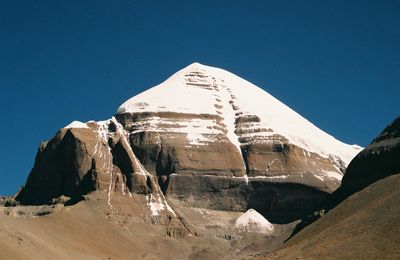
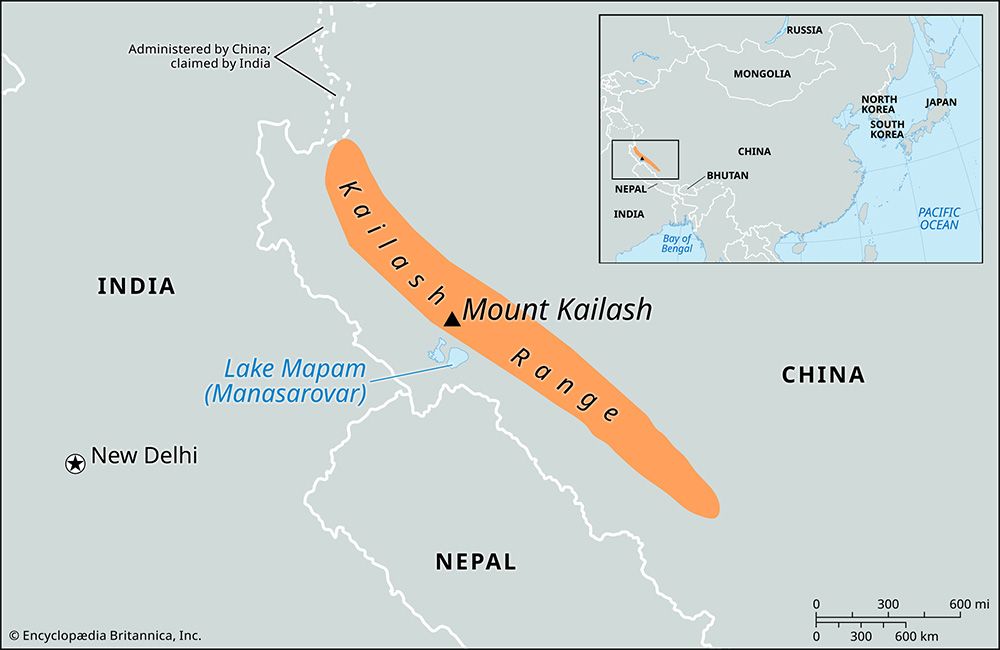
Mount Kailash is a sacred mountain located in the Ngari prefecture of the Tibet Autonomous Region in China. Rising 21,778 feet (6,638 meters), it is the…
What is Mount Kailash?
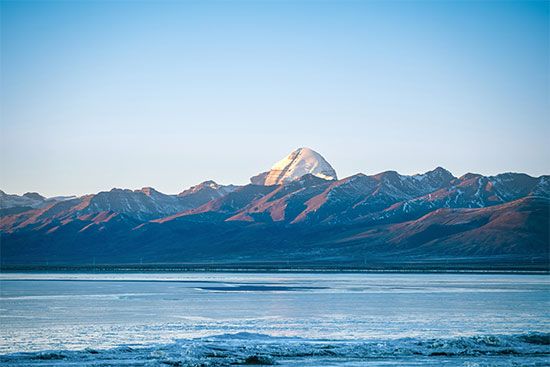
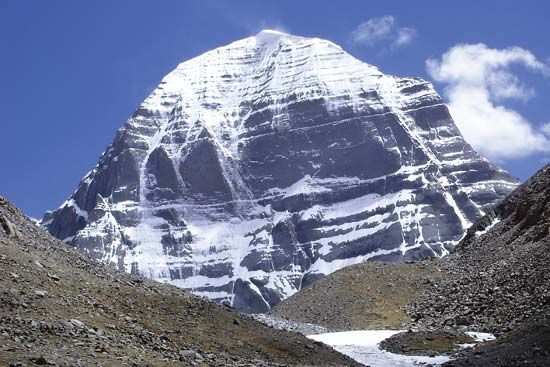
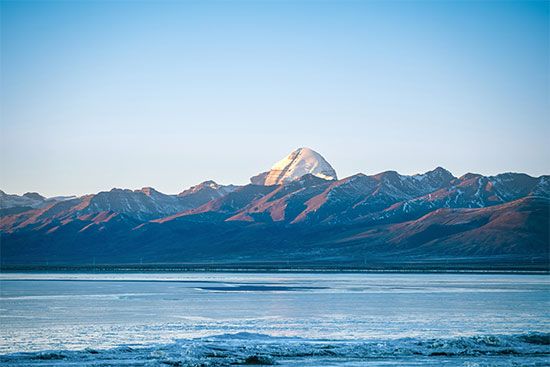
Mount Kailash is a sacred mountain located in the Ngari prefecture of the Tibet Autonomous Region in China. Rising 21,778 feet (6,638 meters), it is the second-highest peak in the Kailash Range.1234
The mountain holds profound religious significance as a site of pilgrimage for Hinduism, Buddhism, Jainism, and Bon. It is often identified as Mount Meru, the mythical center of the universe, and is considered the home of the Hindu god Shiva. Pilgrims perform a ritual circumambulation, or kora, around the mountain, with directions of travel varying by religious tradition.1245
Nearby lies Lake Mapam, a high-altitude freshwater lake also revered for its spiritual importance. While access to the region has been subject to geopolitical tensions and border closures, pilgrimages from India resumed in June 2025.1354
What is the significance of Mount Meru in mythology?
In Hindu mythology, Mount Meru is a golden mountain regarded as the axis of the world and the center of the universe. It is considered the abode of the gods, with its foothills identified as the [Himalayas]. Cosmologically, the mountain is believed to extend as far into the heavens as it does into the nether regions below the earth.6
The significance of Mount Meru extends deeply into religious architecture and symbolism:
- Cosmic Symbolism: It serves as the hub of creation, with four rivers flowing from it to divide the world’s four continents. Its four sides are mythically described as being composed of precious metals and stones, including gold, ruby, crystal, and lapis lazuli.7
- Architectural Influence: The roof tower (vimana) of a Hindu temple is designed to represent Mount Meru, symbolizing heaven on earth. This architectural tradition influenced monuments across Southeast Asia, where temple plinths and towers were built to mirror this cosmic mountain.689
- Mythological Coalescence: While early texts distinguished Mount Meru from Mount Kailash, the two mountains eventually coalesced in mythology as both became associated with the god Shiva.79
Why is Mount Kailash never climbed by humans?
The provided search results do not state that Mount Kailash is “never climbed by humans,” nor do they confirm that it is officially closed to climbing. They focus on its status as a sacred site for Hinduism, Buddhism, Jainism, and Bon, where the primary religious practice is the parikrama or kora—a ritual circumambulation around the base of the mountain rather than an ascent to the summit.142
While the mountain is deeply revered as the home of the god Shiva and the mythical Mount Meru, the available information does not address the history or regulations regarding mountaineering attempts on its peak.125
What is the kora pilgrimage around the mountain?
The kora (or parikrama/pradakshina) is a sacred ritual circumambulation performed by pilgrims around Mount Kailash. This trek is a central practice for followers of Hinduism, Buddhism, Jainism, and Bon.11
Key aspects of the pilgrimage include:
- The Route: The primary outer route is approximately 30 miles (50 kilometers) long and typically takes about three days to complete. A shorter, inner kora route of about 20 miles (35 kilometers) can be finished in one day.1
- Directional Significance: Hindus and Buddhists circumambulate the mountain in a clockwise direction, while Jains and Bon practitioners circle it counterclockwise.41
- Spiritual Purpose: For Hindus, the act of viewing the sacred mountain is considered a form of darshan—a direct vision of the divine.41
- Access: Pilgrimage access has historically been subject to geopolitical tensions between India and China. Following a five-year pause due to the COVID-19 pandemic and border skirmishes, travel from India to the site recommenced in June 2025.41
Sources
- Mount Kailash: Top Questions — Encyclopædia Britannica
- Mount Kailash — Encyclopædia Britannica
- Mount Kailash - Geography — Encyclopædia Britannica
- Mount Kailash - Pilgrimage — Encyclopædia Britannica
- Kailash Range — Encyclopædia Britannica
- Mount Meru — Encyclopædia Britannica
- Mount Kailash - Abode of Hindu gods — Encyclopædia Britannica
- Southeast Asian arts - Artistic styles — Encyclopædia Britannica
- Brihadishvara Temple: Top Questions — Encyclopædia Britannica
- Nature worship - Mountains — Encyclopædia Britannica
Published on · 3 min read