Haramukh
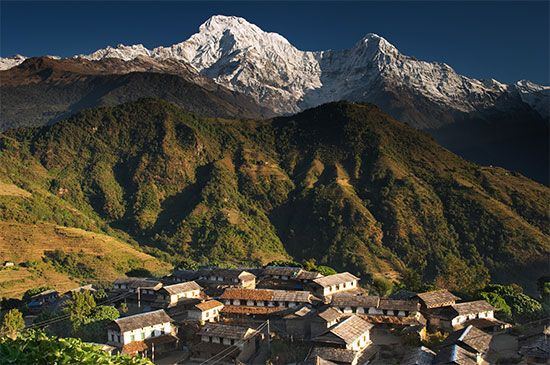
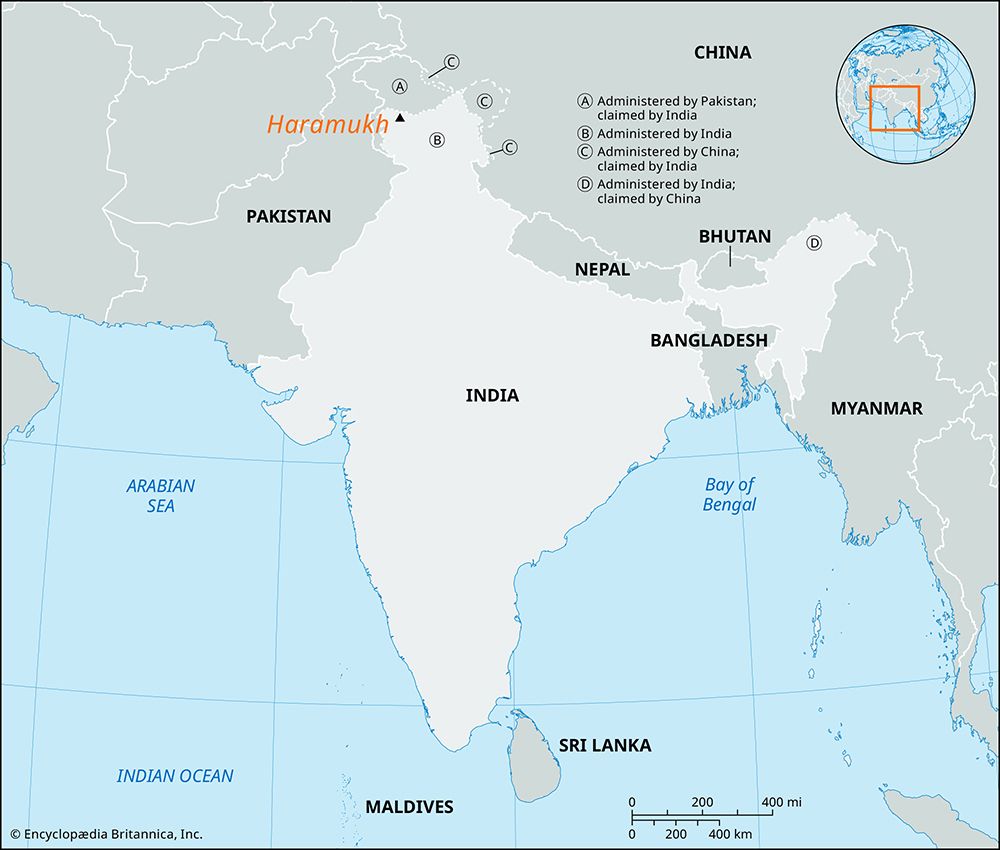
Haramukh is a prominent mountain peak situated in the Great Himalayas within the Jammu and Kashmir union territory of northern India.
What is Haramukh?
Haramukh is a prominent mountain peak situated in the Great Himalayas within the Jammu and Kashmir union territory of northern India.1
Located approximately 22 miles (35 km) north of Srinagar, the peak rises to an elevation of 16,872 feet (5,143 meters) and overlooks the Vale of Kashmir. Geologically, the mountain features a core dating back to the Precambrian period, meaning its rock formations are over 540 million years old.1
What is the significance of the Vale of Kashmir?
The Vale of Kashmir is a significant intermontane valley in the Indian-administered portion of the Kashmir region. Its importance is defined by its unique geography, economic productivity, and historical legacy.
Geographical and Economic Significance
The valley serves as the primary population center of the region, housing the summer capital, Srinagar. Its fertile alluvial soil and favorable climate support a robust agricultural economy, producing staples like rice and corn, as well as temperate fruits such as apples, walnuts, and cherries. Notably, the vale is the sole producer of saffron in the Indian subcontinent. The region’s scenic beauty, characterized by lakes like Wular, also makes it a major tourist destination.23
Cultural and Historical Legacy
Historically, the valley has been a center of cultural exchange. It served as a hub for Hindu culture from the 9th to the 12th century and later became a favored retreat for Mughal emperors, who developed its iconic gardens. The local population possesses a distinct identity, with a rich literary tradition and a language influenced by Sanskrit.245
How were the Himalayan mountains formed?
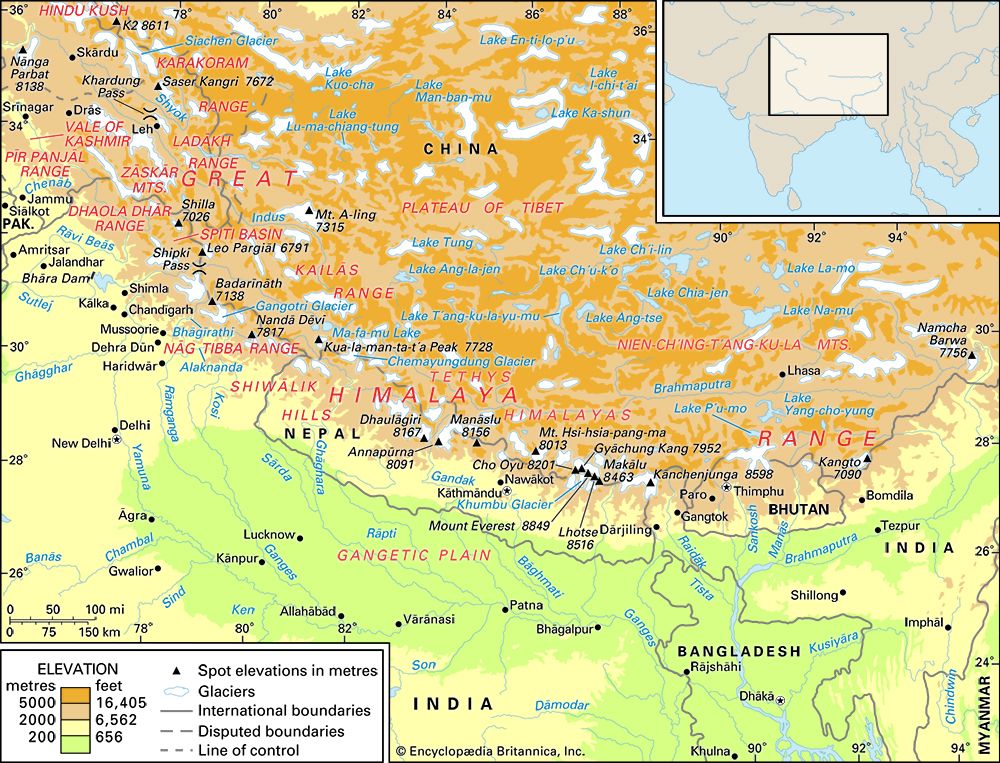
The formation of the Himalayas is a result of a massive continental collision between the Indian subcontinent and the Eurasian Plate.78
The Process of Collision
Beginning approximately 180 million years ago, the supercontinent Gondwana began to break apart. The plate carrying India moved northward for over 100 million years, gradually closing the Tethys Sea that separated it from Asia.78
About 40 to 50 million years ago, India finally collided with Eurasia. Because both plates were buoyant, neither subducted completely. Instead, the Indian plate continued to push beneath Asia, causing intense crustal thickening, folding, and the thrusting of ancient rock layers over one another.79
Uplift and Development
- Crustal Shortening: As India penetrated some 2,000 km into Asia, the crust was forced skyward, creating the Plateau of Tibet and the Himalayan range.79
- Mountain Building: Significant mountain building accelerated during the Miocene Epoch (about 20 million years ago), when layers of metamorphic rock were thrust southward to form nappes.8
- Recent Elevation: The Himalayas reached their current status as the world’s highest mountains primarily during the Pleistocene Epoch (within the last 2.6 million years), driven by intense localized uplift.8
What are some other sacred mountains in India?
Beyond the iconic Mount Kailash, which is revered across multiple traditions as a cosmic center, India is home to numerous mountains and peaks held in high spiritual regard.
Sacred Peaks in the Himalayas
The state of Uttarakhand is particularly dense with sacred geography, where mountains are often associated with deities and serve as the source of holy rivers:
- Nanda Devi: Standing at 25,645 feet (7,816 meters), this peak is a prominent and sacred mountain in the Himalayas.10
- Gangotri: This site is home to a shrine situated near the source of the Ganges River. Mythology suggests that Shiva sat here to receive the goddess Ganga in his locks.11
- Kedarnath: Located at a high elevation, this site features a stone temple dedicated to Shiva that is over 1,000 years old.11
- Yamunotri: This temple is dedicated to the goddess Yamuna, whose river emerges from the nearby glacier.11
- Badrinath: An important abode of the god Vishnu, situated on the banks of the Alaknanda River.11
- Hemkund Sahib: A significant Sikh pilgrimage site where Guru Gobind Singh is said to have meditated.11
Conceptual Replicas
In Hindu tradition, the sacred status of Mount Kailash is often replicated through architecture. Temple towers, known as shikharas (meaning “mountain peak”), are designed to represent the cosmic mountain. A notable example is the Brihadishvara Temple in Tamil Nadu, which is referred to as “Dakshina Meru” (Mount Meru of the South) and serves as a symbolic dwelling place for Shiva.12
Sources
- Haramukh — Encyclopædia Britannica
- Vale of Kashmir — Encyclopædia Britannica
- Kashmir - The region to 1947 — Encyclopædia Britannica
- Jammu and Kashmir - Agriculture — Encyclopædia Britannica
- Jammu and Kashmir - Kashmiris of the vale and highlands — Encyclopædia Britannica
- Jammu and Kashmir - The Vale of Kashmir — Encyclopædia Britannica
- plate tectonics - Mountains by continental collision — Encyclopædia Britannica
- Himalayas - Geologic history — Encyclopædia Britannica
- mountain - The Himalayan chain — Encyclopædia Britannica
- Mount Kailash: Top Questions — Encyclopædia Britannica
- Mount Kailash - Kailashes across India — Encyclopædia Britannica
- Mount Kailash — Encyclopædia Britannica
- Uttarakhand - Pilgrimage centres — Encyclopædia Britannica
- Ghats — Encyclopædia Britannica
- Western Ghats — Encyclopædia Britannica
- Nanda Devi — Merriam-Webster
Published on · 3 min read