Lake Mapam
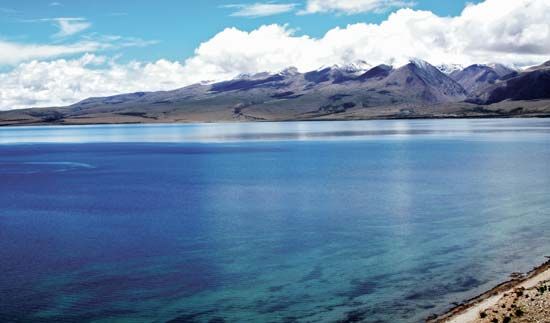
Lake Mapam, also widely known as Manasarovar in Sanskrit, is a high-altitude freshwater lake located in the western Tibet Autonomous Region of China.…
What is Lake Mapam?
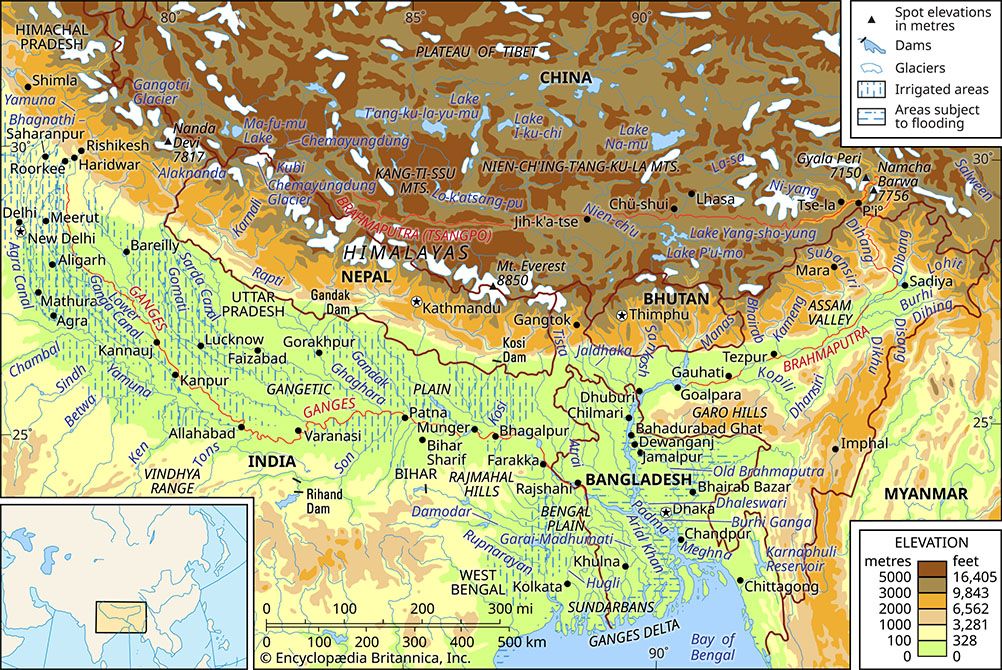
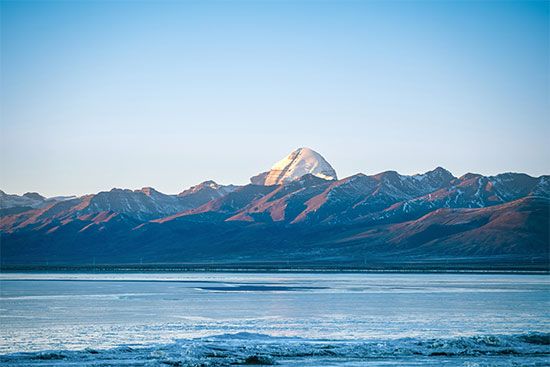
Lake Mapam, also widely known as Manasarovar in Sanskrit, is a high-altitude freshwater lake located in the western Tibet Autonomous Region of China. Situated south of the Kailash Range at an elevation of 15,052 feet (4,588 meters), it is recognized as one of the highest bodies of fresh water in the world and is celebrated for its crystal-clear appearance.12
The lake holds profound significance in Hinduism, where it is traditionally regarded as a major pilgrimage site. According to Hindu mythology, the lake—whose name translates to “Lake of the Mind”—was created by the god Brahma through mental effort. It is located approximately 20 miles south of Mount Kailash, near the salty and lifeless Rakshastal lake.12
What is the significance of Mount Kailash in Hinduism?
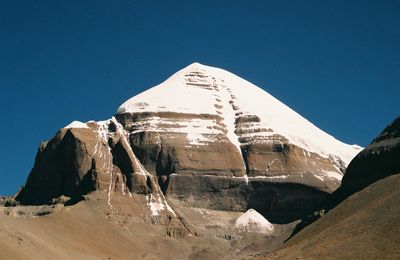
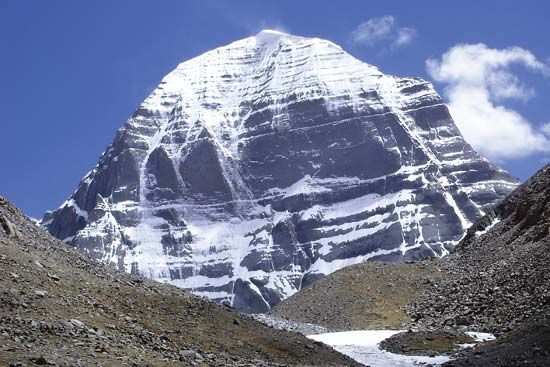
In Hinduism, Mount Kailash is a site of profound religious significance, primarily revered as the eternal abode of the god Shiva and his wife Parvati. It is considered a place where Shiva performs ascetic austerities (tapas) and is often identified as a lingam, a sacred symbol of the deity.34
The mountain’s importance is deeply rooted in ancient literature:
- Mythological Center: It is frequently associated with Mount Meru, the mythical center of the universe, and is sometimes described as the point where the celestial Ganges River descends to Earth.34
- Divine Domicile: Early texts like the Mahabharata and Ramayana link the mountain to Kubera, the god of wealth, and recount the legend of the demon Ravana attempting to shake the mountain, only to be subdued by Shiva.34
- Pilgrimage: For Hindus, the mountain is a major destination for yatra (pilgrimage). Merely viewing the peak is considered a form of darshan, or a sacred vision of the divine, and many perform a clockwise circumambulation known as parikrama.35
How does Rakshastal differ from Lake Mapam?
Lake Mapam and Rakshastal are two distinct lakes located approximately 20 miles south of Mount Kailash in the Tibet Autonomous Region of China. While they are geographic neighbors, they differ significantly in their physical characteristics and cultural status:
- Water Quality and Life: Lake Mapam (also known as Manasarovar) is one of the highest freshwater lakes in the world and is renowned for being crystal clear. In contrast, Rakshastal is a salty, lifeless body of water.12
- Cultural Significance: Lake Mapam is highly revered in Hinduism as a major pilgrimage site, with its name meaning “Lake of the Mind.” Conversely, Rakshastal is known in Sanskrit as the “Lake of Demons” and in Tibetan as the “Poison Lake,” reflecting a starkly different symbolic association.2
What are the challenges of traveling to high-altitude lakes?
Traveling to high-altitude lakes presents significant physical and logistical challenges, primarily due to the effects of low atmospheric pressure and reduced oxygen availability at elevations above 8,000 feet (2,400 meters).6
Physiological Challenges
The human body often struggles to adapt to the thin air, leading to altitude sickness. Symptoms typically appear within hours to days of arrival and include:
- Respiratory: Shortness of breath and rapid breathing.6
- Neurological/Muscular: Headache, dizziness, fatigue, and impaired coordination.6
- Gastrointestinal: Nausea and vomiting.6
In severe cases, individuals may develop high altitude pulmonary edema (HAPE), where fluid accumulates in the lungs, or high-altitude cerebral edema (HACE), where the brain swells. Both conditions are life-threatening and require immediate descent to a lower elevation.67
Logistical and Environmental Challenges
- Isolation: Many high-altitude lakes are located in remote, rugged regions with limited infrastructure, making access difficult and emergency medical care scarce.7
- Climate: Extreme weather, including winter storms and seasonal monsoons, can make travel nearly impossible during certain times of the year.7
- Accessibility: While some areas have seen improvements in transportation through road and air networks, many high-elevation sites remain accessible only via footpaths.78
Sources
- Lake Mapam — Encyclopædia Britannica
- Mount Kailash - Geography — Encyclopædia Britannica
- Mount Kailash: Top Questions — Encyclopædia Britannica
- Mount Kailash - Abode of Hindu gods — Encyclopædia Britannica
- Mount Kailash - Pilgrimage — Encyclopædia Britannica
- altitude sickness — Encyclopædia Britannica
- human respiratory system - High altitudes — Encyclopædia Britannica
- Mount Everest - The human challenge — Encyclopædia Britannica
- Tibet - Transportation — Encyclopædia Britannica
Published on · 3 min read