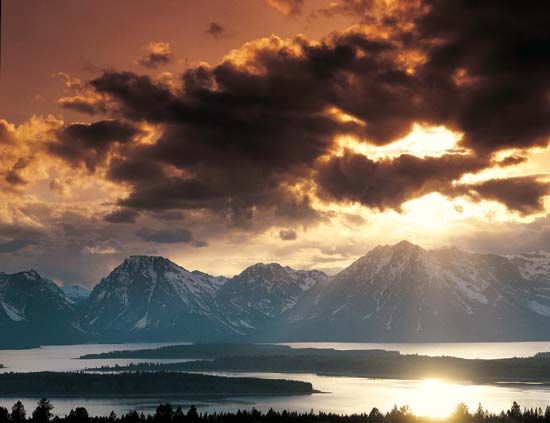
Mount Rainier National Park
Mount Rainier National Park provides several facilities to support its many visitors. The park features three primary visitor centers that operate during the…
What are the main visitor centers and facilities available in the park?
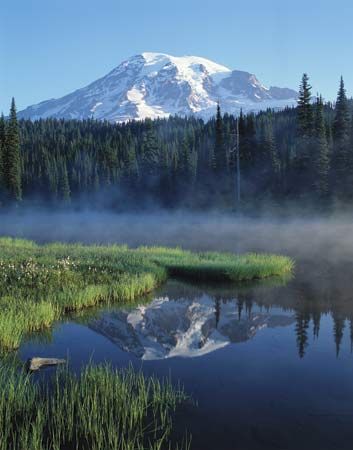
Mount Rainier National Park provides several facilities to support its many visitors. The park features three primary visitor centers that operate during the warmer months:
- Paradise Area: Located on the southern slope, this area also hosts the historic Paradise Inn, which was built in 1916 and remains one of the most renowned lodges in the U.S. national park system.1
- Sunrise Ridge: Situated in the eastern portion of the park.1
- Ohanapecosh River: Located in the southeastern section of the park.1
Additionally, the park maintains its administrative headquarters in Ashford, located just southwest of the park boundaries. Visitors can access these areas via several paved roads on the southern and eastern sides of the park.1
What is the geological history of Mount Rainier and how was it formed?
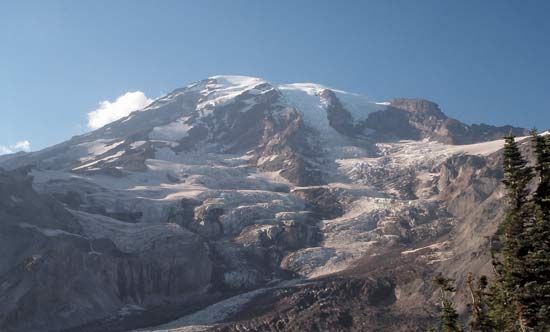
Mount Rainier is a geologically young volcano located in the Cascade Range. Its formation began approximately one million years ago, driven by successive lava flows from repeated eruptions.
The mountain is characterized by its broad summit, which features a caldera rim containing the peak known as Columbia Crest. While the volcano has been active for a million years, it remains geologically dynamic; it last erupted about 150 years ago. Today, the mountain is defined by its extensive glacier system—the largest single-mountain system in the contiguous United States—which radiates from the summit and has provided scientists with valuable data regarding Earth’s climate patterns through the observation of glacial retreat and advance.
What is the history of Mount Rainier National Park’s establishment and development?
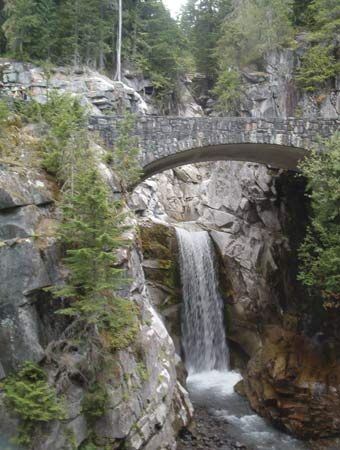
Mount Rainier National Park was established in 1899 to preserve the iconic Mount Rainier—a dormant volcano reaching 14,410 feet—and its surrounding wilderness in Washington state.1
The park’s creation was significantly influenced by the advocacy of naturalist John Muir, whose writings and efforts to promote the federal protection of wilderness areas were instrumental in shaping the national park system. Muir’s conviction that such landscapes should be preserved in their entirety, free from industrial exploitation, helped swing both public and congressional opinion in favor of establishing protected reservations.5
Since its inception, the park has developed into a premier destination for hiking and mountaineering, supported by an extensive trail system and visitor facilities, including the historic Paradise Inn, which was constructed in 1916. Today, the park covers 369 square miles, serving as a vital site for both recreation and scientific study, particularly regarding its massive glacier system.12
What are the main ecosystems and wildlife found in Mount Rainier National Park?
Mount Rainier National Park features a diverse range of ecosystems shaped by significant variations in elevation and climate. Nearly three-fifths of the park is covered by dense coniferous forests, which transition from giant Douglas firs, western red cedars, and mountain hemlocks at lower elevations to western white pines as you ascend toward 6,000 feet. Above the timberline, the landscape shifts into expansive subalpine and alpine meadows, which are renowned for their vibrant displays of wildflowers during the summer months.1
The park’s varied terrain supports a wide array of wildlife:
- Large Mammals: The most prominent species include black-tailed deer, Roosevelt elk, black bears, and mountain goats.1
- Small Mammals: Raccoons, squirrels, and marmots are frequently observed throughout the park.1
- Birds: Over 220 species have been recorded, including common residents and migrants such as gray and Steller’s jays, Clark’s nutcrackers, hairy woodpeckers, and various warblers.1
Sources
- Mount Rainier National Park — Encyclopædia Britannica
- Mount Rainier — Encyclopædia Britannica
- Cascade Range — Encyclopædia Britannica
- Mount Saint Helens — Encyclopædia Britannica
- John Muir — Encyclopædia Britannica
Published on · 3 min read