Mount Washington
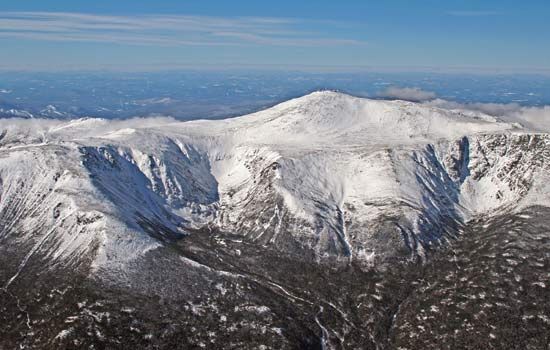
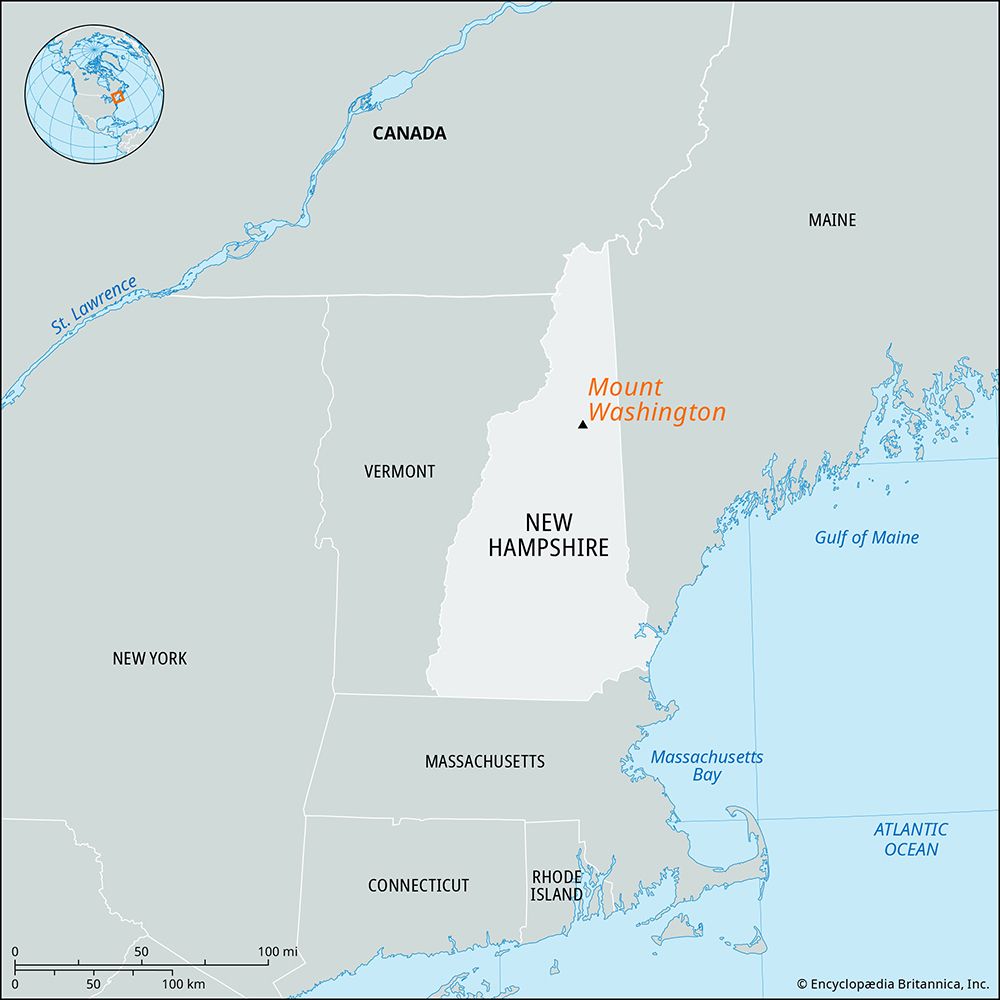
Mount Washington is located in the Presidential Range of the White Mountains in New Hampshire, U.S. Standing at 6,288 feet (1,917 metres), it is the highest…
What is the geographical location and significance of Mount Washington in New Hampshire?
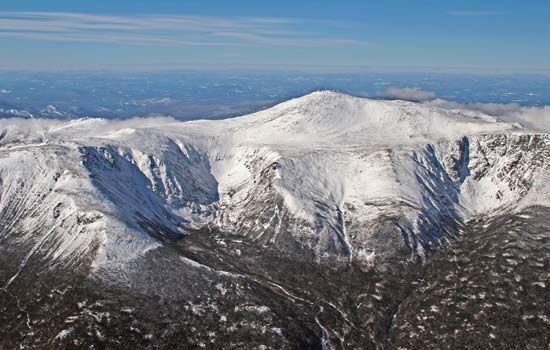
Mount Washington is located in the Presidential Range of the White Mountains in New Hampshire, U.S. Standing at 6,288 feet (1,917 metres), it is the highest peak in the state and serves as a vital watershed for the Androscoggin, Connecticut, and Saco rivers.1
The mountain is historically and scientifically significant for several reasons:
- Extreme Weather: It is renowned for its severe climate, having recorded one of the world’s highest wind velocities at 231 miles (372 km) per hour in 1934.1
- Exploration: It holds a place in early American history as the site of the first recorded climb by a European, achieved by Darby Field in 1642.2
- Scientific Research: The Mount Washington Weather Observatory continues to provide critical meteorological data, and the mountain was a focal point for early systematic mapping of the Appalachian region by geographers like Arnold Guyot.12
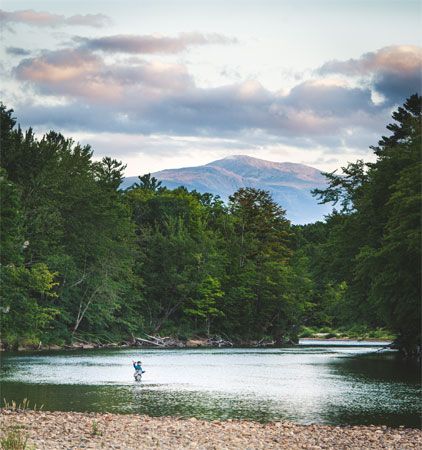
How tall is Mount Washington, and how does it compare to other peaks in the northeastern United States?
Mount Washington stands at an elevation of 6,288 feet (1,917 metres), making it the highest peak in New Hampshire and the loftiest summit in the northeastern United States.13
While the White Mountains contain numerous significant peaks, most of the range’s highest summits—located within the Presidential Range—typically reach elevations between 5,000 and 6,000 feet (1,500 and 1,800 metres). Consequently, Mount Washington stands as the clear apex of the region, surpassing all other mountains in the northeastern U.S. in height.31
What are the unique weather conditions and extreme weather records associated with Mount Washington?
Mount Washington is defined by its extreme and volatile climate, which is often described as Arctic or subarctic in nature. Due to its high elevation and exposed, treeless summit, the mountain experiences conditions that contrast sharply with the surrounding region.15
The peak is globally recognized for its intense wind speeds. On April 12, 1934, the Mount Washington Weather Observatory recorded a wind gust of 231 miles (372 km) per hour, which stood as a world record for many years. Beyond its high winds, the summit is characterized by persistent cloud cover and haze, which frequently impact visibility. Temperature extremes are also notable; the summit is so consistently cold that temperatures have never been recorded to rise above 71 °F (22 °C).561
These severe conditions necessitate specialized infrastructure, such as summit buildings specifically anchored to withstand the mountain’s powerful winds. The ongoing meteorological data collected at the observatory remains a critical resource for understanding the unique climatic severity of the White Mountains.56
How does the Mount Washington Observatory track extreme weather?
The Mount Washington Observatory tracks extreme weather by maintaining a permanent presence on the summit, where its facilities are specifically engineered to withstand the mountain’s intense environmental conditions. Because the peak is known for record-breaking wind velocities—such as the 231 miles (372 km) per hour gust recorded in 1934—the observatory’s infrastructure, including its buildings, is securely anchored to the mountain to ensure the safety of staff and the continuity of meteorological data collection.1
While the provided information confirms the observatory’s role in monitoring these conditions, it does not detail the specific technical instruments or daily tracking methodologies used by the staff.
Sources
- Mount Washington — Encyclopædia Britannica
- Appalachian Mountains - Study and exploration — Encyclopædia Britannica
- White Mountains — Encyclopædia Britannica
- Washington, Mount — Merriam-Webster
- New Hampshire - Climate — Encyclopædia Britannica
- Appalachian Mountains - Climate — Encyclopædia Britannica
Published on · 3 min read