Agulhas Current
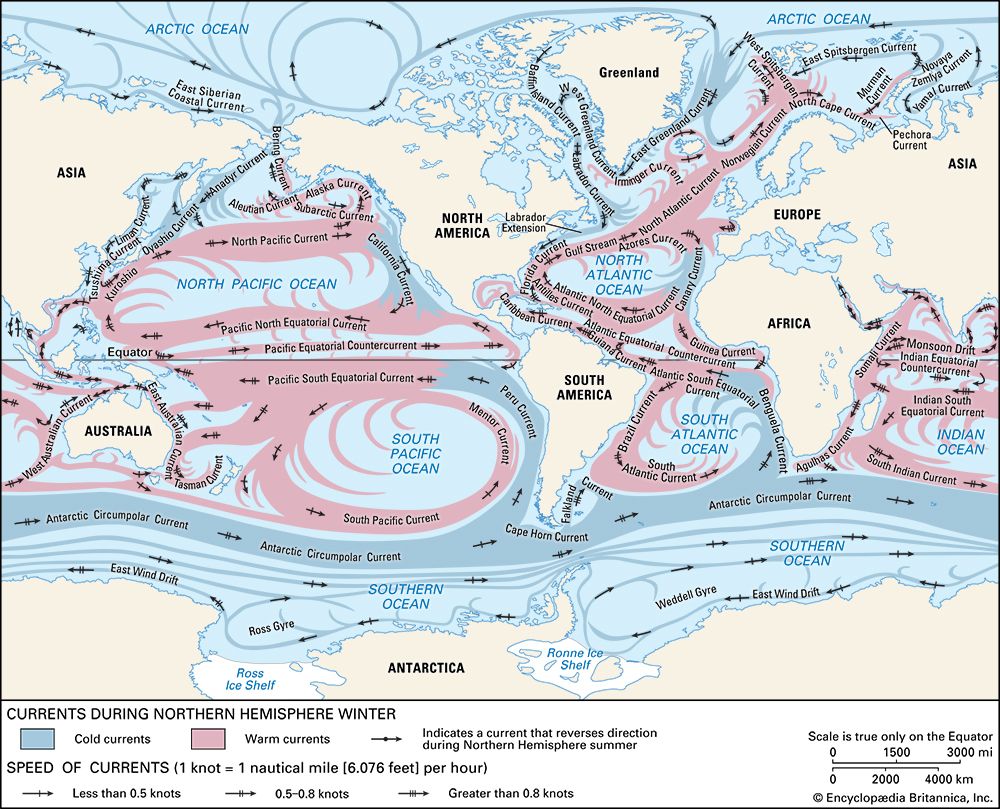
The Agulhas Current is a powerful western boundary current in the southern Indian Ocean that interacts with several other systems:
How does the Agulhas Current interact with other currents in the Indian Ocean?
The Agulhas Current is a powerful western boundary current in the southern Indian Ocean that interacts with several other systems:
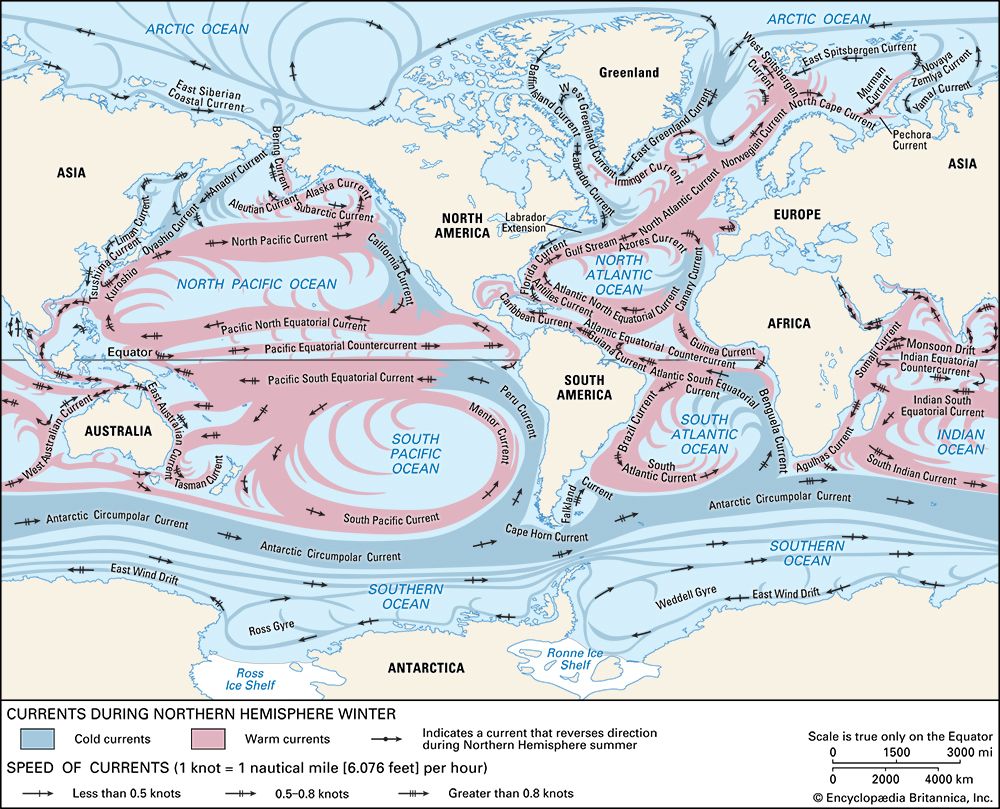
- Feeding Currents: The current is primarily fed by the Indian South Equatorial Current. As this equatorial flow moves westward, it splits; one part forms the Mozambique Current (flowing through the Mozambique Channel) and the Mascarene Current. These streams converge south of Madagascar to form the Agulhas Current.123
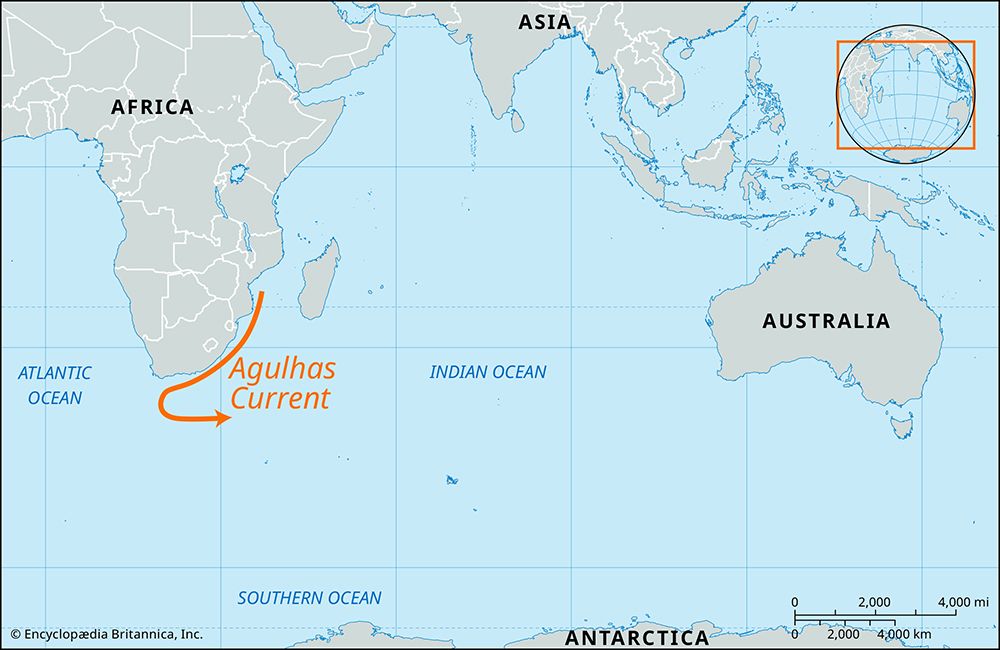
- Retroflection and Outflow: Upon reaching the southern tip of Africa, the current separates from the continental margin and performs a sharp turn known as the Agulhas Retroflection, curling back into the Indian Ocean to join the eastward flow toward Australia.145
- Atlantic Connection: A significant portion of the water—approximately 10 to 20 percent—does not return to the Indian Ocean. Instead, it is injected into the South Atlantic Ocean as large eddies that migrate westward.45
What is the Agulhas Current and where is it located?
The Agulhas Current is a major, warm-water surface oceanic current that serves as the western boundary current of the southern Indian Ocean.1
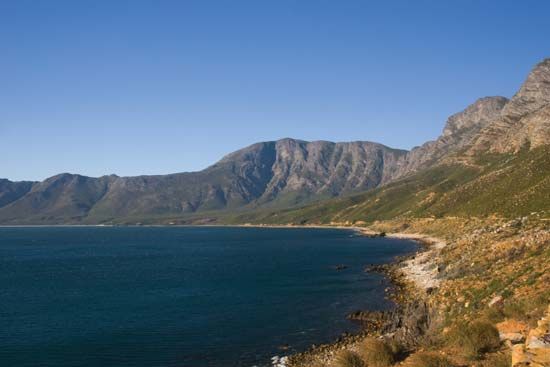
It is located along the southeastern coast of Mozambique and the coast of South Africa. The current flows southward before turning eastward to join the flow moving toward Australia. A small portion of its water continues westward around the Cape of Good Hope into the Atlantic Ocean.1
Fed by the Mozambique Current, the Agulhas is one of the fastest-flowing currents in any ocean, reaching estimated top speeds of 5.8 miles (9.3 km) per hour off the South African coast. Because it originates in lower latitudes, it remains relatively warm, with surface temperatures typically ranging between 57 and 79 °F (14 and 26 °C).1
What role does the Agulhas Current play in the global ocean circulation system?
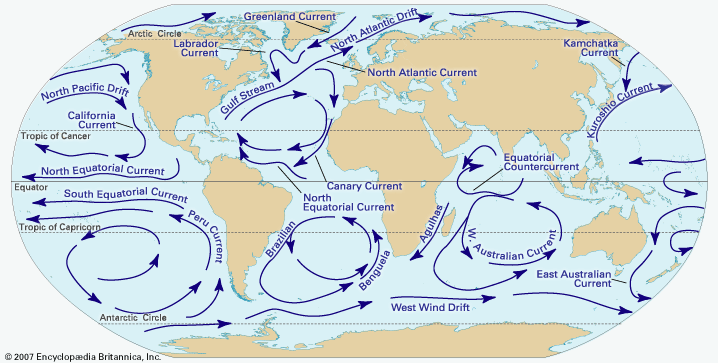
The Agulhas Current plays a critical role in global ocean circulation by acting as a major western boundary current of the southern Indian Ocean. As a powerful, warm-water jet, it is instrumental in transporting excess heat from low latitudes toward higher latitudes, a fundamental function of subtropical gyres.12
Its contribution to global circulation is particularly notable at the southern tip of Africa. While the current primarily undergoes a “retroflection”—curling back into the Indian Ocean to flow eastward—it also facilitates a significant inter-ocean exchange. Approximately 10 to 20 percent of the water transported by the Agulhas is injected into the South Atlantic Ocean in the form of large, warm-core eddies. This process is a vital component of the global “conveyor belt” of ocean circulation, as it helps transfer heat and salt between the Indian and Atlantic basins.2
How fast does the Agulhas Current flow, and how does this compare to other ocean currents?
The Agulhas Current is one of the fastest-flowing currents in any ocean, with an estimated top speed of 5.8 miles (9.3 km) per hour off the southeast coast of South Africa. On average, however, its flow rate is estimated between 0.5 and 1.4 miles (0.8 to 2.2 km) per hour, with velocities fluctuating based on season, depth, and location.1
When compared to other major systems, the Agulhas is categorized as a western boundary current. It is notable for having a water transport volume comparable to that of the Gulf Stream, which is considered the strongest of the western boundary currents. Stream](https://www.britannica.com/place/Gulf-Stream), which is considered the strongest of the western boundary currents. While the Brazil Current and East Australian Current are relatively weak, the Agulhas remains a powerful, jetlike feature of the southern Indian Ocean circulation. Unlike the Antarctic Circumpolar Current, which is deep, cold, and slow but carries a significantly larger mass of water, the Agulhas is a warm, surface-level current.2617
Sources
- Agulhas Current — Encyclopædia Britannica
- subtropical gyre — Encyclopædia Britannica
- Equatorial current — Encyclopædia Britannica
- Mozambique Current — Encyclopædia Britannica
- Agulhas Current — Merriam-Webster
- ocean current - The subtropical gyres — Encyclopædia Britannica
- hydrologic sciences - The circulation of the oceans — Encyclopædia Britannica
- ocean current - Distribution of ocean currents — Encyclopædia Britannica
Published on · 3 min read