Mudumalai National Park
Mudumalai National Park is a significant wildlife preserve located in the western part of Tamil Nadu state in southern India. Originally established as a…
What is Mudumalai National Park?
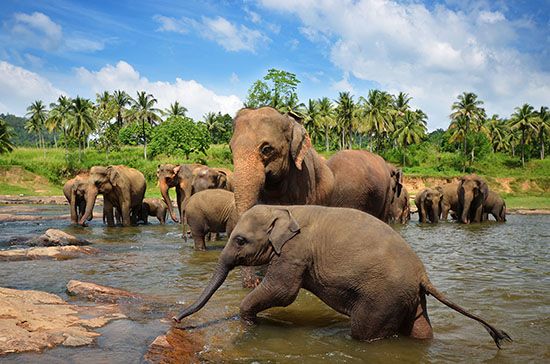
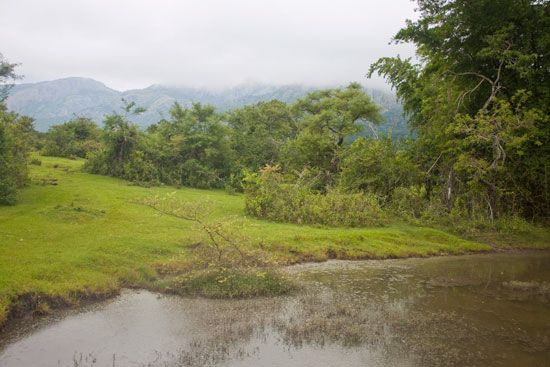
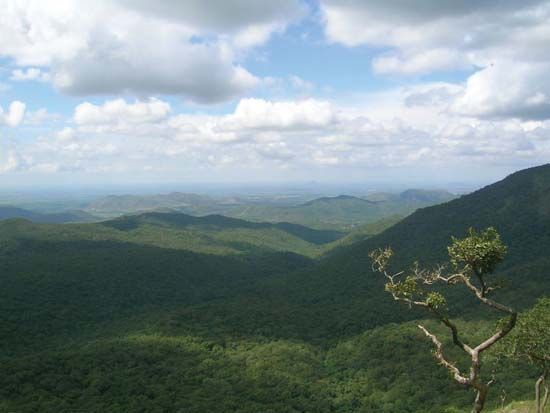
Mudumalai National Park is a significant wildlife preserve located in the western part of Tamil Nadu state in southern India. Originally established as a wildlife sanctuary in 1940, it was declared a national park in 1990 and now spans approximately 124 square miles (321 square km). In 2007, it became the core zone of the Mudumalai Tiger Reserve, serving as critical tiger habitat.12
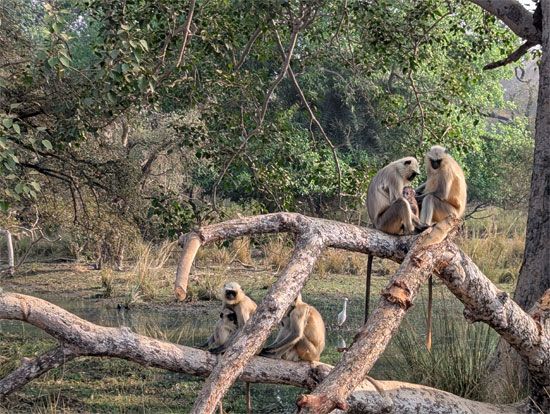
The park’s diverse topography of hills, valleys, and streams supports varied vegetation, including teak, rosewood, and bamboo. This environment provides a home for numerous species, such as elephants, gaurs, black panthers, sloth bears, and various birds like drongos and flycatchers. It is also a vital part of India’s Project Elephant conservation initiative.21
What is Project Elephant and how does it protect wildlife?
Project Elephant is a significant conservation initiative in India dedicated to the protection and management of the Asian elephant. While the provided search results detail the broader challenges facing elephants—such as poaching, habitat loss, and human-elephant conflict—they do not explicitly outline the specific administrative structure or operational history of Project Elephant itself.
However, the principles of wildlife protection in India, as demonstrated by the successful Project Tiger, rely on in situ conservation. This approach protects species within their natural habitats by designating protected areas like national parks and wildlife sanctuaries. These efforts often involve:
- Habitat Management: Restoring grasslands and managing water sources to ensure adequate resources for wildlife.3
- Mitigating Conflict: Addressing the challenges where elephants consume crops, which is a primary driver of human-elephant conflict.45
- Ecological Corridors: Creating pathways between protected preserves to allow for natural movement and genetic exchange.3
We could dive deeper into the specific threats facing Asian elephants or explore how other in situ conservation models function in India.
How do national parks differ from wildlife sanctuaries?
In India, both national parks and wildlife sanctuaries are protected areas established under the Wildlife (Protection) Act of 1972 to preserve the natural environment and its biodiversity. While they share the common goal of conservation, they differ in their legal status and management focus.8
- National Parks: These are areas set aside by the government for the preservation of the natural environment, often with a focus on protecting specific ecosystems and their associated flora and fauna in their natural state. They are generally subject to stricter regulations regarding human activity to ensure the integrity of the habitat.89
- Wildlife Sanctuaries: These areas are also designated for the protection of wildlife, but they may allow for a broader range of human activities depending on the specific management plan. As seen in the case of the Hazaribag Wildlife Sanctuary, sanctuaries can face significant challenges from external pressures like mining, construction, and poaching, which can disrupt local ecosystems.10
While some areas may be proposed for upgrading to national park status to enhance their protection, they may remain officially designated as sanctuaries if formal approval is not granted.10
What are the characteristics of a tropical deciduous forest?
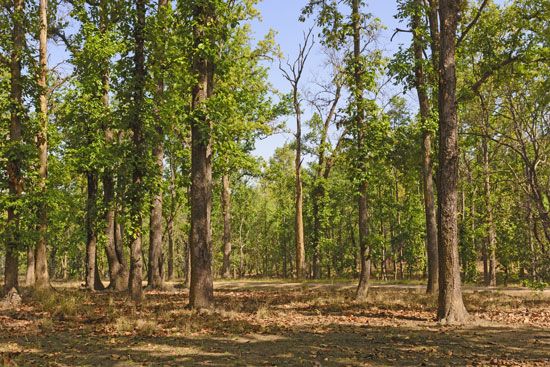
Tropical deciduous forests, often referred to as monsoon forests, are characterized by their development in tropical regions that experience alternating seasons of heavy rainfall and prolonged drought.1112
Key characteristics include:
- Seasonal Leaf Shedding: These forests are defined by their deciduous nature, with up to three-quarters of the trees losing their leaves during the dry season to conserve moisture.1213
- Climatic Requirements: They thrive in areas where annual rainfall typically ranges between 800 and 1,800 mm (about 30 to 70 inches). Unlike the perpetually wet conditions of tropical rainforests, these regions have a distinct, pronounced dry season.1213
- Lower Biodiversity: Compared to tropical rainforests, tropical deciduous forests are generally less diverse. They are often dominated by only one or two tree species, such as teak and various members of the Dipterocarpaceae family.14
- Vegetation Structure: The forests are typically composed of trees of moderate height. In some areas, they may feature dense undergrowth, such as thickets of bamboo.1513
These ecosystems are found in various parts of the world, including Southeast Asia (such as Myanmar and Thailand), northern Australia, southeastern Africa, and parts of South America like Brazil, Colombia, and Venezuela.141513
Sources
- Mudumalai National Park: Top Questions — Encyclopædia Britannica
- Mudumalai National Park — Encyclopædia Britannica
- Asian elephant — Encyclopædia Britannica
- Asian elephant: Top Questions — Encyclopædia Britannica
- Ranthambore National Park: Top Questions — Encyclopædia Britannica
- Kanha National Park — Encyclopædia Britannica
- elephant - Conservation — Encyclopædia Britannica
- Environment and sustainable development in India - Wildlife — Encyclopædia Britannica
- national park — Encyclopædia Britannica
- Hazaribag Wildlife Sanctuary — Encyclopædia Britannica
- Tropical rainforest - Flora — Encyclopædia Britannica
- monsoon forest — Merriam-Webster
- South America - Tropical deciduous forests — Encyclopædia Britannica
- Deciduous forest — Encyclopædia Britannica
- Tropical rainforest - Environment — Encyclopædia Britannica
- Deciduous forest: Top Questions — Encyclopædia Britannica
- Rainforest — Encyclopædia Britannica
Published on · 3 min read