Musandam Peninsula
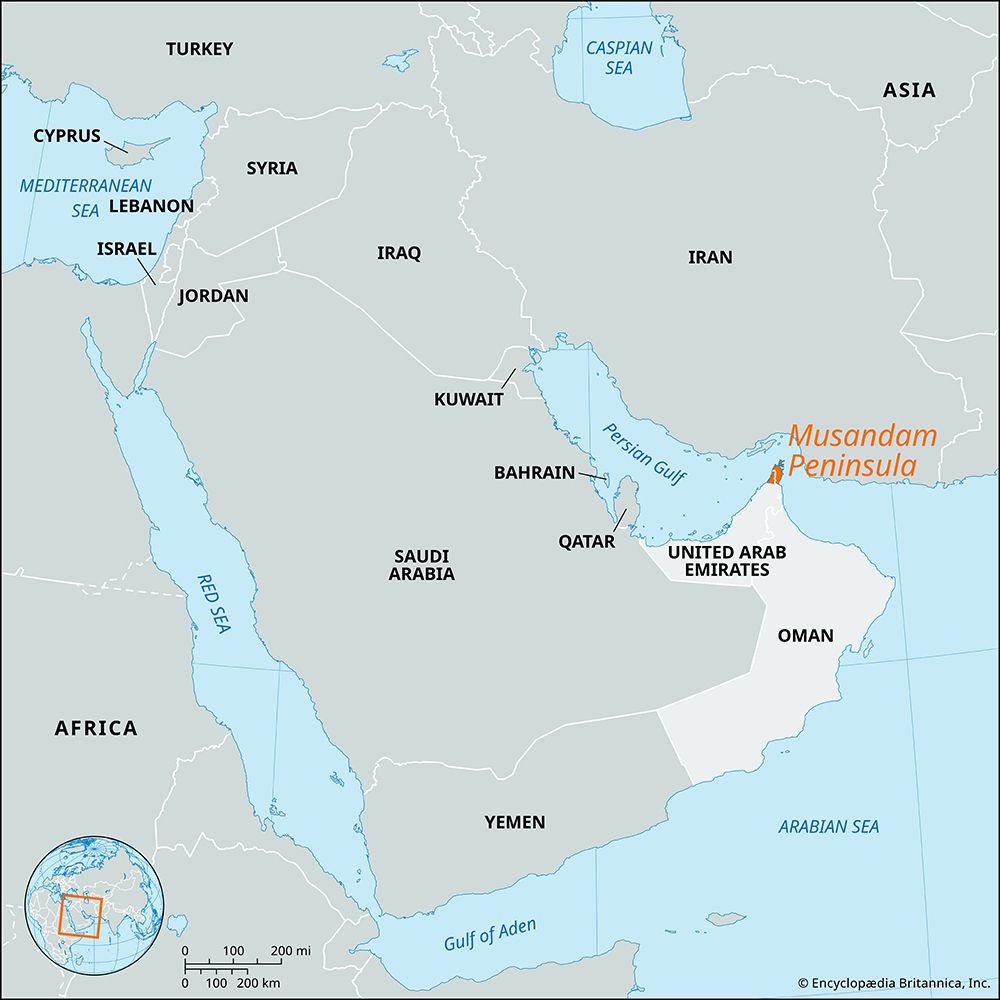
The economy of the Musandam Peninsula is primarily driven by traditional activities, supplemented by infrastructure development and natural resource…
What are the main economic activities and industries in the Musandam Peninsula?
The economy of the Musandam Peninsula is primarily driven by traditional activities, supplemented by infrastructure development and natural resource extraction.
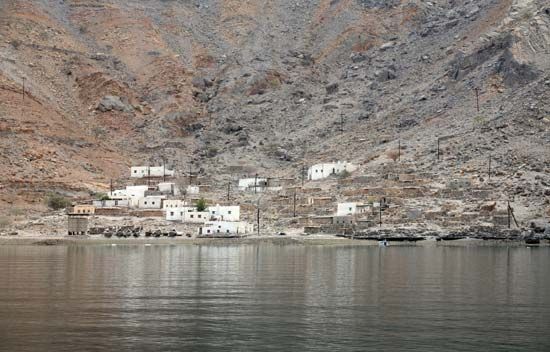
- Fishing: This is the peninsula’s main industry. The local population, primarily the Shihuh, engages in fishing and herding. The industry is supported by dedicated packing plants located in Al-Khaṣab and Bayʿah.1
- Agriculture: While the terrain is rugged, agriculture is practiced in wadi beds and on lower mountain slopes. The primary crops produced on the peninsula are dates and vegetables.1
- Petroleum: There are known reserves of petroleum located off the western coast of the peninsula.1
- Development and Infrastructure: The Sultanate of Oman has invested in the region through the Musandam Development Committee. Efforts have included the construction of fishing jetties, food storage facilities, the Khaṣab dam, and power expansion projects to support local livelihoods.1
Due to the forbidding, mountainous terrain, communication and transport on the peninsula are conducted mostly by sea.1
How does the strategic location of the Musandam Peninsula affect its importance in the region?
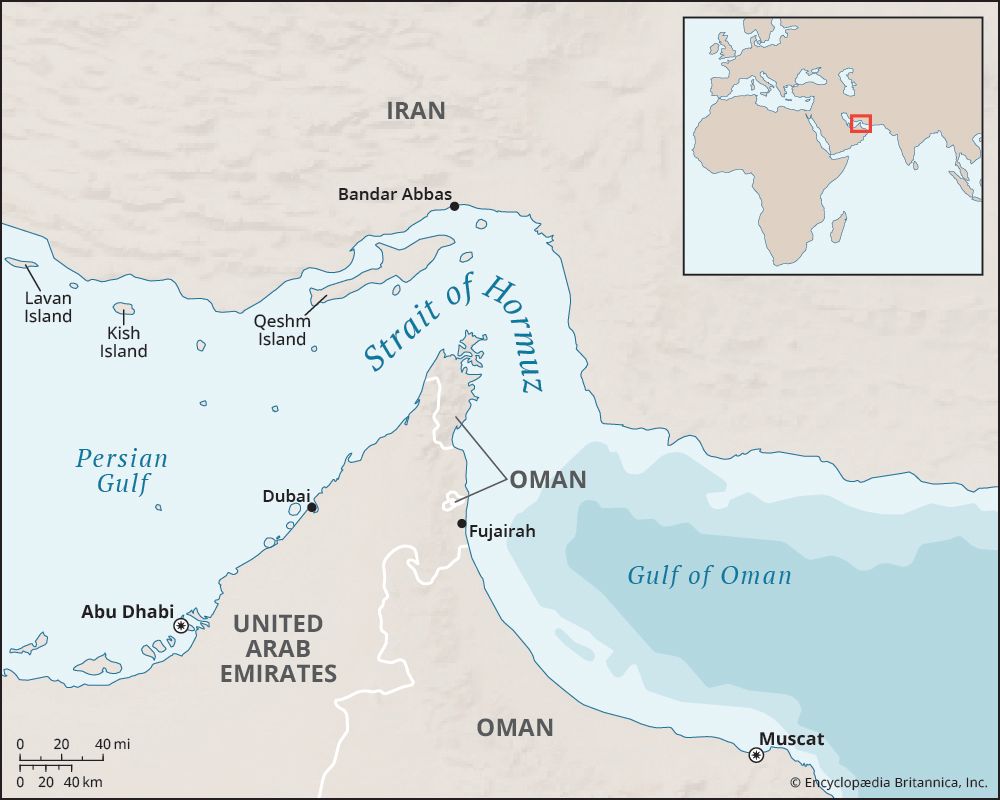
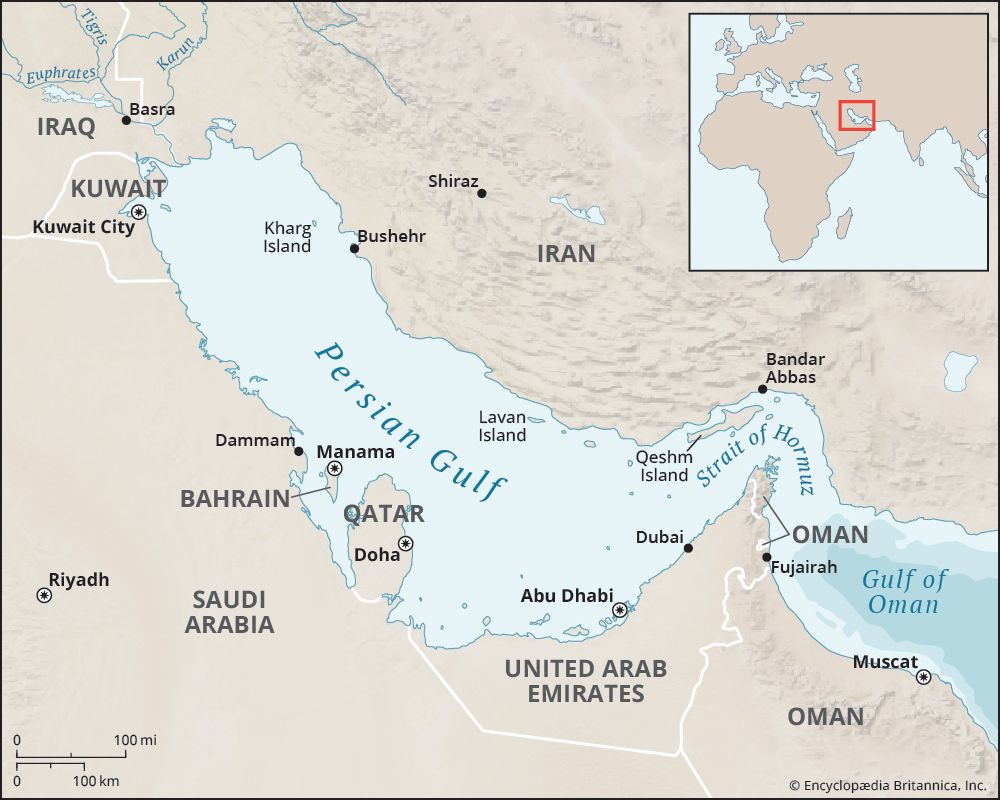
The strategic importance of the Musandam Peninsula is primarily defined by its position at the Strait of Hormuz, which serves as the essential maritime gateway to the Persian Gulf.41
This location is critical to global energy security because the strait is the world’s busiest choke point for the oil trade, with approximately 25 percent of the world’s maritime oil passing through it daily. Because there are no logistically viable land-based alternatives for the massive volume of oil exported by nations such as Saudi Arabia, Iraq, and the United Arab Emirates, the peninsula sits at the center of a vital global artery.5
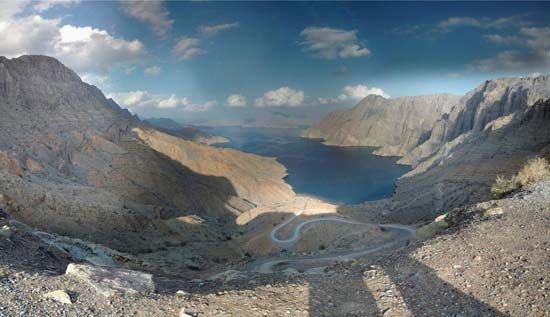
The peninsula’s geography—characterized by rugged, mountainous terrain—further emphasizes its role as a sentinel over these waters. For Oman, the northern tip of the peninsula provides the country’s only frontage on the Persian Gulf. Given the high stakes of global energy transit, the region remains a focal point of geopolitical sensitivity and strategic interest.4156
What is the climate like in the Musandam Peninsula?
The climate of the Musandam Peninsula is characterized by hot, arid conditions typical of the broader region, though it is influenced significantly by its rugged topography.
Along the coast, the climate is hot and humid, while the interior and higher elevations experience hot and dry conditions. Temperatures in coastal areas can frequently reach 110° F (43° C) during the summer months, with winters remaining mild, featuring average lows around 63° F (17° C). At higher elevations within the Ru’ūs al-Jibāl mountain range, temperatures are generally more moderate.17
Rainfall across the region is minimal, averaging only about 4 inches (100 mm) per year. However, precipitation is notably heavier in the mountains, where sporadic rains carve deep ravines into the landscape, supporting vegetation in the wadi beds and sustaining wild olive and juniper trees at higher altitudes.17
How has the Musandam Peninsula’s history been shaped by its location?
The history of the Musandam Peninsula has been profoundly shaped by its rugged geography and its critical position at the Strait of Hormuz, the gateway between the Persian Gulf and the Gulf of Oman.1
Historically, the peninsula’s forbidding, mountainous terrain—known as the Ru’ūs al-Jibāl—served as a refuge for the Shihuh people. These original inhabitants were pushed into the mountains by successive waves of invaders, including Muslim and Portuguese forces, who sought to control the strategic maritime chokepoint.19
The region’s location has long made it a prize for empire builders, as the strait serves as a vital artery for regional and global trade. While the peninsula remained relatively isolated due to its difficult landscape, which lacks cross-peninsula roads, the Sultanate of Oman has worked to integrate the area through modern development projects, such as fishing infrastructure and power expansion, particularly since the late 20th century. Today, the peninsula remains a strategically significant territory shared by Oman and the United Arab Emirates.961
Sources
- Musandam Peninsula — Encyclopædia Britannica
- Strait of Hormuz — Encyclopædia Britannica
- Oman - Settlement patterns — Encyclopædia Britannica
- How Much Oil Passes Through the Strait of Hormuz? — Encyclopædia Britannica
- Oman - Land — Encyclopædia Britannica
- Musandam Peninsula — Merriam-Webster
- Oman - Climate — Encyclopædia Britannica
- Oman - Relief — Encyclopædia Britannica
- Oman — Encyclopædia Britannica
Published on · 3 min read