Persian Gulf
The Persian Gulf’s climate and environment are characterized by extreme conditions that significantly shape the region's ecology and human development.
How does the Persian Gulf’s climate and environment affect the region?
The Persian Gulf’s climate and environment are characterized by extreme conditions that significantly shape the region’s ecology and human development.
Climate and Hydrology
The region experiences a notoriously harsh climate with high temperatures and humidity. Rainfall is sparse, occurring primarily as sharp downpours between November and April. During summer, the area is frequently affected by the shamal—a north-northwesterly wind—and dust storms.1
The gulf’s hydrology is defined by high evaporation rates that exceed freshwater inflow, leading to high salinity levels. These conditions, combined with intense heat, limit the variety of flora and fauna compared to the open Indian Ocean compared to the open Indian Ocean. Furthermore, the high temperatures and salinity promote the formation of sabkhas (coastal salt flats) and the precipitation of minerals like calcium carbonate.23
Environmental and Human Impact
The arid environment and extreme heat present ongoing challenges for the region’s rapid urbanization. High energy and water consumption, coupled with vulnerability to climate change—specifically extreme heat and rising sea levels—pose significant sustainability concerns for the Gulf Arab states.45
How has the culture and lifestyle of people living around the Persian Gulf been influenced by its geography?
The geography of the Persian Gulf has profoundly shaped the culture and lifestyle of its inhabitants, transitioning from a reliance on maritime resources to a modern, oil-driven economy.
Historical Foundations
Before the 20th-century discovery of oil, the region’s arid landscape and limited agricultural potential restricted most populations to coastal settlements. Life centered on the sea, with communities thriving through fishing, pearling, and maritime trade using traditional dhows. Inland, the environment supported only small populations engaged in nomadic herding and date growing.24
Urban Transformation
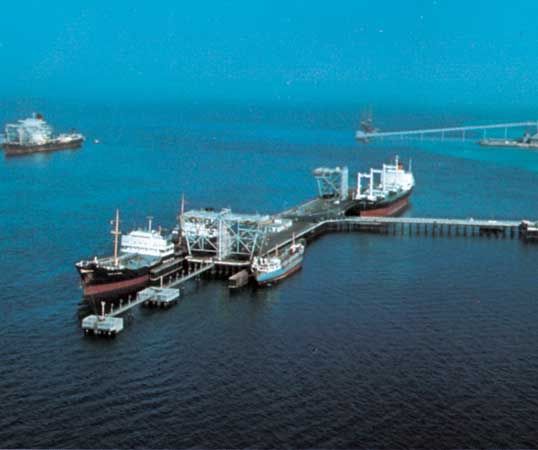
The discovery of vast hydrocarbon reserves transformed these modest maritime societies into high-income, urbanized states. Oil wealth financed the rapid development of modern metropolises like Dubai, Doha, and Kuwait City. These cities evolved from compact, traditional port towns into global hubs, characterized by iconic architecture and expansive infrastructure.78
Social and Cultural Dynamics
- Demographics: The region is marked by a unique demographic structure, with many states hosting large expatriate workforces that support construction, retail, and professional sectors alongside smaller citizen populations.7
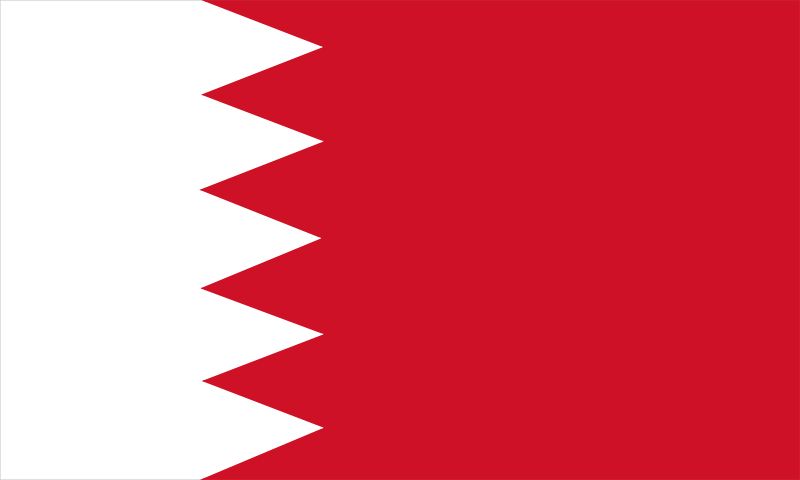
- Cosmopolitanism: Geography has influenced social openness; for instance, Bahrain’s island location historically facilitated greater exposure to outside influences, fostering a more cosmopolitan and moderate social environment compared to more insular neighbors.9
- Governance: The “rentier state” framework, where governments derive revenue from oil exports rather than domestic taxation, has shaped the political relationship between ruling families and citizens, with the state acting as the primary provider of welfare and employment.7
What is the Persian Gulf and where is it located?
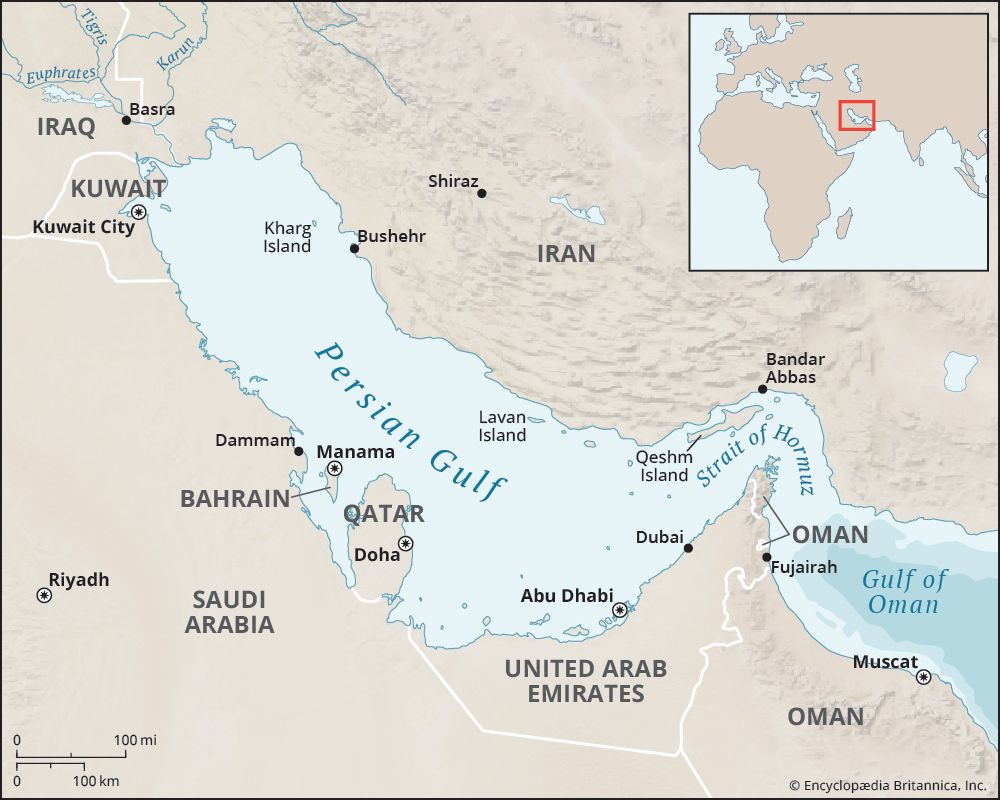
The Persian Gulf is a shallow marginal sea of the Indian Ocean located in the Middle East. It lies between Iran to the northeast and the Arabian Peninsula to the southwest.126
The gulf covers approximately 93,000 square miles (241,000 square km) and extends about 615 miles (990 km) in length. Its width varies significantly, reaching a maximum of about 210 miles (340 km) and narrowing to 35 miles (55 km) at the Strait of Hormuz, which serves as its only outlet to the Gulf of Oman and the Arabian Sea.126
Bordering nations include Iran to the north and east; Oman and the United Arab Emirates to the southeast and south; Qatar, Bahrain, and Saudi Arabia to the southwest and west; and Kuwait and Iraq to the northwest. While historically and internationally known as the Persian Gulf, it is also referred to by some as the Arabian Gulf.61314
What is the significance of the Strait of Hormuz in relation to the Persian Gulf?
The Strait of Hormuz is the only maritime gateway linking the Persian Gulf to the Gulf of Oman and the Arabian Sea, making it one of the most critical oil chokepoints in the global economy.1516
Economic Significance
The strait is a vital artery for global energy markets, as approximately 25 percent of the world’s maritime petroleum trade passes through it daily. It serves as the primary export route for major producers, including Iran, Iraq, Kuwait, Qatar, Saudi Arabia, and the United Arab Emirates. Because there are no logistically viable land-based alternatives for the massive volumes exported by sea, any disruption in the strait—such as those experienced during the 2026 Iran war—can cause immediate global supply shortages and price surges for energy and other critical commodities.1716
Strategic and Legal Context
Governed by international maritime law and the United Nations Convention on the Law of the Sea, the strait is controlled by Iran to the north and Oman to the south. While the U.S. Navy has historically played a role in guaranteeing safe passage, the strait remains a site of significant geopolitical tension, where the threat of closure or interference serves as a powerful tool of asymmetric leverage.16
Sources
- Persian Gulf - Hydrology — Encyclopædia Britannica
- Persian Gulf - Biological and mineral resources — Encyclopædia Britannica
- Persian Gulf - Climate — Encyclopædia Britannica
- Gulf Arab States — Encyclopædia Britannica
- Gulf Arab States: Top Questions — Encyclopædia Britannica
- Persian Gulf - Physiography — Encyclopædia Britannica
- Bahrain - Cultural life — Encyclopædia Britannica
- Why Is It Called the Persian Gulf? — Encyclopædia Britannica
- Arabia - Economy of Arabia — Encyclopædia Britannica
- Gulf of Oman — Encyclopædia Britannica
- Kuwait - Settlement patterns — Encyclopædia Britannica
- Persian Gulf: Top Questions — Encyclopædia Britannica
- Persian Gulf — Encyclopædia Britannica
- Persian Gulf — Merriam-Webster
- Strait of Hormuz: Top Questions — Encyclopædia Britannica
- How Much Oil Passes Through the Strait of Hormuz? — Encyclopædia Britannica
- Strait of Hormuz — Encyclopædia Britannica
Published on · 4 min read