Gulf of Oman
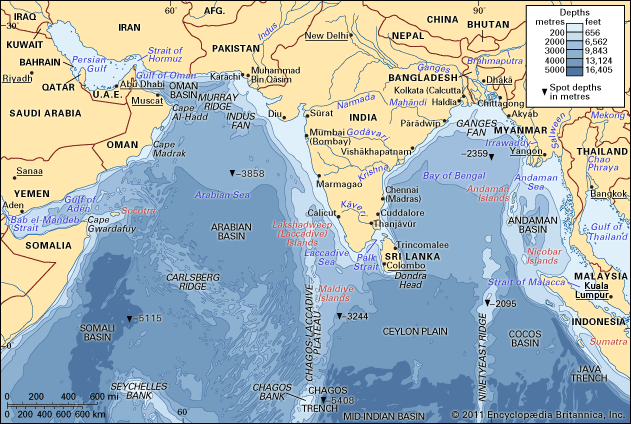
The Gulf of Oman is a vital maritime corridor connecting the Arabian Sea to the Persian Gulf via the Strait of Hormuz. It is bordered primarily by Oman to…
What are the major countries and ports bordering the Gulf of Oman?
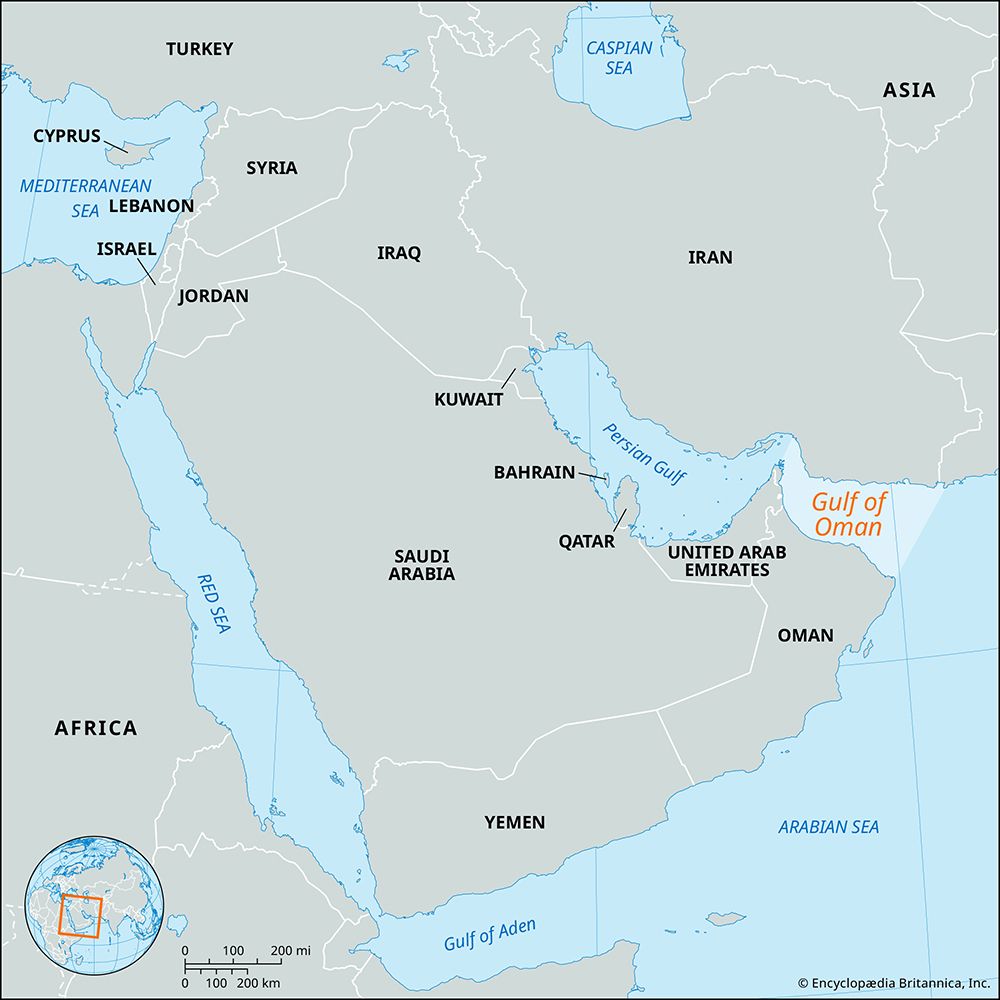
The Gulf of Oman is a vital maritime corridor connecting the Arabian Sea to the Persian Gulf via the Strait of Hormuz. It is bordered primarily by Oman to the southwest and Iran to the north.1
Key ports located along these coastlines include:
- In Oman: Muscat, Ṣuḥār, al-Khābūrah, and Ṣūr.1
- In Iran: Jāsk and Bandar Beheshtī (formerly Chāh Bahār).1
The gulf serves as a critical shipping route for the global oil trade, making the security of these waters a matter of international importance. While the region has faced geopolitical tensions, such as those involving the Strait of Hormuz, the maintenance of safe passage remains essential for global economic stability.12
What is the historical significance of the Gulf of Oman in maritime trade?
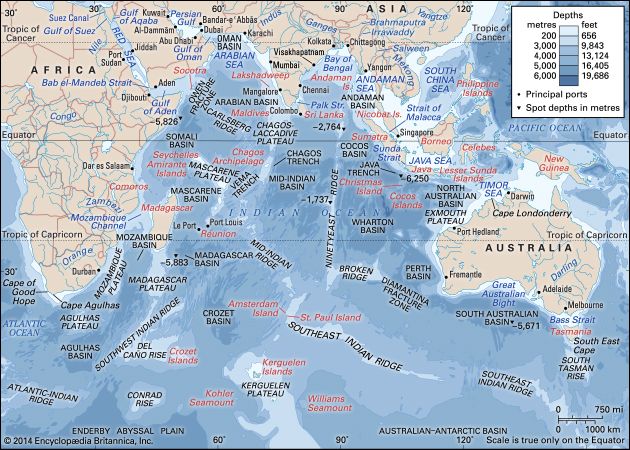
The Gulf of Oman has served as a pivotal maritime corridor for centuries, functioning as the essential gateway between the Arabian Sea, the Indian Ocean, and the Persian Gulf.1
Historical Maritime Significance
Oman’s history is deeply rooted in its maritime tradition. By the 18th century, the Āl Bū Saʿīd dynasty established a Muscat-based sultanate that emerged as a preeminent power in the Indian Ocean. Omani influence extended far beyond the gulf, with the Yaʿrubid dynasty previously expanding its reach to East Africa and the Indian coast, challenging European dominance in the region.45672
From the 9th to the 15th centuries, Omani pilots authored detailed rahmangs (books of routes), which provided critical navigational instructions for trade networks connecting the Arabian Peninsula to India, Malaysia, and China. These routes facilitated the exchange of goods such as frankincense, coffee, and dates.862
Contemporary Importance
Today, the gulf is primarily recognized as a vital shipping route for global energy markets. As the only entrance to the oil-rich Persian Gulf, it remains a critical chokepoint for oil and liquefied natural gas exports, necessitating international cooperation to ensure maritime security.19
What is the strategic importance of the Gulf of Oman in terms of international trade and oil transportation?
The Gulf of Oman holds immense strategic importance as the sole maritime gateway connecting the Arabian Sea and the Indian Ocean to the Persian Gulf. Its primary significance lies in its role as a critical shipping route for the global energy trade, as it provides the only access to the oil-producing nations of the Persian Gulf.110
Strategic Role in Oil Transportation
The gulf serves as the transit point for the Strait of Hormuz, which handles over 20 percent of global oil and liquefied natural gas exports.10 Because the volume of petroleum exported from countries like Iran, Iraq, Kuwait, Qatar, and the United Arab Emirates is so vast, land-based alternatives are logistically unviable. While the UAE can divert a portion of its exports through the Fujairah pipeline directly to the Gulf of Oman, the region remains a vital chokepoint for the global economy.310
International Security
Due to the low elasticity of oil prices, any disruption in this corridor—such as those experienced during the 2026 Iran war—has profound, immediate impacts on global commodity prices and energy security. Consequently, major global powers maintain a joint interest in the security of these waters to ensure the uninterrupted flow of trade.3101
What role does the Gulf of Oman play in regional geopolitics and security?
The Gulf of Oman is a critical geopolitical and security nexus, primarily because it serves as the essential maritime gateway between the Arabian Sea and the Persian Gulf.1
Geopolitical and Strategic Importance
The gulf’s strategic value is inseparable from the Strait of Hormuz, the narrow channel through which over 20 percent of the world’s oil and liquefied natural gas exports must pass. Because this region is the primary transit route for energy exports from Iran, Iraq, Kuwait, Qatar, and the United Arab Emirates, it is a focal point for global energy security.101
Security Dynamics
The region is frequently defined by tensions between regional powers and international actors:
- Asymmetric Leverage: During the 2026 Iran war, Iran demonstrated its ability to disrupt global markets by threatening and attacking vessels, leading to massive drops in traffic and surges in commodity prices.10
- Territorial Control: While shipping lanes are governed by the United Nations Convention on the Law of the Sea, control is contested. Most lanes pass through Oman’s territorial waters, yet Iran has attempted to enforce its own transit protocols and tolls via the Persian Gulf Strait Authority (PGSA).102
- International Presence: Major powers, including the United States, maintain a significant naval presence to guarantee the freedom of navigation, often leading to standoffs with Iranian forces.10
Sources
- Gulf of Oman — Encyclopædia Britannica
- Oman: Top Questions — Encyclopædia Britannica
- Oman - Trade of Oman — Encyclopædia Britannica
- Strait of Hormuz: Top Questions — Encyclopædia Britannica
- Oman - The early period — Encyclopædia Britannica
- Oman — Encyclopædia Britannica
- Arabian Sea - Study and exploration — Encyclopædia Britannica
- Oman - Portuguese and Persian invasions — Encyclopædia Britannica
- history of Arabia - Omani expansion — Encyclopædia Britannica
- Strait of Hormuz — Encyclopædia Britannica
- How Much Oil Passes Through the Strait of Hormuz? — Encyclopædia Britannica
Published on · 3 min read