Mycoheterotroph
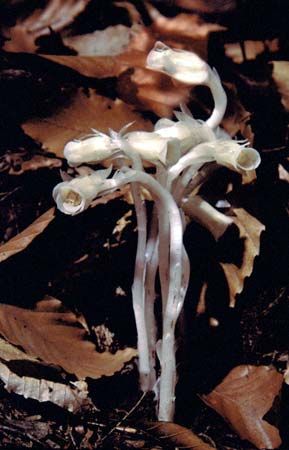
A mycoheterotroph is a plant that obtains some or all of its nutrition by extracting carbon-based nutrients from fungal networks rather than relying solely…
What is mycoheterotroph?
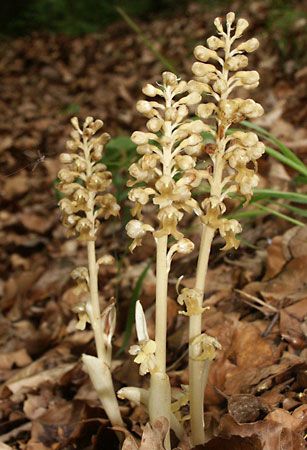
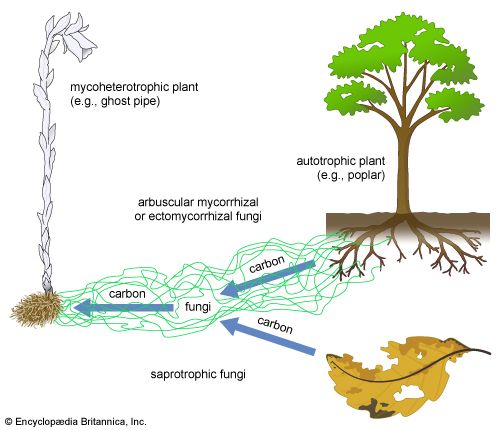
A mycoheterotroph is a plant that obtains some or all of its nutrition by extracting carbon-based nutrients from fungal networks rather than relying solely on photosynthesis.
These plants form a nonreciprocal, one-sided relationship with fungi. While most plants engage in mycorrhizal symbiosis—a mutualistic exchange where plants provide carbohydrates to fungi in return for soil nutrients—mycoheterotrophs act as a “sink,” leaching these carbohydrates from the fungi without providing benefits in return. Because they often steal nutrients originally sourced from other photosynthetic plants, this interaction is sometimes termed “epiparasitism.”
Mycoheterotrophs are categorized by their level of dependence:
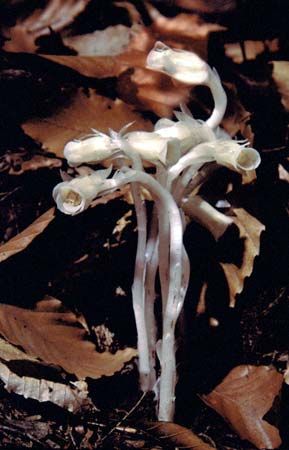
- Full (obligate) mycoheterotrophs: These plants have lost the ability to photosynthesize and depend entirely on fungi for survival. They often lack chlorophyll and may appear white, purple, or brown.
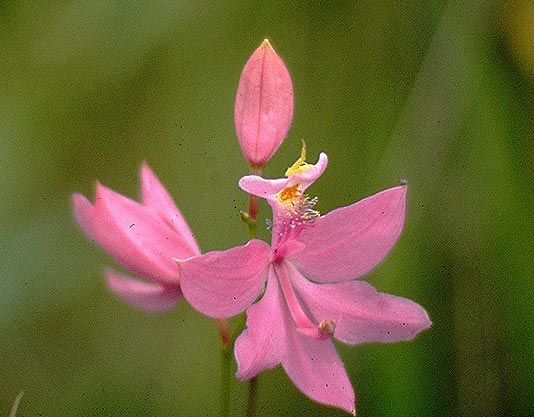
- Partial mycoheterotrophs (mixotrophs): These plants can both photosynthesize and utilize fungal nutrients, often switching strategies based on environmental needs. Many orchids are partial mycoheterotrophs during their early development.
How do orchids rely on fungi during their early development?
All orchid species rely on fungi during the initial stages of their development because their seeds are extremely small and lack the endosperm necessary to fuel germination on their own.21
To survive, these seeds must be colonized by specific fungi, which penetrate the seed and supply the essential nutrients required for the seedling to sprout and grow. During this early phase, the young orchid develops a tuber-shaped body known as a protocorm, which is associated with these mycorrhizal fungi.23
Because the orchid extracts carbon-based nutrients from the fungal network without providing a reciprocal benefit during this stage, it is classified as an “initial mycoheterotroph”. While most orchid species eventually transition to autotrophy as they mature and begin to photosynthesize, at least 210 species remain fully mycoheterotrophic throughout their entire life cycle. In some cases, orchids may even derive their nutrition directly from saprotrophic fungi that feed on decaying organic matter.1
What is the difference between a mycoheterotroph and a parasite?
While both mycoheterotrophs and parasitic plants obtain nutrients from other organisms, they are distinct in their biological mechanisms and relationships with their hosts.
Key Differences
- Host Interaction: A parasitic plant obtains nutrients directly from another plant (the host) and often causes significant damage to it. In contrast, a mycoheterotroph relies on a fungal network. While they “leach” carbohydrates from these fungi, it is not clearly established that they harm the fungi; some evidence suggests they may even stimulate fungal growth.51
- Specialized Organs: The defining structural feature of a parasitic plant is the haustorium, a specialized organ that penetrates the host to create a direct vascular union. Mycoheterotrophs lack haustoria.5
- Nutritional Source: Parasitic plants feed directly on a host plant. Mycoheterotrophs typically act as a “sink” in a tripartite relationship, drawing carbon that the fungus originally obtained from an autotrophic plant. Because of this, some experts refer to mycoheterotrophy as “epiparasitism” rather than true parasitism.51
While both groups may lack chlorophyll and photosynthetic capacity, their evolutionary paths and methods of nutrient acquisition remain fundamentally different.15
Why do some mycoheterotrophic plants lack chlorophyll?
Some mycoheterotrophic plants lack chlorophyll because they have evolved to become fully dependent on fungal networks for their entire nutritional intake, rendering the pigment unnecessary.1
Chlorophyll is the essential pigment used by plants to capture light energy for photosynthesis, a process that converts light, water, and carbon dioxide into carbohydrates. For plants that have transitioned to an obligate (full) mycoheterotrophic lifestyle, the ability to photosynthesize has been lost over time through the gradual loss of genes and the reprogramming of their metabolism.581
Because these plants derive all their carbon-based nutrients by leaching them from fungal partners, they no longer require the machinery for light absorption. Consequently, they often lack the green coloration associated with chlorophyll, instead exhibiting hues such as white, crimson, purple, or brown. This evolutionary shift allows these species to thrive in environments where sunlight is restricted, such as deep within forest habitats.11
Sources
- mycoheterotroph — Encyclopædia Britannica
- orchid - Seeds — Encyclopædia Britannica
- protocorm — Merriam-Webster
- protocorm theory — Merriam-Webster
- mycoheterotroph: Top Questions — Encyclopædia Britannica
- parasitic plant — Encyclopædia Britannica
- biparasitic — Merriam-Webster
- cell - Trapping of light — Encyclopædia Britannica
- photosynthesis - Energy efficiency of photosynthesis — Encyclopædia Britannica
Published on · 3 min read