Neritic Zone
The neritic zone is a shallow marine environment that extends from the mean low water mark to a depth of 200 meters (660 feet), generally corresponding to…
What is neritic zone?
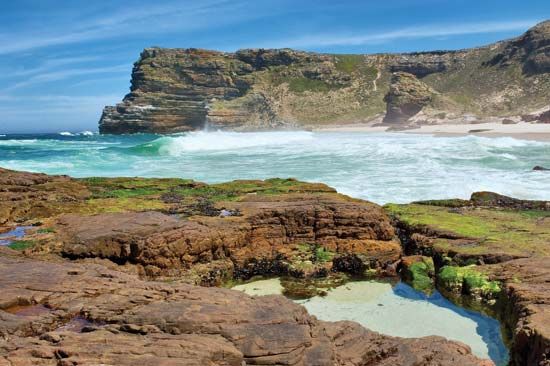
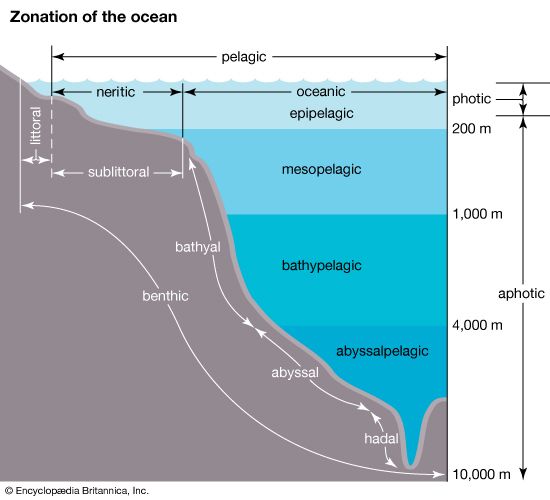
The neritic zone is a shallow marine environment that extends from the mean low water mark to a depth of 200 meters (660 feet), generally corresponding to the continental shelf.1
Because of its proximity to land, this zone is characterized by relatively abundant nutrients and high biological activity. The water is penetrated by varying amounts of sunlight, which supports photosynthesis by both planktonic and bottom-dwelling organisms. While the bottom sediments are typically composed of coarse, land-derived materials, some low-latitude regions feature sediments rich in calcium carbonate produced by organisms such as corals, bacteria, and algae.1
The term, introduced by Ernst Haeckel in 1891, distinguishes the coastal flora and fauna from those found in the open ocean. It represents a vital, nutrient-rich portion of the broader pelagic zone.23
What is the continental shelf?
A continental shelf is a broad, relatively shallow submarine terrace of continental crust that forms the submerged edge of a continental landmass. These shelves typically extend from the coast to depths of 100–200 metres (330–660 feet) and are gently inclined seaward at an average slope of about 0.1°.45
Key characteristics of the continental shelf include:
- Structure: Most shelves terminate at a seaward edge known as the shelf break, where the seafloor drops off into the much steeper continental slope.5
- Geography: Shelves make up approximately 8 percent of the total ocean area. Their width varies significantly; they are generally narrow off mountainous coasts and broad offshore from plains, with the world’s largest shelf extending 1,500 km from the Siberian coast.45
- Composition: Surfaces are typically covered with sand, silts, and mud. The specific sediment type is determined by the interplay of tectonic settings, riverine input, and wave energy.56
- Legal Definition: In international law, the term is used to define the seabed area over which a coastal state has exclusive rights to resources, such as oil and gas, extending up to 200 nautical miles from shore or to the outer edge of the continental margin.7
How does photosynthesis occur in the ocean?
Photosynthesis in the ocean is the process by which phytoplankton and benthic algae transform solar energy into chemical energy, utilizing carbon dioxide and other available nutrients. This process is responsible for the vast majority of primary production in marine environments, with phytoplankton accounting for approximately 98 percent of the total, while bottom-dwelling algae contribute the remaining 2 percent.11
The Role of Light and Depth
Photosynthesis is restricted to the photic zone, specifically the upper layer known as the euphotic zone, where light penetration is sufficient to fuel the process. While light intensity decreases with depth due to absorption and scattering, the most optimal photosynthesis for phytoplankton typically occurs between 5 and 10 metres below the surface. In deeper, poorly illuminated regions known as the disphotic zone, light levels are so low that the rate of respiration exceeds that of photosynthesis.711
Environmental Factors
The efficiency of marine photosynthesis is heavily influenced by:
- Nutrient Availability: Areas with high nutrient levels, often supported by ocean currents that bring up deep-water nutrients, are highly productive.11
- Water Clarity: Factors such as turbidity, cloud cover, and the presence of suspended particles affect how deeply light can penetrate to support photosynthetic organisms.71
- Geographic Location: The neritic zone, located above the continental shelf, is particularly productive due to its proximity to land and the resulting influx of nutrients from riverine runoff.712
What are the differences between phytoplankton and zooplankton?
Plankton are primarily microscopic organisms that drift with ocean currents, and they are broadly categorized based on their role in the food web and their biological characteristics.13
Key Differences
- Functional Role: Phytoplankton are the producers of the marine community, utilizing photosynthesis to convert solar energy into chemical energy. In contrast, zooplankton are heterotrophic consumers that feed on phytoplankton, other zooplankton, or organic matter.13
- Biological Classification: Phytoplankton are generally plants or plantlike protists, such as diatoms and dinoflagellates. Zooplankton are animals or animal-like protists, ranging from single-celled organisms like radiolarians to complex larvae of crabs, lobsters, and fish.arians](https://www.britannica.com/science/radiolarian) to complex larvae of crabs, lobsters, and fish.13
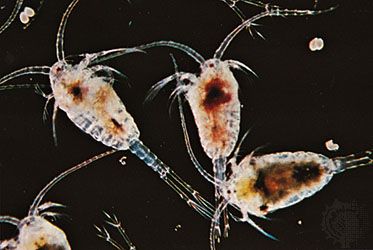
- Life Cycle: Zooplankton are further divided into holoplankton, which remain planktonic their entire lives (e.g., copepods), and meroplankton, which spend only their larval or juvenile stages as plankton before transitioning to adult habitats.1413
While this division is a convenient way to understand marine ecosystems, it is not absolute; many planktonic organisms are better described as protists, and some species exhibit both photosynthetic and predatory behaviors.1513
Sources
- neritic zone — Encyclopædia Britannica
- neritic — Merriam-Webster
- pelagic zone — Encyclopædia Britannica
- continental shelf — Encyclopædia Britannica
- continental shelf - Origin — Encyclopædia Britannica
- Law of the Sea — Encyclopædia Britannica
- Marine ecosystem - Geography, oceanography, and topography — Encyclopædia Britannica
- continental slope — Encyclopædia Britannica
- continental margin — Encyclopædia Britannica
- continental shelf - Structure — Encyclopædia Britannica
- plankton - Plankton and biological productivity — Encyclopædia Britannica
- seawater - Optical properties — Encyclopædia Britannica
- zooplankton — Encyclopædia Britannica
- plankton - Phytoplankton — Encyclopædia Britannica
- Marine ecosystem - Plankton — Encyclopædia Britannica
Published on · 3 min read