National Forest
In the United States, a national forest is a federally managed area designated for the conservation of resources such as timber, water, wildlife, and fish…
What is the definition of a national forest, and how does it differ from a national park?
In the United States, a national forest is a federally managed area designated for the conservation of resources such as timber, water, wildlife, and fish, while also providing public recreation. These lands are administered by the U.S. Forest Service under a “multiple-use” mandate, which balances resource extraction and utilization with long-term sustainability.12
In contrast, a national park is set aside primarily for the preservation of the natural environment, often focusing on protecting landscapes, wildlife, and areas of scientific or historical interest in their natural state. While national forests allow for managed resource use, national parks generally emphasize protection and limited human impact to ensure the environment remains undisturbed for public enjoyment and conservation. Furthermore, national parks are administered by the National Park Service, whereas national forests fall under the Department of Agriculture.31
What are some of the most notable national forests in the United States, and what makes them unique?
The United States manages 154 national forests, each serving as a vital resource for conservation, recreation, and ecosystem health. Several stand out due to their unique ecological features and historical significance:14
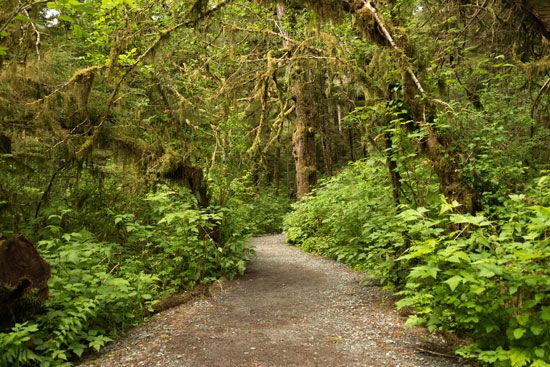
- Tongass National Forest: Located in southeastern Alaska, this is the largest publicly owned forest in the United States. It is renowned for containing some of the most extensive intact remnants of virgin temperate rainforest in North America, characterized by rugged fjords, tidewater glaciers, and a diverse array of wildlife, including brown and black bears.5
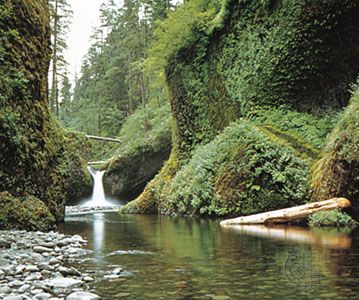
- Mount Hood National Forest: Situated in Oregon, this forest is defined by its mountainous terrain and the iconic Mount Hood, the state’s highest point. It is a hub for outdoor activities like skiing and mountaineering and features significant landmarks such as the historic Timberline Lodge and portions of the Oregon Trail.6
- White Mountain National Forest: Spanning parts of New Hampshire and Maine, this forest encompasses the highest elevations in the northeastern United States. It is famous for its “notches”—passes carved by ancient glaciers—and the Presidential Range, which includes Mount Washington.3
These forests are managed by the U.S. Forest Service under a “multiple-use” mandate, ensuring they provide timber, water, and wildlife habitats while remaining accessible for public enjoyment.14
How are national forests managed, and which government agency is responsible for their oversight?
National forests in the United States are managed by the U.S. Forest Service (USFS), a federal agency operating under the U.S. Department of Agriculture.31
Management Approach
The USFS oversees these lands under a “multiple-use” mandate, established by the Multiple-Use Sustained-Yield Act of 1960. This policy requires the agency to balance various interests, including timber production, water conservation, wildlife habitat, and public recreation, ensuring that resources are utilized without compromising the land’s long-term productivity. Current management practices prioritize ecological sustainability, which guides activities such as timber harvesting and the use of prescribed burns to maintain ecosystem health.31
Agency Structure
The USFS is headquartered in Washington, D.C., and is led by a chief who reports to the under secretary for natural resources and environment. The agency’s operations are decentralized into nine regions, with approximately 600 ranger districts providing day-to-day management on the ground. In addition to managing the National Forest System, the agency conducts extensive forestry research and provides support to state, private, and tribal landowners.3
How do national forests contribute to conservation efforts and biodiversity preservation?
National forests play a critical role in conservation and the preservation of biodiversity by serving as protected environments for diverse flora, fauna, and ecosystems.3 Managed by the U.S. Forest Service, these lands are overseen with a focus on ecological sustainability, ensuring that natural resources are stewarded for the long term.3
Biodiversity and Ecosystem Services
National forests act as essential carbon sinks, sequestering carbon in biomass and soils through photosynthesis. By preserving these areas, the agency helps mitigate climate change and protects the natural habitats required for wildlife survival. The management approach, guided by the Multiple-Use Sustained-Yield Act of 1960, requires the agency to balance conservation with other uses, ensuring that the land’s capacity to support life is not diminished.137
Conservation Practices
- Fire Ecology: While early policies focused on total fire suppression, modern management incorporates prescribed burns to maintain ecosystem health and reduce the risk of catastrophic wildfires.3
- Research and Stewardship: The USFS is the world’s largest forestry research organization, using scientific data to inform land management, protect against deforestation, and prevent soil erosion.3
- Collaborative Efforts: The agency supports state, private, and tribal landowners in their own conservation efforts, extending the impact of stewardship beyond federal boundaries.3
Sources
- national forest — Encyclopædia Britannica
- national park — Encyclopædia Britannica
- U.S. Forest Service — Encyclopædia Britannica
- Mount Hood National Forest — Encyclopædia Britannica
- Tongass National Forest — Encyclopædia Britannica
- White Mountains — Encyclopædia Britannica
- forestry - Development of U.S. policies — Encyclopædia Britannica
- Carbon sequestration — Encyclopædia Britannica
Published on · 3 min read