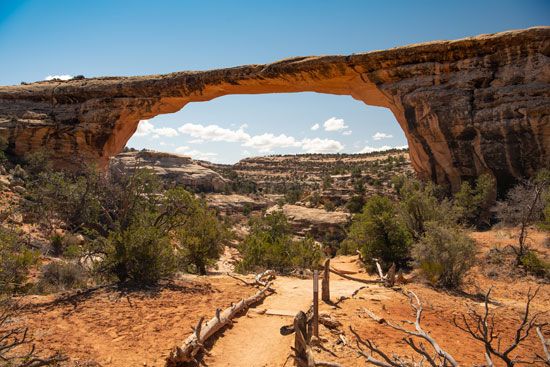
Natural Bridges National Monument
Natural Bridges National Monument was established in 1908 in southeastern Utah.
When was Natural Bridges National Monument established, and why was it chosen for preservation?
Natural Bridges National Monument was established in 1908 in southeastern Utah.1
The site was chosen for preservation primarily to protect its three spectacular natural sandstone bridges, which were carved by winding streams on the western slopes of Elk Ridge. These formations are significant examples of erosion processes that create arch-like structures in massive, horizontally bedded sandstone.12
Beyond its geological significance, the area is also preserved for its cultural heritage. The monument contains numerous Native American ruins and features ancient pictographs on the abutments of the Kachina bridge, which were created by early Ancestral Pueblo cliff dwellers.1
How does Natural Bridges National Monument compare to other natural bridge formations in the United States?
Natural Bridges National Monument in Utah is distinguished by its specific formation process compared to other natural bridges in the United States. While many natural bridges—such as the famous Natural Bridge in Virginia—are created by the collapse of a cavern roof, the bridges at the monument were formed by the erosive action of winding streams cutting through meander necks in sandstone.13
This method of formation, involving rivers eroding through narrow loops of rock, is distinct from other geological processes that produce similar features, such as:
- Exfoliation and Wind Erosion: Some arches are produced by the peeling away of rock layers and are subsequently enlarged by wind.3
- Coastal Erosion: Sea arches are formed by wave action cutting through headlands, a process entirely different from the stream-based erosion seen in the high-desert environment of the Colorado Plateau.13
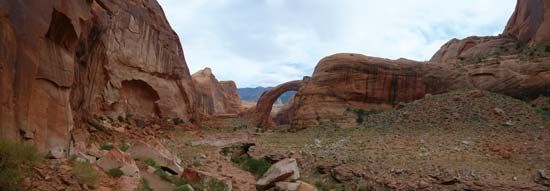
The monument remains a premier example of stream-carved sandstone bridges, standing alongside other notable sites like Rainbow Bridge National Monument in Utah, which share similar geological origins.3
How were the natural bridges in the monument formed?
The natural bridges within Natural Bridges National Monument were formed through the erosive power of winding streams on the western slopes of Elk Ridge, located on the Colorado Plateau.1
These formations are the result of entrenched rivers that developed extreme, looping bends known as meanders. Over time, these streams eroded through the narrow “necks” of rock separating opposite sides of a meandering loop. This process eventually created a cutoff, leaving behind the arch-like structures that stand today as natural bridges. Unlike some other natural bridges that are created by the collapse of a cavern roof, these specific bridges are defined by this stream-based erosive action within massive, horizontally bedded sandstone.53
What is the cultural significance of Natural Bridges National Monument to Native American tribes?
Natural Bridges National Monument holds significant historical and cultural value due to its connection to the Ancestral Pueblo (Anasazi) people. The area contains numerous ruins, and the abutments of the Kachina bridge feature pictographs created by these early cliff dwellers, serving as a testament to their long-standing presence in the region.1
While the provided information highlights the archaeological legacy of the Ancestral Pueblo at this specific site, it is important to recognize that many natural bridges in the American Southwest, such as the nearby Rainbow Bridge, are regarded as sacred religious sites by various Native American tribes. These landscapes are deeply integrated into the cultural and spiritual heritage of the region’s Indigenous peoples, representing a profound connection between the land and their ancestral history.18
We could dive deeper into the history of the Ancestral Pueblo culture or explore the significance of other sacred sites in the Colorado Plateau region.
Sources
- Natural Bridges National Monument — Encyclopædia Britannica
- Natural Bridges National Monument — Merriam-Webster
- natural bridge — Encyclopædia Britannica
- arch bridge - Form and mechanics — Encyclopædia Britannica
- Rocky Mountains - Physiography — Encyclopædia Britannica
- Natural Bridge — Encyclopædia Britannica
- meander — Encyclopædia Britannica
- Rainbow Bridge National Monument — Encyclopædia Britannica
Published on · 3 min read