Nectarine
Sorry, the Britannica knowledge base does not contain this information. While the provided text details the nectarine (Prunus persica) as a genetic variant…
How long does it take for a nectarine tree to bear fruit?
Sorry, the Britannica knowledge base does not contain this information. While the provided text details the nectarine (Prunus persica) as a genetic variant of the peach and outlines its physical characteristics and cultivation requirements, it does not specify the number of years required for a tree to begin bearing fruit.
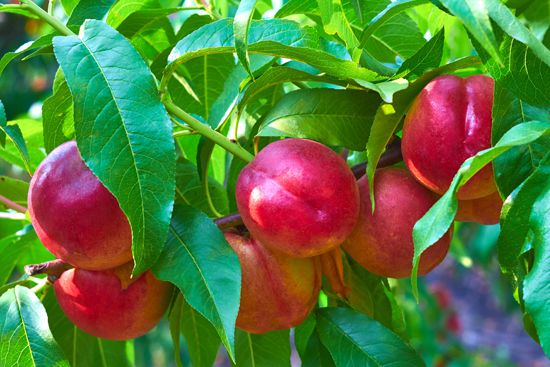
What are the nutritional benefits of eating nectarines?
Nectarines are a nutritious fruit choice, primarily recognized as a good source of vitamin A and vitamin C.1
As a genetic variant of the common peach, nectarines share many of the same nutritional profiles as their fuzzy counterparts. Specifically, yellow-fleshed varieties of this fruit family are noted for being especially rich in vitamin A. These vitamins play essential roles in maintaining overall health, supporting immune function, and promoting skin and eye health.2
Nectarines are versatile in the diet and are commonly enjoyed fresh or incorporated into various culinary preparations, such as cooked conserves, jams, and pies.1
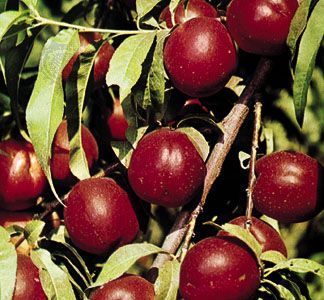
How do nectarines differ from peaches in terms of appearance and taste?
Nectarines and peaches are both members of the species Prunus persica, and they are genetically very similar; in fact, nectarines are essentially a genetic variant of the common peach.12
Appearance
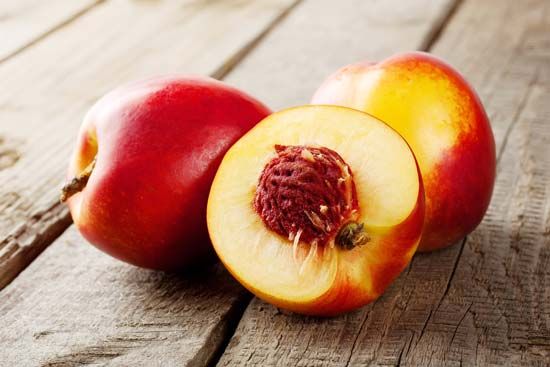
The primary physical difference between the two is the skin texture. While peaches are characterized by their downy, fuzzy skin, nectarines possess smooth skin. This difference is caused by the expression of a recessive allele in nectarines that prevents the development of the fuzzy trichomes (plant hairs) found on peaches. Otherwise, both fruits share similar characteristics: they develop from a single ovary, feature a fleshy, juicy exterior, and contain a hard stone or pit. Both fruits can have white, yellow, or red flesh.12
Taste
The provided information does not explicitly detail a difference in taste between the two fruits. Because they are the same species and share similar internal structures and flesh colors, they are often used interchangeably in culinary applications, such as in pies, jams, and conserves.12
What is the genetic relationship between nectarines and peaches?
Nectarines (Prunus persica) are genetically classified as a variant of the common peach. The two fruits are essentially the same species, and their trees are virtually indistinguishable from one another.1
The primary genetic distinction lies in the expression of a specific allele. The smooth skin of the nectarine is caused by a recessive allele that prevents the development of the fuzzy trichomes (plant hairs) found on peaches. Conversely, the presence of the dominant allele results in the characteristic fuzzy skin of a peach.1
This genetic relationship is further evidenced by the following:
- Inheritance: When peaches are crossed or self-pollinated, the resulting seeds will produce nectarines if they carry the recessive allele for smooth skin, or peaches if they carry the dominant allele.1
- Bud Variation: Nectarines can occasionally appear on peach trees through a process known as bud variation, or bud sporting, which is a vegetative deviation from the normal growth pattern.1
Because of this close genetic link, the cultivation requirements for both fruits are essentially identical.1
Sources
- Nectarine — Encyclopædia Britannica
- Peach — Encyclopædia Britannica
Published on · 2 min read