Prunus
The Prunus genus consists of more than 400 species of trees and shrubs within the Rosaceae family. Native to northern temperate regions, these plants are…
What are the main characteristics of the Prunus genus?
The Prunus genus consists of more than 400 species of trees and shrubs within the Rosaceae family. Native to northern temperate regions, these plants are characterized by several distinct features:1
- Foliage: Members can be deciduous or evergreen and typically bear simple leaves with toothed margins. Many species possess a pair of characteristic glands at the base of the leaf blade.1
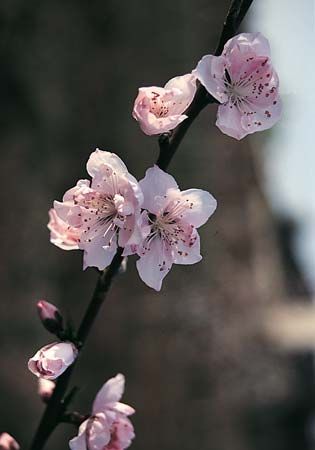
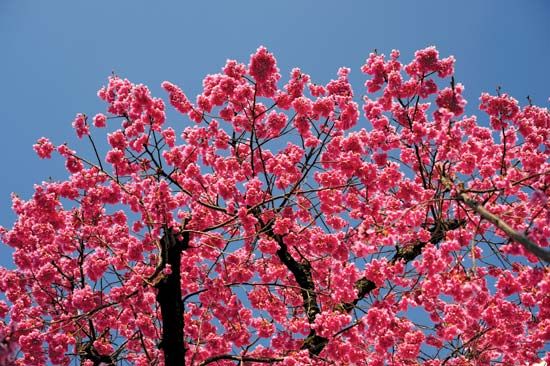
- Flowers: The flowers are often showy, typically featuring five petals and numerous stamens. While many species bloom in the spring, some ornamental varieties have been developed to produce double blooms.12
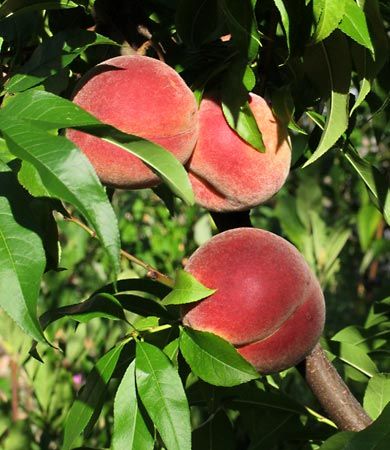
- Fruit: The genus is well known for producing drupes, commonly referred to as stone fruits, which include economically important crops like almonds, peaches, plums, cherries, and apricots.12
- Other traits: Some species, such as blackthorn, feature thorns and are used for protective hedging.1
Which common fruits and plants belong to the Prunus genus?
The Prunus genus, part of the Rosaceae family, includes over 400 species of trees and shrubs. Many of these are economically important for their fruit, which are botanically classified as drupes (stone fruits).13
Common plants and fruits belonging to the Prunus genus include:
- Almond (Prunus dulcis): Cultivated for its edible seed, which is used in cooking and confectionery.34
- Apricot (Prunus armeniaca): A stone fruit widely cultivated in temperate regions.35
- Peach and Nectarine (Prunus persica): Popular stone fruits.3
- Plum (various Prunus species): A diverse group of stone fruits.3
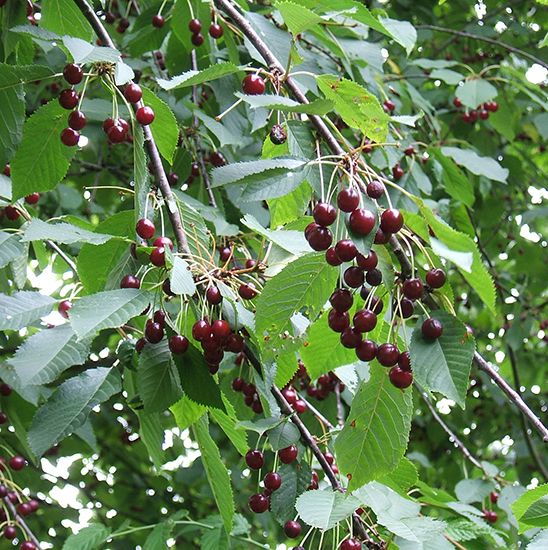
- Cherry (various Prunus species): Includes both sweet cherry (P. avium) and tart cherry (P. cerasus).3
- Blackthorn (Prunus spinosa): Often used for protective hedging due to its thorns.13
- Cherry laurel (Prunus caroliniana and P. laurocerasus) and Chokecherry (Prunus virginiana): Other notable members of the genus.3
In addition to these food crops, many Prunus species are grown for their prolific, showy flowers as ornamentals.1
What are some of the economic and culinary uses of Prunus species?
The Prunus genus is highly valued for its diverse economic and culinary contributions, ranging from food production to the manufacturing of fine goods.
Culinary Uses
Many Prunus species are cultivated for their edible drupes, commonly known as stone fruits.
- Fresh and Processed Fruit: Peaches, plums, and cherries are widely consumed fresh, cooked into compotes and jams, or baked in pastries. Certain plum varieties with high sugar content are dried to produce prunes.12
- Seeds and Flavorings: The almond is a major crop used in confectionery, baking, and various savory dishes. The oil of bitter almonds is processed to create flavoring extracts for foods and liqueurs like amaretto. Similarly, sweet cherries are frequently preserved in liqueurs.61
Economic and Ornamental Uses
- Timber: The wood of black cherry and sweet cherry is highly esteemed for manufacturing high-quality furniture, paneling, and musical instruments due to its durability and rich color.15
- Ornamental Horticulture: Many species are grown for their prolific, showy flowers, making them popular in landscaping and public gardens.71
- Agricultural Utility: Some species, such as blackthorn, are utilized as protective hedges.7
What are some common diseases or pests that affect Prunus plants?
Prunus plants are susceptible to various fungal diseases and insect pests that can significantly impact their health and agricultural productivity.
Fungal Diseases
- Black Knot: Caused by the fungus Apiosporina morbosa, this disease affects species such as plums, cherries, and apricots. It manifests as rough, black galls on twigs and branches, which can girdle and kill the plant.8
- Leaf Blister: Caused by Taphrina fungi, this includes peach leaf curl, which affects peaches, nectarines, and almonds. It causes distorted, blistered leaves and can lead to premature fruit drop.9
- Brown Rot: This common disease of stone fruits is caused by fungi in the genus Monilinia (notably M. fructicola), leading to decay in both stone and pome fruits.1011
Insect Pests
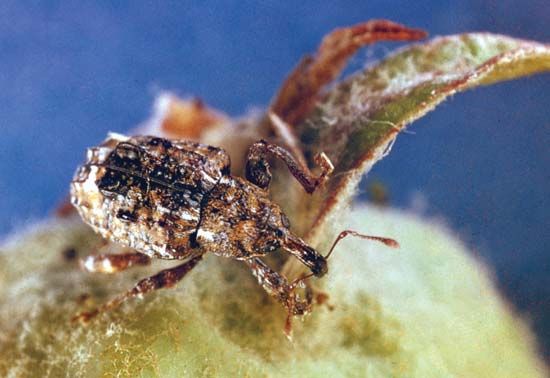
- Plum Curculio: The plum curculio (Conotrachelus nenuphar) is a destructive weevil that punctures the skin of young fruits to deposit eggs. The resulting larvae burrow into the fruit pulp, causing significant damage to crops like peaches, plums, and cherries.1213
Sources
- Prunus — Encyclopædia Britannica
- Cherry — Encyclopædia Britannica
- list of plants in the family Rosaceae — Encyclopædia Britannica
- Apricot — Encyclopædia Britannica
- Almond — Encyclopædia Britannica
- Rosales - Wood — Encyclopædia Britannica
- Plum — Encyclopædia Britannica
- Black knot — Encyclopædia Britannica
- Leaf blister — Encyclopædia Britannica
- Plum curculio — Encyclopædia Britannica
- plum curculio — Merriam-Webster
- brown rot — Merriam-Webster
- American brown rot — Merriam-Webster
Published on · 3 min read