Plantain
While plantains and bananas both belong to the genus Musa, they are distinct in their culinary uses and composition. The primary differences include:
What are the key differences between plantains and bananas?
While plantains and bananas both belong to the genus Musa, they are distinct in their culinary uses and composition. The primary differences include:
- Starch and Sugar Content: Plantains are significantly starchier and less sweet than common dessert bananas. Because of this high starch content, they are generally not eaten raw.12
- Culinary Preparation: Dessert bananas are typically consumed fresh and ripe. In contrast, plantains are considered a cooking variety and are usually boiled or fried while either green (immature) or ripe. They are often used in savory dishes or processed into flour for porridges and dumplings.13
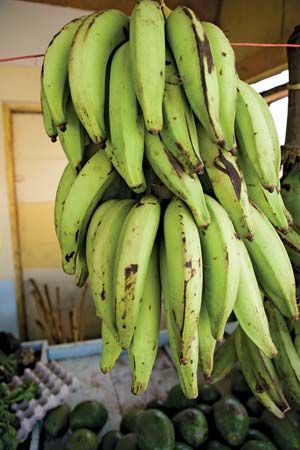
- Physical Characteristics: Plantains are typically larger than the common dessert banana.1
- Classification: While there are hundreds of banana varieties, they are broadly categorized into dessert bananas (such as the Cavendish) and plantains. Notably, plantains account for approximately 85 percent of all banana cultivation worldwide.132
In which cuisines and cultures are plantains a staple food?
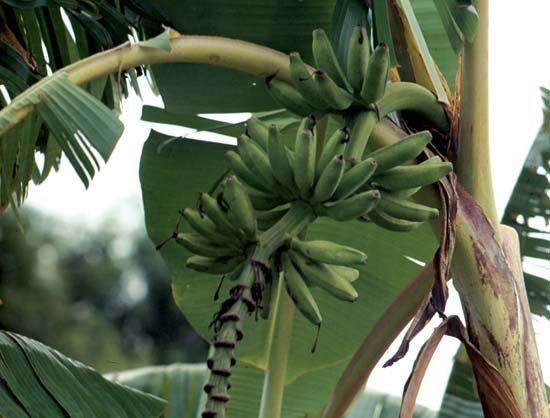
Plantains are a vital staple food across many tropical regions, serving as a primary source of nutrition in diverse cultures. They are widely cultivated and consumed in India, Africa, Egypt, and tropical America1.
Specific cultural applications include:
- East Africa: Plantains are a significant crop in this region, where they are notably used in the production of beer, particularly in central and eastern Uganda and Tanzania.1
- Southeast Asia and the Pacific: Originating in Southeast Asia, various plantain groups are also found in Indonesia and across the islands of the Pacific.1
Because plantains contain high levels of starch, they are rarely eaten raw. Instead, they are typically boiled or fried in savory dishes, or processed into meal and flour for various culinary preparations.1
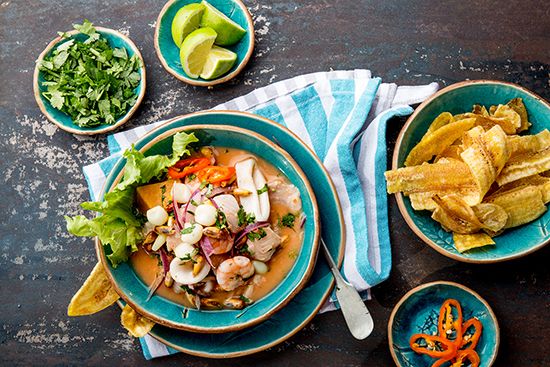
What are some common ways to prepare and cook plantains?
Because plantains contain high levels of starch, they are not consumed raw and require cooking to be palatable. Their preparation varies significantly depending on their stage of ripeness.1
Common Preparation Methods
- Cooking Green: When harvested while immature and green, plantains are at their starchiest. In this state, they are typically boiled or fried and incorporated into savory dishes.1
- Cooking Ripe: As the fruit ripens, it becomes mildly sweet. Ripe plantains are often cooked with sugar or coconut juice to enhance their flavor.1
- Preservation and Processing: Plantains can be dried for future use. They are also frequently ground into a meal, which can be further processed into flour for use in various culinary applications, such as porridges or dumplings.1
- Specialized Uses: In certain regions, such as central and eastern Uganda and Tanzania, plantains serve as a critical crop for the production of beer.1
Why are bananas and plantains so vulnerable to diseases like Panama disease?
Bananas and plantains are highly vulnerable to diseases like Panama disease primarily due to a lack of genetic diversity. Because most cultivated varieties are sterile, they are propagated clonally, meaning every plant of a specific variety is genetically identical to the others.62
This reliance on monoculture—the practice of growing a single crop variety over vast areas—creates a scenario where a novel pathogen can quickly exploit a genetic weakness across an entire population. If a variety lacks resistance to a specific fungus, such as the soil-inhabiting Fusarium oxysporum that causes Panama disease, the pathogen can devastate entire plantations.6728
The difficulty is compounded by the nature of the pathogen itself:
- Persistence: The Fusarium fungus can thrive in the soil indefinitely, making it nearly impossible to eradicate with fungicides or crop rotation.28
- Sterility: Because the plants are sterile, breeders cannot easily cross-breed them to develop new, resistant cultivars, leaving the industry dependent on existing clones.26
Sources
- Plantain — Encyclopædia Britannica
- Banana — Encyclopædia Britannica
- Banana: Top Questions — Encyclopædia Britannica
- gastronomy - Latin American — Encyclopædia Britannica
- wild plantain — Merriam-Webster
- Panama disease — Encyclopædia Britannica
- Fusarium wilt — Encyclopædia Britannica
- Monoculture — Encyclopædia Britannica
- Plant disease - Host resistance and selection — Encyclopædia Britannica
Published on · 3 min read