Nepenthes
Nepenthes, commonly known as Old World pitcher plants, are primarily native to Madagascar, Southeast Asia, and Australia. Within these regions, they are…
What is the geographical distribution of Nepenthes species in the wild?
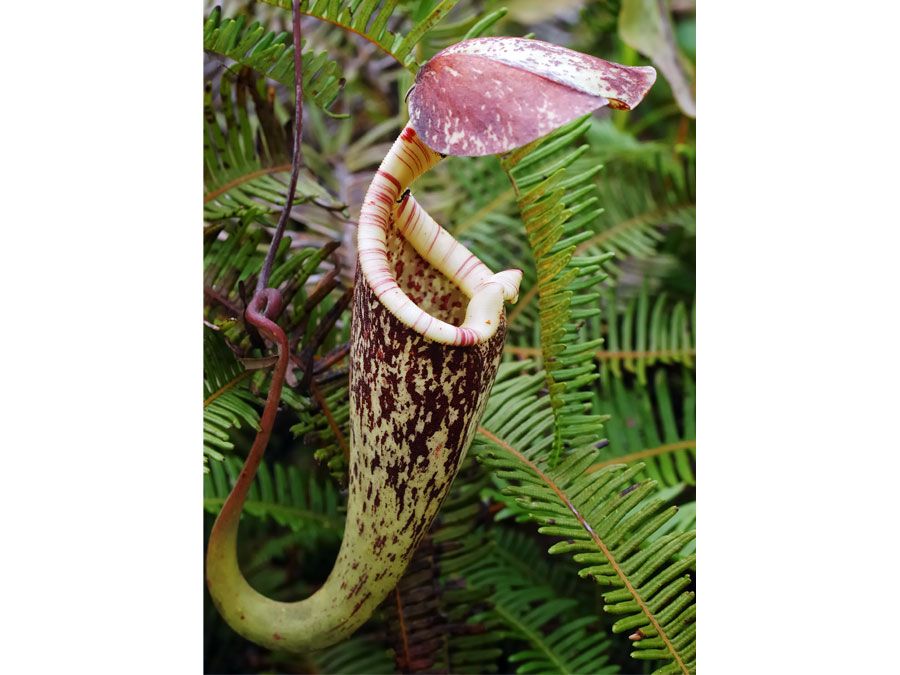
Nepenthes, commonly known as Old World pitcher plants, are primarily native to Madagascar, Southeast Asia, and Australia. Within these regions, they are known for their specialized, carnivorous adaptations that allow them to thrive in nutrient-poor soil conditions.12
While the genus has a broad distribution across these areas, individual species often occupy specific habitats. For example, the critically endangered Attenborough’s pitcher plant (N. attenboroughii) is found in central Palawan in the Philippines. Other species, such as N. rajah, are notable for their unique ecological relationships in specific locations like Borneo, where they have evolved to utilize animal waste as a nutrient source.31
How do Nepenthes plants attract and trap their prey?
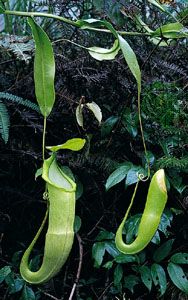
Nepenthes plants, commonly known as Old World pitcher plants, utilize specialized, modified leaves to function as passive pitfall traps for insects and other small prey.31
Attraction
To lure potential prey, the plants employ several visual and chemical signals:
- Nectar: The underside of the trap’s lid and the rim of the pitcher are equipped with nectar glands that secrete a sugary substance, which acts as a powerful attractant.31
- Visual Cues: The leaves often feature bright red markings that help draw the attention of insects.3
Trapping and Digestion
Once an insect is attracted to the rim, the trap mechanism ensures capture:
- Slippery Surfaces: The rim of the pitcher is corrugated and treacherous, while the upper interior of the pitcher is lined with a waxy, crumbly surface. When prey lands on these areas, they lose their footing and fall into the pitcher’s base.31
- Escape Prevention: The pitcher contains a pool of digestive liquid. Escape is prevented by the presence of downward-pointing hairs and the slick, waxy sides of the trap.31
- Digestion: Once trapped, the prey drowns and is broken down by enzymes, allowing the plant to absorb essential nutrients like nitrogen and phosphorus.1
How are Nepenthes plants cultivated, and what makes them popular among plant enthusiasts?
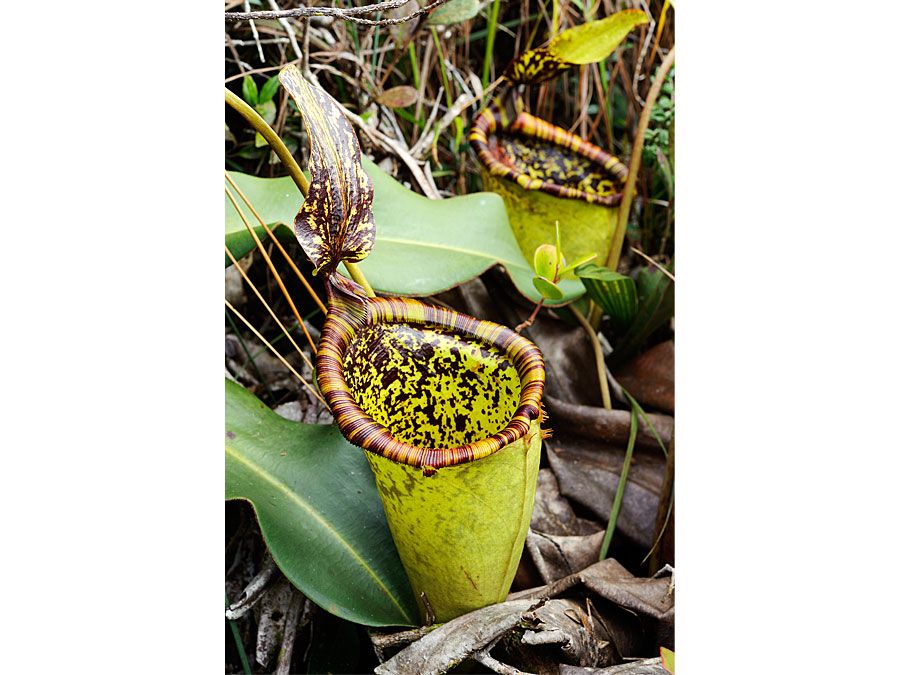
Nepenthes, or Old World pitcher plants, are highly regarded by plant enthusiasts for their unique, specialized morphology and fascinating carnivorous habits. Their popularity stems from the diverse array of species and hybrids that showcase striking colors, varied pitcher shapes, and complex ecological relationships, such as those that have evolved to utilize animal waste for nutrients.13
While the provided search results do not detail specific horticultural techniques, they note that Nepenthes are perennial herbaceous plants that often thrive in acidic soil conditions, with some species growing as epiphytes on tree branches. Collectors frequently seek out a variety of cultivated species and hybrids, including:13
- Species: N. gracilis (slender pitcher plant), N. mirabilis (common swamp pitcher plant), N. alata, N. sanguinea, and N. veitchii (golden peristome).13
- Hybrids: Popular varieties such as N. ×hookeriana (Hooker’s pitcher plant), N. ×ventrata, N. ×mastersiana, and N. ×dominii.13
These plants remain a focal point for collectors due to their status as some of the most spectacular carnivorous plants in the world.16
What are some of the most notable or unusual species within the Nepenthes genus?
The Nepenthes genus contains approximately 140 species of tropical pitcher plants, many of which have evolved remarkable adaptations to survive in nutrient-poor environments. Some of the most notable and unusual species include:
- Attenborough’s pitcher plant (N. attenboroughii): As one of the largest carnivorous plants in the world, this critically endangered species can reach up to 1.5 meters (4.9 feet) in height. Its massive pitchers, which can measure 30 cm (11.8 inches) in diameter, are capable of capturing and digesting small animals, including rodents.13
- Tree shrew mutualists (N. rajah, N. lowii, and N. macrophylla): In environments where insects are scarce, these species have evolved to supplement their nutrition by collecting tree shrew feces. N. rajah uses nectar to attract the shrews, which then use the pitcher as a “toilet.” N. lowii is particularly unusual, as it is believed to have lost the ability to digest insect prey entirely in favor of this nutrient-rich manure.13
- Bat-sheltering pitcher (N. hemsleyana): This species features an elongated pitcher that provides a roosting site for Hardwicke’s woolly bat (Kerivoula hardwicki). In exchange for the shelter, the plant collects the bat’s guano to meet its nutritional needs.13
Sources
- Nepenthes — Encyclopædia Britannica
- 10 Organisms Named for David Attenborough - Attenborough’s pitcher plant — Encyclopædia Britannica
- Caryophyllales - Nepenthaceae — Encyclopædia Britannica
- nectar — Encyclopædia Britannica
- nectary — Encyclopædia Britannica
- pitcher plant — Encyclopædia Britannica
Published on · 4 min read