Opuntia
Opuntia cacti, commonly known as prickly pear, are distinguished from other members of the Cactaceae family by several unique morphological features:
How do Opuntia cacti differ from other cactus genera?
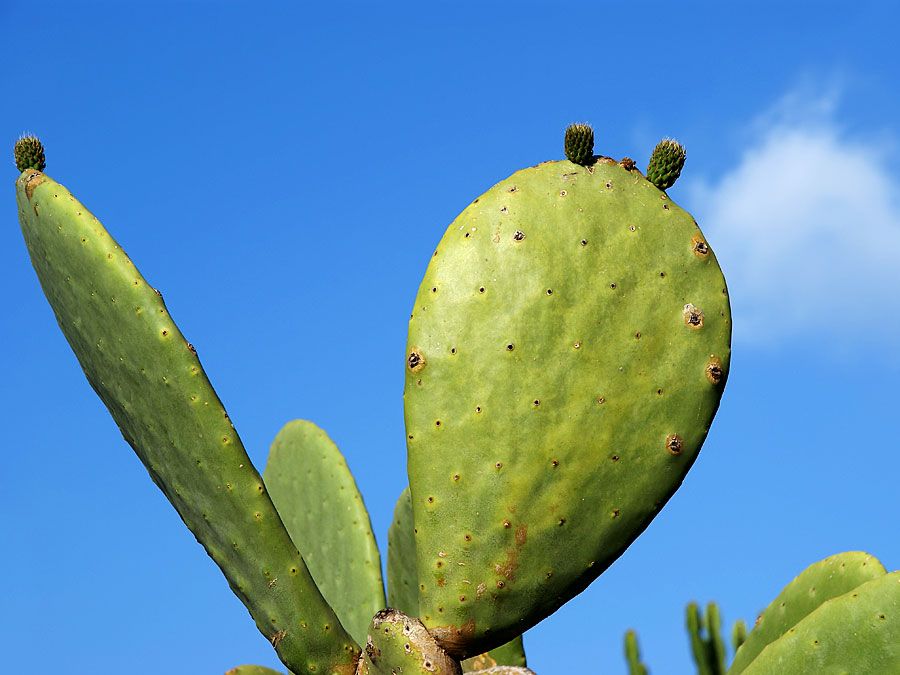
Opuntia cacti, commonly known as prickly pear, are distinguished from other members of the Cactaceae family by several unique morphological features:
- Glochidia: Unlike many other cacti, Opuntia species possess glochidia—small, hair-like bristles equipped with backward-facing barbs located in the areoles. These are notoriously difficult to remove from human skin.1
- Stem Structure: These cacti are composed of flat, paddle-like cladodes (photosynthetic stem segments) that grow in a jointed fashion, one from the end of another.1
- Ephemeral Leaves: While most cacti lack functional leaves, Opuntia produces small, succulent, conical-to-cylindrical leaves on young stem joints that typically fall off after about a month of growth.2
- Floral Characteristics: In many Opuntia species, the stamens are sensitive and move in response to touch, a mechanism believed to enhance pollination by increasing the pollen load on visiting insects. Additionally, they feature a relatively short floral tube above the ovary compared to some other cactus genera.12
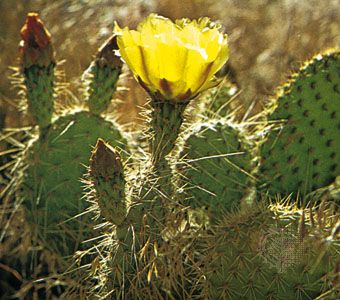
How do Opuntia cacti reproduce and what makes their fruiting process unique?
Opuntia cacti, commonly known as prickly pear, utilize both sexual and asexual reproduction to propagate. Asexually, these plants are highly efficient; their jointed, paddle-like cladodes break apart easily and can readily take root when they contact the ground, allowing the cactus to spread quickly.12
Sexual reproduction is facilitated by showy, brightly colored flowers. A unique feature of many Opuntia species is their sensitive stamens, which move in response to touch. This mechanism is thought to increase the pollen load on visiting insect pollinators, enhancing the likelihood of successful fertilization.1
The resulting fruit is typically a reddish berry. While these fruits are often valued for being edible, they are frequently armed with spines, which serve as a defensive adaptation. The development of these fruits occurs from an inferior ovary, characteristic of the Cactaceae family, where the floral tube adheres to the ovary’s surface.12
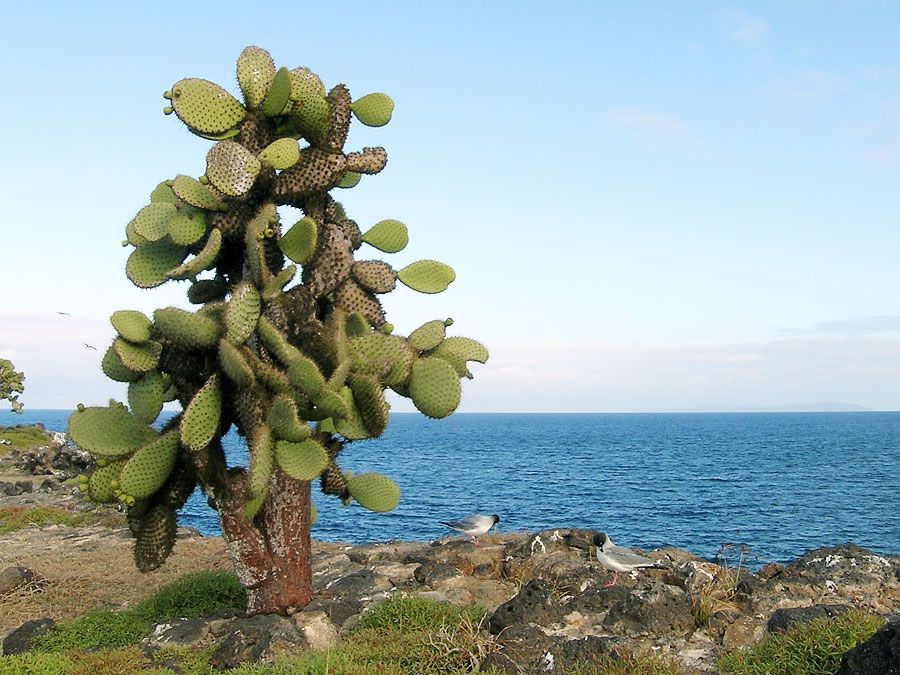
Where are Opuntia cacti naturally found, and how have they spread to other parts of the world?
Opuntia cacti, commonly known as prickly pear, are native to the Western Hemisphere, with a range extending from the Peace River in western Canada down to the southern reaches of South America.14
These cacti have spread to other parts of the world, including Australia and South Africa, primarily through human introduction by early explorers and settlers who valued them for their edible fruits, paddles, and use as forage crops or ornamental plants.14
Once introduced to these new regions, Opuntia species often became invasive because they were separated from their natural parasites and competitors, allowing them to proliferate rapidly. Their ability to reproduce asexually—whereby broken stem segments or cladodes easily take root—has further facilitated their spread and establishment in non-native environments. In some instances, the introduction of specific moths of the genus Cactoblastis has been necessary to bring these populations under control.41
What are some common uses of Opuntia cacti in agriculture, food, and medicine?
Opuntia cacti, commonly known as prickly pear, serve a variety of practical purposes across agriculture, food, and traditional medicine.
Food and Agriculture
- Edible Consumption: Both the fruits and the flattened succulent stems, known as pads or nopales, are widely consumed as food, particularly in Mexico and parts of Central and South America.15
- Livestock Fodder: In arid regions, Opuntia species are used as emergency feed for livestock during periods of drought. The spines are typically removed to make the plant safe for animal consumption.6
- Living Fences: In many Latin American regions, these cacti are planted around homes and properties to form natural, protective barriers known as “living fences”.65
Medicinal Uses
Sources
- Opuntia — Encyclopædia Britannica
- Caryophyllales - Cactaceae — Encyclopædia Britannica
- Opuntiales — Merriam-Webster
- prickly pear — Encyclopædia Britannica
- cactus — Encyclopædia Britannica
- opuntia — Merriam-Webster
- Caryophyllales - Cactaceae — Encyclopædia Britannica
Published on · 3 min read