Niah Cave
Niah Cave is a globally significant archaeological site located on the island of Borneo in East Malaysia. Situated in Sarawak, this massive cave system…
What is Niah Cave?
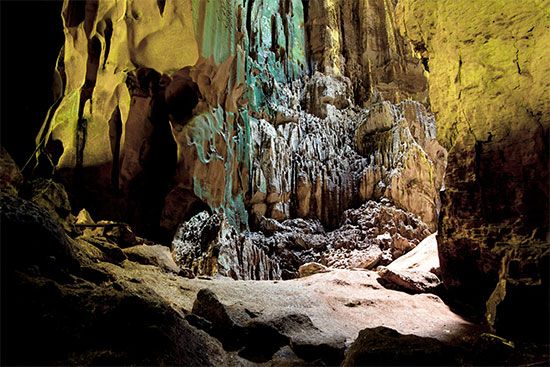
Niah Cave is a globally significant archaeological site located on the island of Borneo in East Malaysia. Situated in Sarawak, this massive cave system features the “Great Cave,” which provided a favorable environment for near-continuous human occupation from the Pleistocene epoch until the 19th century. In 2024, it was designated a UNESCO World Heritage site.1
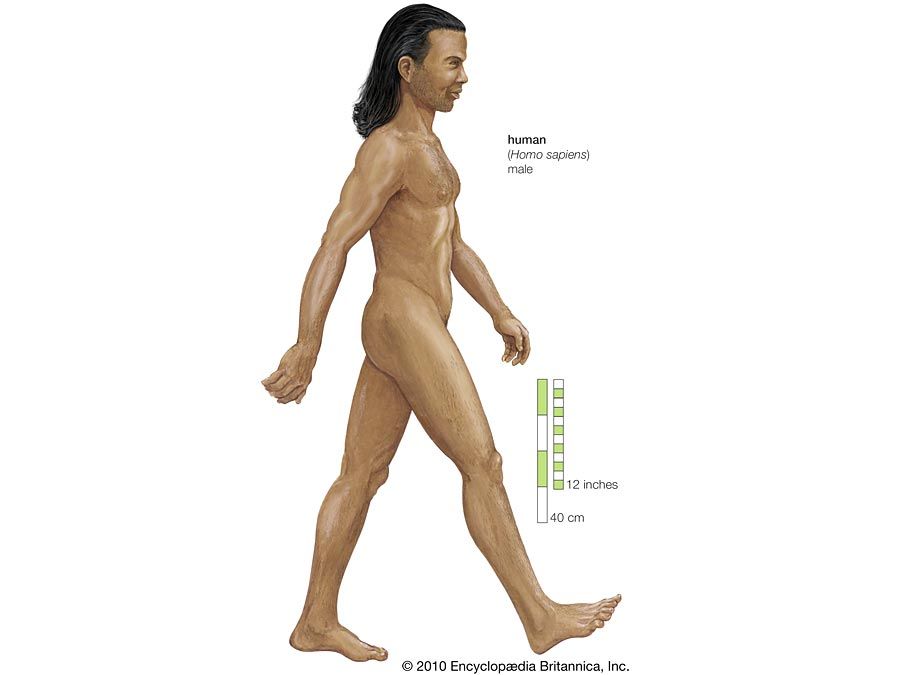
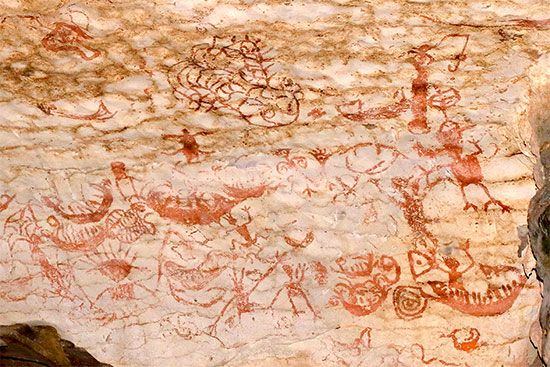
The site is most famous for the discovery of a skeleton dating to approximately 38,000 BCE, representing the earliest evidence of Homo sapiens in Southeast Asia. These remains provide critical insight into early human migration patterns toward Australasia. Additionally, archaeologists have uncovered “boats of the dead”—unique boat-shaped coffins—and cave paintings that reveal the complex spiritual beliefs and symbolic behaviors of the region’s early inhabitants.1
What are the ‘boats of the dead’ and their cultural meaning?
The “boats of the dead” discovered at Niah Cave are distinctive, boat-shaped coffins that serve as a profound testament to the symbolic and spiritual lives of early human inhabitants in Sarawak.1
These artifacts are culturally significant because they reflect a complex belief system regarding the transition from life to death. The coffins were designed to function as vessels intended to transport the spirits of the deceased into the afterlife. This interpretation is further supported by accompanying cave paintings found at the site, which artistically depict spirits traveling within these boats, illustrating a ritualized journey toward the spiritual realm.1
Together, these findings provide researchers with invaluable insights into the symbolic behaviors and funerary practices of prehistoric societies in Southeast Asia, highlighting how these early humans conceptualized mortality and the journey of the soul.1
How did early humans survive in the Niah Cave environment?
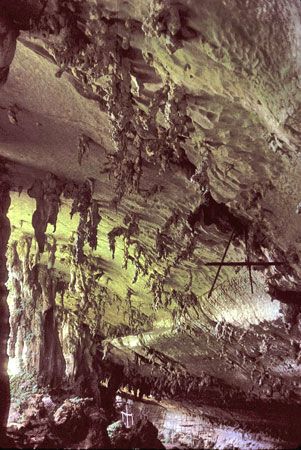
Early humans survived in the Niah Cave environment primarily by utilizing the Great Cave, a massive, well-lit, and dry section of the cave system that provided a favorable and stable dwelling space.1
While other parts of the cave were dark, moist, and occupied by millions of bats and swiftlets, the Great Cave offered a protected environment that supported near-continuous human occupation from the Pleistocene epoch until the 19th century. This long-term habitation suggests that the cave provided a reliable base for early groups, allowing them to thrive in the region while serving as a waypoint for populations migrating toward Australasia.1
Beyond the physical shelter, the site reveals that these early humans engaged in complex symbolic and spiritual behaviors, as evidenced by the “boats of the dead” and associated cave paintings, which reflect a sophisticated cultural life alongside their daily survival.1
What other archaeological sites are famous in Southeast Asia?
Southeast Asia is home to numerous world-renowned archaeological sites that reflect the region’s rich history, complex religious traditions, and sophisticated architectural achievements.
Major Archaeological Sites
- Angkor Wat: Located in Cambodia, this 12th-century temple complex is the world’s largest religious structure. Originally built as a Hindu funerary temple for King Suryavarman II, it later became a significant Buddhist pilgrimage site. It is celebrated for its massive scale and intricate bas-reliefs depicting Hindu epics.2
- Borobudur: Situated in Indonesia, this 9th-century Buddhist monument is a masterpiece of design. It serves as both a temple and a symbolic representation of the cosmos, featuring thousands of relief sculptures and hundreds of Buddha figures that guide pilgrims toward spiritual enlightenment.34
- Pagan: This ancient capital in Myanmar contains a vast concentration of Buddhist temples and stupas constructed between the 11th and 13th centuries. It remains one of the most impressive architectural landscapes in the region.45
- Plain of Jars: Located in Laos, this site is famous for several hundred massive, ancient stone jars. These megalithic vessels are believed to be associated with prehistoric burial practices.67
- My Son: This site in Vietnam features the remains of numerous brick temples built by the Champa kingdom. It was a major religious center from the 4th to the 14th century, showcasing unique architectural styles influenced by Indian traditions.8
Sources
- Niah Cave — Encyclopædia Britannica
- Plain of Jars — Encyclopædia Britannica
- Southeast Asian arts - Cambodia and Vietnam — Encyclopædia Britannica
- Angkor Wat — Encyclopædia Britannica
- Southeast Asian arts - Borobudur — Encyclopædia Britannica
- Southeast Asian architecture — Encyclopædia Britannica
- history of Southeast Asia - Influence of China and India — Encyclopædia Britannica
- Southeast Asian arts - Art of the northern capital: 4th–11th century — Encyclopædia Britannica
Published on · 3 min read