Swiftlet
Swiftlets, like other members of the swift family, feed exclusively on flying insects. They are highly aerial birds that catch their prey on the wing…
What is the diet of swiftlets and how do they catch their prey?
Swiftlets, like other members of the swift family, feed exclusively on flying insects. They are highly aerial birds that catch their prey on the wing, utilizing their wide gapes to capture insects while in flight.12
While swiftlets are famous for their ability to use echolocation to navigate dark caves, this biological sonar is used for orientation rather than for hunting prey. Their foraging behavior relies on their exceptional flying ability to course through the air and snatch insects during flight, a method shared by other related birds such as swallows.3145
How do swiftlets build their nests, and what makes these nests unique?
Swiftlets are remarkable for their unique nesting habits, which distinguish them from most other birds. Here is how they build their nests and what makes them so special:
Nest Construction
Swiftlets typically build their nests in mountain or coastal caves, often forming massive colonies that can contain up to a million birds. These nests are constructed as small, semicircular brackets fastened to vertical surfaces, such as cave walls or cliffs. While some species may incorporate small amounts of fern or bark, the primary building material is the bird’s own sticky, glutinous saliva, which is secreted by enlarged salivary glands.178
What Makes Them Unique
- Composition: The nests are made chiefly or entirely of dried saliva. This unique composition is the defining feature of the edible bird’s nest, a substance famous for being the primary ingredient in bird’s-nest soup.18
- Structural Function: The saliva acts as a powerful adhesive, allowing the birds to anchor their nests firmly to vertical rock faces where other materials would not hold.74
- Biological Context: The use of saliva as a primary structural material is a specialized adaptation within the genus Collocalia, setting them apart from other swifts that rely more heavily on plant materials, feathers, or mud.74
What are the distinguishing characteristics of swiftlets?
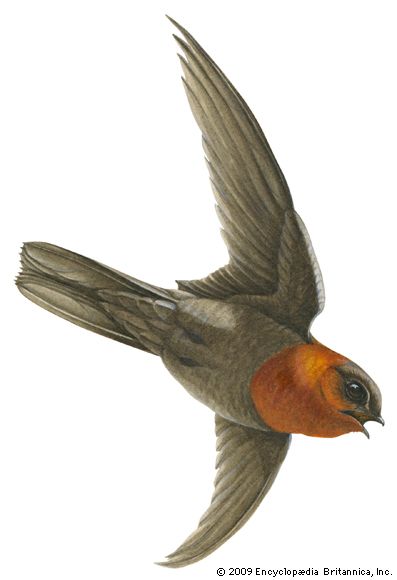
Swiftlets (genus Collocalia) are a group of cave-dwelling birds within the swift family, Apodidae, found throughout southeastern Asia, the Philippines, and the South Pacific islands. They are characterized by several distinct features:
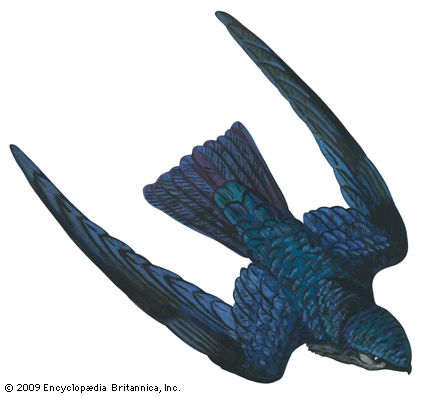
- Physical Appearance: These birds are small, measuring 9 to 15 cm (3.5 to 6 inches) in length. They are typically dull brown or gray in color, sometimes with a blue or green gloss, and feature paler rumps and underparts. Compared to other swifts, they fly more slowly, erratically, and at lower altitudes.
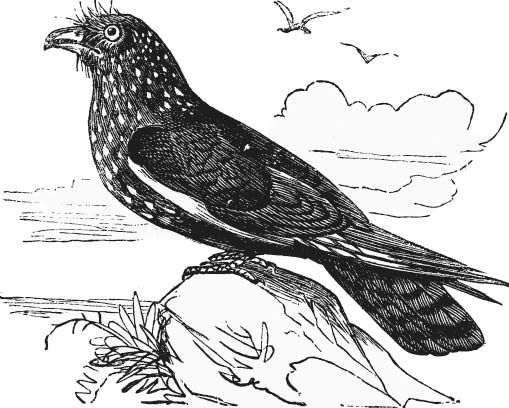
- Echolocation: Along with the oilbird, certain swiftlets are the only birds known to use echolocation to navigate dark caverns. They emit audible clicking sounds at frequencies between 1,500 and 5,500 hertz at a rate of about six per second. Notably, some species lack this ability and only nest in areas where light penetrates the cave.
- Nesting Habits: Swiftlets are famous for building nests primarily or entirely out of their own hardened, sticky saliva. These nests are small, semicircular brackets attached to vertical surfaces like cave walls or cliffs. These structures are the basis for bird’s-nest soup.
- Colonial Behavior: They are highly gregarious and often form massive colonies, with a single cave sometimes housing up to a million birds.
What is the economic importance of swiftlets, particularly in relation to their nests?
The economic importance of swiftlets is primarily centered on the commercial harvesting of their nests in Southeast Asia and the East Indies. These nests are highly valued as the essential ingredient for bird’s-nest soup, a traditional delicacy of the Orient.13
The nests are unique in their composition, which dictates their market value. While many swiftlets use a mixture of plant and animal materials—such as moss, feathers, and hair—held together by a mucilaginous secretion from their salivary glands, the most prized nests are those of the edible-nest swiftlet (C. fuciphaga). These nests are constructed almost entirely from concentric layers of this hardened salivary cement, making them the most sought-after for culinary use. Because these birds often nest in massive colonies within caves, they have become a significant focus of specialized trade and resource management in the region.13
Sources
- Swiftlet — Encyclopædia Britannica
- Apodiform - Behaviour and locomotion — Encyclopædia Britannica
- Apodiform - Importance to humans — Encyclopædia Britannica
- Swift — Encyclopædia Britannica
- sound reception - Uses of hearing in birds — Encyclopædia Britannica
- Bird - Feeding habits — Encyclopædia Britannica
- edible bird's nest — Merriam-Webster
- Apodiform - Reproduction and life cycle — Encyclopædia Britannica
Published on · 3 min read