Norwich Terrier
The Norwich terrier is a short-legged terrier breed that originated in England around 1880. Initially popular among students at Cambridge, the breed later…
What is Norwich terrier?
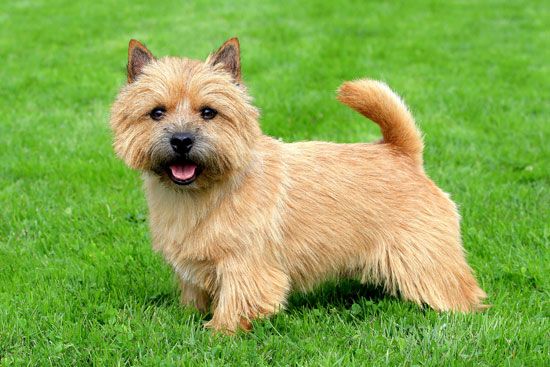
The Norwich terrier is a short-legged terrier breed that originated in England around 1880. Initially popular among students at Cambridge, the breed later gained recognition for its utility in American hunt clubs and its skill as a rabbit hunter.1
Physically, the Norwich terrier is a stocky, rugged dog characterized by a broad head and erect ears. It typically stands no more than 10 inches (25 cm) tall and weighs between 10 and 14 pounds (4.5 to 6.5 kg). Its coat is dense, wiry, and weather-resistant, most commonly appearing in shades of reddish brown.1
The breed is closely related to the Norfolk terrier, which shares a similar history and appearance but is distinguished by its folded-over ears. Like other members of the terrier group, the Norwich is known for being a loyal and spirited companion.213
What are the main physical differences between a Norwich terrier and a Norfolk terrier?
The primary physical distinction between the Norwich terrier and the Norfolk terrier lies in the shape and carriage of their ears.
- Norwich Terrier: This breed is characterized by having erect, pointed ears.21
- Norfolk Terrier: This breed is physically similar to the Norwich but is distinguished by having ears that are folded over.4
Beyond this specific difference, both breeds share a common heritage as small, low-set, and stocky terriers developed in England. They both possess a dense, wiry, and weather-resistant coat, maintaining the rugged appearance typical of the terrier group.21
Why were terriers originally bred to hunt underground?
Terriers were originally bred to hunt underground primarily to serve as effective tools for vermin control and to assist in foxhunting by flushing out or confronting burrowing animals. The name “terrier” itself is derived from the Old French chien terrier, meaning “earth dog,” which highlights this specific historical purpose.35
To perform these tasks effectively, these dogs were selectively bred with specific physical traits:
- Size and Build: Smaller terriers were bred to be compact with short legs, allowing them to fit into and navigate narrow rodent burrows.35
- Durability: They were developed with tough, wiry, weather-resistant coats to protect them while working in rugged, subterranean environments.35
- Temperament: Unlike many other hunting dogs that merely track or chase quarry, terriers were often required to confront and kill prey that frequently fought back. This necessity fostered a tenacious, fearless, and pugnacious temperament.35
- Physical Features: They typically possess long heads, strong jaws, and deep-set eyes. Many breeds that worked underground were also developed with strong tails, which allowed hunters to pull them out of burrows if necessary.3
What does the process of hand-stripping a dog’s coat involve?
Hand-stripping is a grooming technique used primarily for dogs with wire coats, such as many terrier breeds. The process involves manually pulling out dead hair from the dog’s coat to maintain its characteristic hard texture and sleek appearance.7
While some owners choose to use a stripping knife—a metal tool with a serrated edge designed to assist in plucking—the core of the method relies on the removal of old, loose hair by hand. This technique is distinct from clipping, which involves cutting the hair with shears or clippers; while clipping is often easier for the owner, it tends to soften the coat’s texture over time, whereas hand-stripping preserves the natural, wiry quality of the fur.37
Sources
- Norwich terrier — Encyclopædia Britannica
- Norfolk terrier — Merriam-Webster
- terrier — Encyclopædia Britannica
- Norwich terrier — Merriam-Webster
- dog - Terriers — Encyclopædia Britannica
- dog sports - Earthdog and barn hunt — Encyclopædia Britannica
- stripping knife — Merriam-Webster
Published on · 3 min read