Nunivak Island
The Nuniwarmiut, or Cup’ik people of Nunivak Island, have historically maintained their traditions longer than many mainland groups due to the island's…
How do the Nunivak Island inhabitants maintain their traditional way of life in modern times?
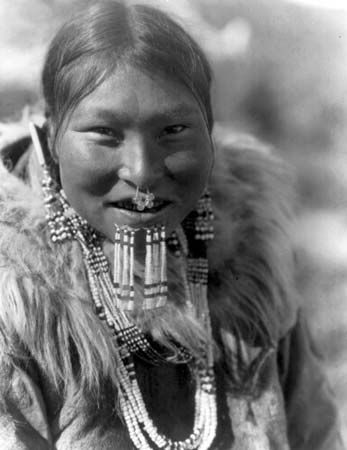
The Nuniwarmiut, or Cup’ik people of Nunivak Island, have historically maintained their traditions longer than many mainland groups due to the island’s challenging geography, which historically hindered external access.1
In modern times, the Nuniwarmiut and other Inuit groups balance traditional practices with contemporary life. While many have transitioned to living in permanent settlements like Mekoryuk, they continue to engage in traditional activities such as hunting sea mammals and fishing to supplement their diets. These practices are often integrated with modern technology; for instance, rifles have largely replaced traditional harpoons for hunting, and snowmobiles are now commonly used for land transport.23
Furthermore, many Inuit communities have adapted to the modern economy by forming cooperatives to market traditional handicrafts and participate in tourism ventures. Despite these shifts, there is a broader, ongoing effort across Inuit regions to revitalize and preserve Indigenous culture through political organization and self-determination.3
What are the main economic activities on Nunivak Island?
The economic activities on Nunivak Island are primarily centered on subsistence practices and the management of the island’s unique wildlife resources.
- Subsistence Activities: The Nuniwarmiut, or Cup’ik Inuit, rely on traditional hunting and fishing to support their way of life. This includes the harvesting of sea mammals and other local resources, which remains a vital component of the island’s economy.12
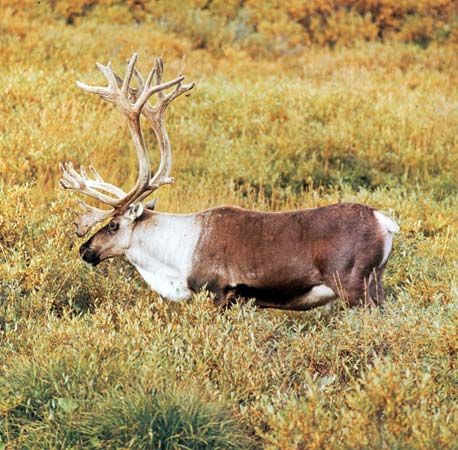
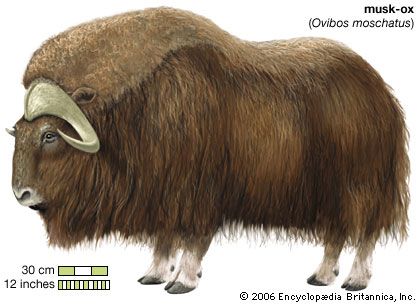
- Wildlife Management: The island is home to the Nunivak unit of the Yukon Delta National Wildlife Refuge. The presence of reindeer and musk oxen—both introduced species—plays a significant role in the island’s ecological and economic landscape.1
- Broader Context: While the provided search results detail commercial fishing and large-scale agriculture elsewhere in Alaska, specific data regarding large-scale commercial industries on Nunivak Island is not available in the provided information.2
Where is Nunivak Island located and what are its key geographical features?
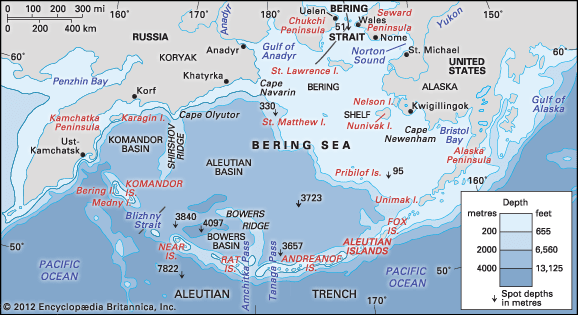
Nunivak Island is located in the Bering Sea off the southwestern coast of Alaska, United States. It is separated from the Alaskan mainland by the Etolin Strait.1
Key geographical features include:
- Size: It is the second-largest island in the Bering Sea, measuring approximately 55 miles (90 km) long and 40 miles (65 km) wide, covering an area of about 1,600 square miles (4,000 square km).1
- Topography and Environment: The island serves as the site for the Nunivak unit of the Yukon Delta National Wildlife Refuge. Its landscape is notable for supporting introduced populations of reindeer and musk oxen, as well as various shorebirds.1
- Accessibility: The island is surrounded by shoals, which historically made landing difficult and helped the Nuniwarmiut people maintain their traditional way of life for centuries.1
What role does Nunivak Island play in Alaska’s economy and conservation efforts?
Nunivak Island plays a distinct role in Alaska’s conservation efforts and local subsistence economy, rather than serving as a hub for large-scale commercial industry.
Conservation and Wildlife
The island is home to the Nunivak unit of the Yukon Delta National Wildlife Refuge. It serves as a critical habitat for various shorebirds and is particularly noted for its populations of musk oxen. These animals were introduced to the island in 1935 from Greenland to help re-establish the species in the region after they had been severely depleted by hunting in the late 19th century. The island also hosts reindeer, which were introduced in the 1800s.16
Subsistence Economy
The island’s economy is primarily defined by the traditional practices of the Nuniwarmiut, or Cup’ik Inuit, who have inhabited the island for at least 2,000 years. Their lifestyle relies on subsistence hunting and fishing, which remains a vital cultural and economic pillar. Unlike the broader Alaskan economy, which is heavily driven by petroleum development and large-scale commercial fishing, Nunivak Island’s remote nature and surrounding shoals have helped preserve these traditional ways of life.127
Sources
- Nunivak Island — Encyclopædia Britannica
- Nunavut - Fishing and hunting — Encyclopædia Britannica
- Inuit — Encyclopædia Britannica
- Alaska - Agriculture, forestry, and fishing — Encyclopædia Britannica
- Nunivak — Merriam-Webster
- Alaska - Plant and animal life — Encyclopædia Britannica
- musk ox — Encyclopædia Britannica
- Alaska - Services, labor, and taxation — Encyclopædia Britannica
- Nunavut - Plant and animal life — Encyclopædia Britannica
Published on · 3 min read