Reindeer
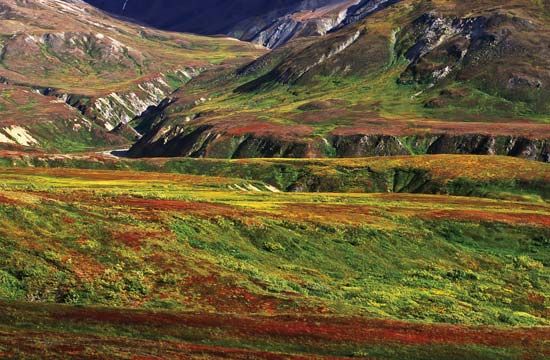
Reindeer, also known as caribou in North America, play a vital role as primary herbivores in the tundra ecosystem. Their interactions with the environment…
What role do reindeer play in the ecosystem of the tundra?
Reindeer, also known as caribou in North America, play a vital role as primary herbivores in the tundra ecosystem. Their interactions with the environment significantly influence the landscape and its biological productivity.12
Key roles include:
- Nutrient Cycling: Through selective grazing, trampling, and the excretion of waste, reindeer help recycle organic material. This process releases essential nutrients back into the soil, which can stimulate the growth of tundra vegetation.2
- Vegetation Management: By consuming annual vegetative growth, reindeer expose underlying plants to sunlight and soil to increased heating, which can enhance the overall productivity of the plant community.2
- Foraging Adaptations: Reindeer possess specialized hooves and antlers that allow them to forage for lichens and flowering plants beneath the snow, enabling them to survive in harsh, nutrient-limited conditions where other species might struggle.31
- Trophic Connections: As a major herbivore, they serve as a critical food source for various predators, including wolves, bears, and lynx, thereby supporting the broader food web of the Arctic.31
How have reindeer been domesticated and used by various cultures throughout history?
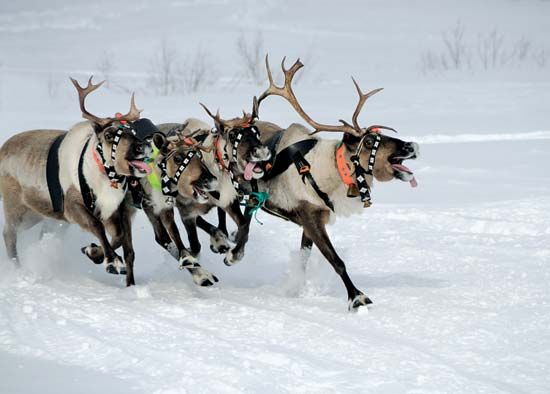
Reindeer domestication is a defining feature of many cultures across the Eurasian Arctic and subarctic, distinguishing these regions from North America, where reindeer (caribou) remain wild. The practice likely originated in the 1st millennium BCE, as pastoralists from the Central Asian steppes moved north and introduced domestication techniques to local hunting and fishing cultures.15
Reindeer husbandry generally follows two distinct patterns based on the environment:
- Tundra Pastoralism: In open tundra, herders manage large, migratory herds. This requires nomadic movement between winter taiga pastures and summer tundra grazing grounds. Peoples such as the Sami, Nenets, Chukchi, and Koryak utilize these herds primarily for meat, fat, and hides, with some groups using trained animals for transport.1
- Taiga Husbandry: In forest environments, herds are smaller and the animals are more tame. Here, reindeer are primarily used as pack animals or mounts to support hunting, trapping, and fishing economies. This practice is common among groups like the Evenk, Ket, and Selkup.1
Beyond sustenance, reindeer are integral to traditional life, providing materials for clothing, tents, and tools, while their antlers are often carved into totems.61
What are the differences between caribou and reindeer?
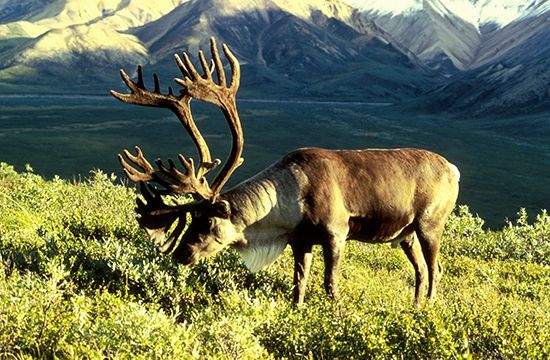
It is a common misconception that reindeer and caribou are different species; in fact, they are the same animal, Rangifer tarandus. The term “caribou” is simply the name used for these animals in North America, while they are referred to as “reindeer” in Eurasia.18
Both populations belong to the same deer family and share the same biological characteristics, such as being the only deer species in which both males and females grow antlers. They are adapted to the Arctic tundra and boreal forests, utilizing specialized hooves to navigate snow and soft ground. While they are biologically identical, the primary distinction is cultural: in parts of Europe and Asia, reindeer have been domesticated for thousands of years, whereas North American caribou remain wild.19
How do reindeer antlers differ from those of other deer species, and why do both male and female reindeer grow them?
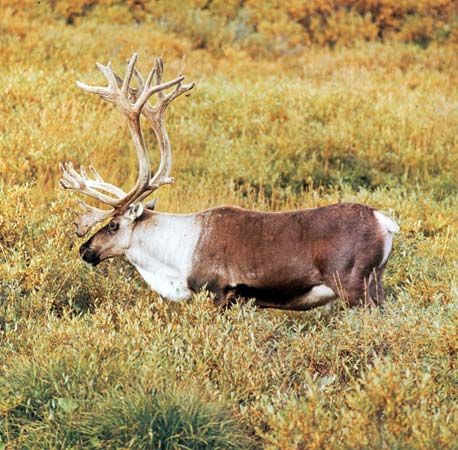
Reindeer (Rangifer tarandus) are unique among the deer family (Cervidae) because they are the only species in which both males and females grow antlers. In all other deer species, antlers are typically carried only by males.110911
The presence of antlers in both sexes serves a critical survival function in the harsh Arctic environment. While males shed their antlers shortly after the autumn mating season (the rut), females retain theirs throughout the winter. This adaptation allows females to defend access to limited food sources—specifically reindeer moss—by using their antlers to clear and protect feeding craters in the snow from other reindeer, including males that have already shed their own.1
Like other deer, reindeer grow their antlers annually from bone, a process that is highly energy-intensive and requires significant mineral and protein intake. The antlers begin as structures encased in “velvet,” a vascularized, sensitive skin that is eventually rubbed off once the bone growth is complete. While males use their antlers primarily for combat and courtship displays during the rut, the female’s ability to retain them through the winter is a specialized evolutionary advantage for survival in extreme climates.10111
Sources
- reindeer — Encyclopædia Britannica
- Tundra - Arctic mammals — Encyclopædia Britannica
- Polar ecosystem - Biological productivity — Encyclopædia Britannica
- Tundra - Effects of human activities and climate change — Encyclopædia Britannica
- Arctic - Traditional culture — Encyclopædia Britannica
- Arctic - History of settlement — Encyclopædia Britannica
- Sami: Top Questions — Encyclopædia Britannica
- Are Santa’s Reindeer Female? — Encyclopædia Britannica
- reindeer: Top Questions — Encyclopædia Britannica
- deer - Morphology and behaviour — Encyclopædia Britannica
- Why do deer shed their antlers? — Encyclopædia Britannica
Published on · 3 min read