Olive
While olive cultivation originated in the Mediterranean region—with evidence of growth in Crete by 3500 BCE—the tree has successfully spread to other parts…
How has olive cultivation spread beyond its native Mediterranean region?
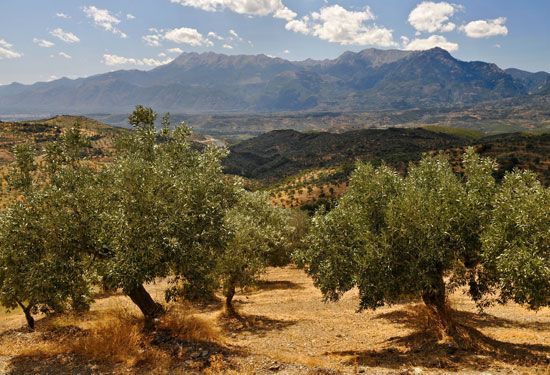
While olive cultivation originated in the Mediterranean region—with evidence of growth in Crete by 3500 BCE—the tree has successfully spread to other parts of the world that offer suitable climates.1
Commercial production is now concentrated in two global belts located between 30° and 45° latitude in both the Northern and Southern hemispheres, where the necessary environmental conditions for growth and fruitfulness are met. Beyond the Mediterranean, California has become a notable region for olive cultivation. Olives were introduced to the area by Franciscan missionaries in the mid-1700s, finding a hospitable environment in the state’s Mediterranean-like climate. The industry there was further bolstered in the late 19th century by innovations in curing and canning, which allowed for the national distribution of products.12
Today, the olive tree is also widely planted as an ornamental in various regions with appropriate climates.1
How long does it take for an olive tree to produce fruit, and how long can they live?
Olive trees (Olea europaea) typically begin bearing fruit between 4 and 8 years of age, though they do not reach full production capacity until they are 15 to 20 years old.3
Regarding their lifespan, while the provided search results do not specify a maximum age for the olive tree, they note that the tree’s wood is highly resistant to decay. Furthermore, the species possesses a unique regenerative ability: if the top of the tree dies back, a new trunk will often arise from the roots, allowing the plant to persist.3
What are the main varieties of olives, and how do they differ?
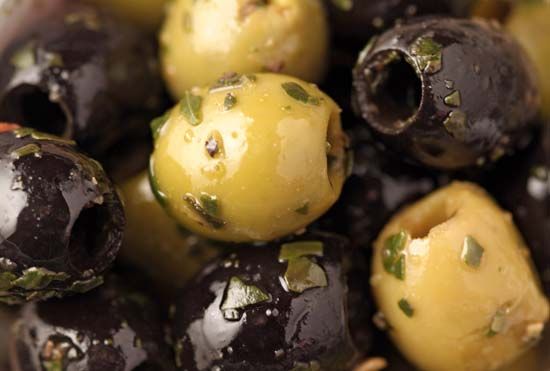
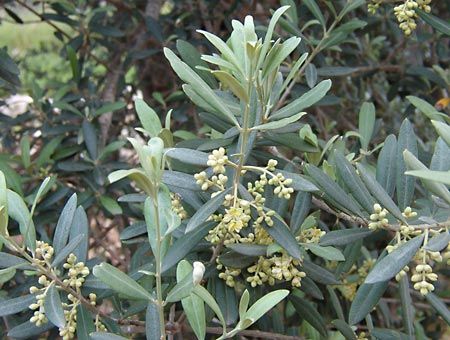
There are hundreds of named varieties of olive trees, which are broadly categorized based on their primary intended use: table olives or oil production. Because olive varieties do not come true from seed, growers must use budding or grafting techniques to propagate specific, high-quality cultivars.1
Primary Categories of Olive Varieties
- Table Olives: These varieties are specifically cultivated for eating. In California, for example, the Mission variety is grown almost exclusively for table use.1
- Oil Olives: These varieties are selected for their high oil content and quality. In Europe, common oil-producing varieties include the Picual, Nevadillo, and Morcal.1
Key Differences
The primary differences between varieties lie in their suitability for processing and their chemical composition. While table olives are often processed to remove their natural bitterness—typically through treatments with a dilute alkali like lye or salt applications—oil varieties are valued for the yield and flavor profile of the olive oil extracted from their flesh. Factors such as the specific district where the tree is grown and the ripeness of the fruit at harvest also significantly influence the final characteristics and quality of the oil produced.14
What are the health benefits associated with olive oil and olive consumption?
Olive oil is a central component of the Mediterranean diet, a dietary pattern widely recognized for supporting long-term health and cardiovascular well-being.45
Cardiovascular and Metabolic Health
Olive oil is rich in monounsaturated fatty acids—specifically oleic acid—and antioxidants such as polyphenols. These components contribute to several health benefits:467
- Cholesterol Management: As a monounsaturated fat, olive oil helps lower total cholesterol, “bad” LDL cholesterol, and triglycerides while helping to maintain healthy HDL cholesterol levels.67
- Disease Prevention: Regular consumption is associated with a reduced risk of cardiovascular disease and type 2 diabetes mellitus.4
Cognitive Benefits
Research suggests that olive oil may play a protective role in brain health. Consumption is linked to a reduction in inflammation and the formation of amyloid-beta plaque, both of which are characteristic of Alzheimer disease. Furthermore, animal studies indicate that diets rich in olive oil may help protect against memory loss and learning impairment.47
Sources
- Olive — Encyclopædia Britannica
- Freda Ehmann — Encyclopædia Britannica
- How Can Some Trees Survive for Thousands of Years? — Encyclopædia Britannica
- olive oil — Encyclopædia Britannica
- Mediterranean diet — Encyclopædia Britannica
- unsaturated fat — Encyclopædia Britannica
- nutritional disease - Dietary fat — Encyclopædia Britannica
Published on · 3 min read