Painted Desert
The Painted Desert is primarily recognized for its geological significance and its cultural importance to Indigenous peoples rather than its depiction in…
How has the Painted Desert been depicted in art, literature, and popular culture throughout history?
The Painted Desert is primarily recognized for its geological significance and its cultural importance to Indigenous peoples rather than its depiction in broader popular culture or literature.
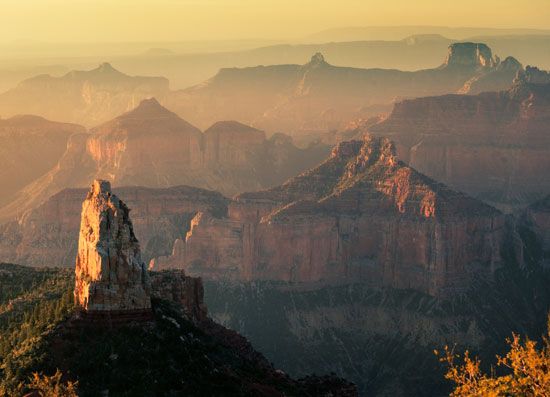
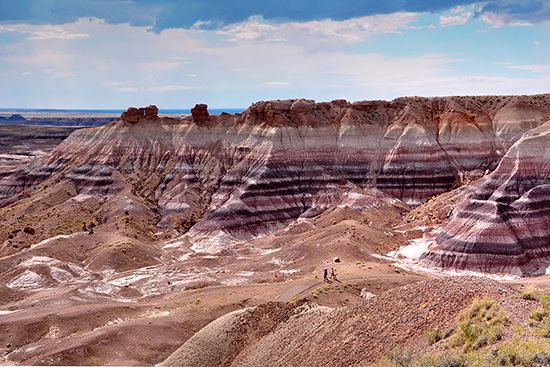
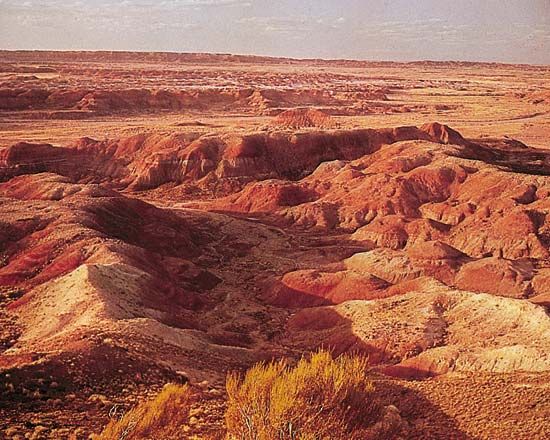
The region’s name, coined in 1858 by Lieutenant Joseph C. Ives, reflects its striking visual character, defined by brilliantly colored shales, marls, and sandstones that display bands of red, yellow, blue, white, and lavender. While these vibrant landscapes are a natural wonder, the most significant cultural artistic tradition associated with the area is the practice of sand painting by the Navajo people. They utilize the region’s variegated, brightly colored sands to create intricate ceremonial art, which holds deep spiritual and cultural meaning.1
The provided information does not contain details regarding the desert’s depiction in mainstream literature, fine art, or popular culture beyond these traditional practices.
What is the Painted Desert and where exactly is it located in Arizona?
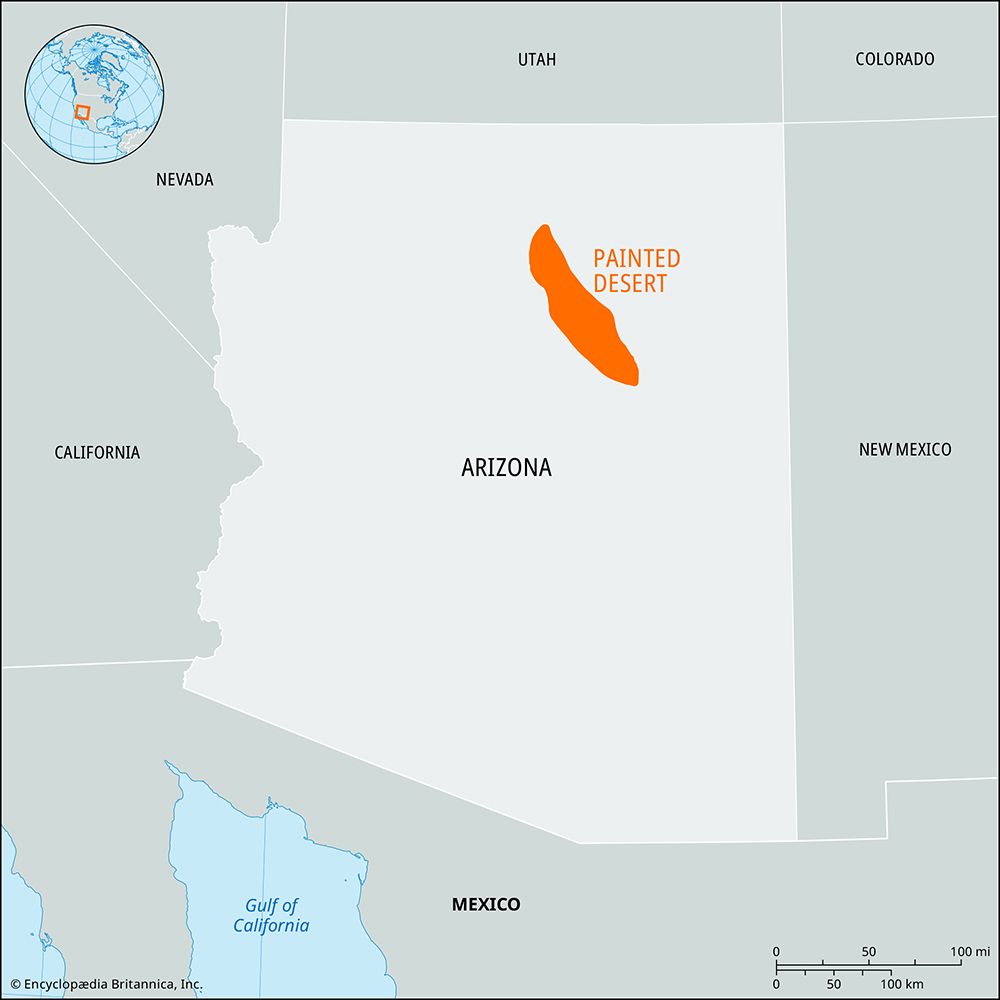
The Painted Desert is a vast, arid region of high plateau located in north-central and northeast-central Arizona, United States.1
Spanning approximately 7,500 square miles (19,400 square km), the desert stretches about 150 miles (240 km) in a southeasterly direction, beginning near the Grand Canyon and extending along the north side of the Little Colorado River to the town of Holbrook.1
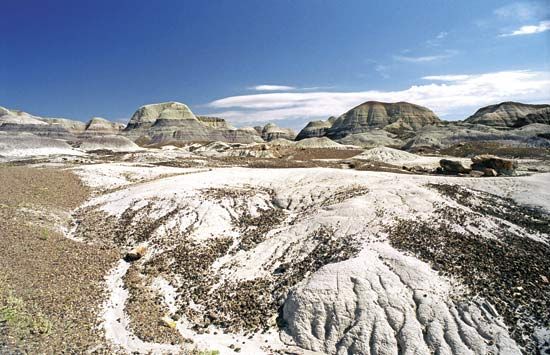
The region is characterized by its vivid, banded landscape of shales, marls, and sandstones, which display striking colors including red, yellow, blue, white, and lavender. Its rolling surface, which sits at elevations between 4,500 and 6,500 feet (1,370 to 1,980 metres), is marked by isolated buttes, broad mesas, and evidence of past volcanic activity. A portion of the desert’s southeastern section is protected within the northern part of Petrified Forest National Park. Large areas of the desert are also situated within Navajo and Hopi reservations.12
What are some of the most notable rock formations or landmarks within the Painted Desert?
The Painted Desert is defined by its vast, colorful landscape of wind-eroded hills, mesas, and buttes. While the region is primarily characterized by its vivid, banded geology, several specific landmarks and features are notable:
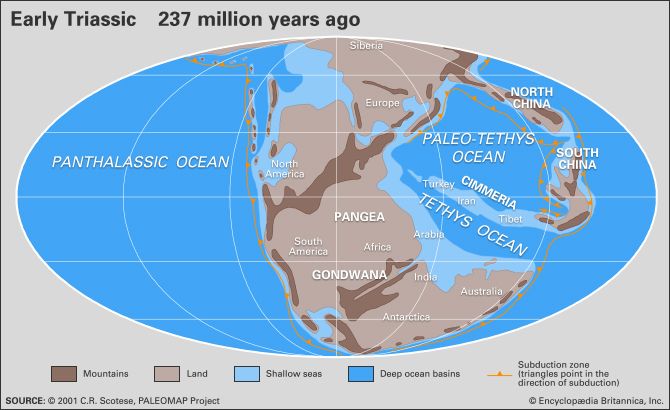
- Black Forest Bed: Located in the northern portion of the Petrified Forest National Park, this is one of four remarkable areas containing petrified trees dating back to the Triassic Period, approximately 213 million years ago.12
- Pilot Rock: Situated in the northwestern corner of the park’s northern lobe, this formation reaches an elevation of 6,235 feet (1,900 metres) and serves as the highest point in the park.2
- Painted Desert Inn: A National Historic Landmark located near the north entrance of the park, offering historical insight into the region.2
- Vermilion Cliffs: These prominent cliffs bound the northern edge of the desert, rising to meet broad, flat-topped mesas.1
- Puerco Indian Ruin: Located just south of the Painted Desert, this site features the remains of ancient Ancestral Pueblo dwellings.2
How did the Painted Desert get its name and what causes its distinctive colorful appearance?
The name “Painted Desert” was first applied to the region in 1858 by government explorer Lieutenant Joseph C. Ives. He chose the name to describe the area’s brilliantly colored landscape, which features a striking array of hues across its exposed surfaces.1
The distinctive appearance of the desert is caused by its composition of shales, marls, and sandstones. These geological layers are banded with vivid colors, including red, yellow, blue, white, and lavender. The visual effect is further enhanced by the atmospheric conditions of the region, where desert dust can create a pink mist or purple haze in the air.1
The region is a high plateau characterized by a barren, arid environment with isolated buttes and broad, flat-topped mesas. The colorful sands found within the desert are also culturally significant, as the Navajo people utilize them for their traditional sand paintings.1
Sources
- Painted Desert — Encyclopædia Britannica
- Petrified Forest National Park — Encyclopædia Britannica
- Painted Desert — Merriam-Webster
- Arizona: Top Questions — Encyclopædia Britannica
Published on · 3 min read