Triassic Period
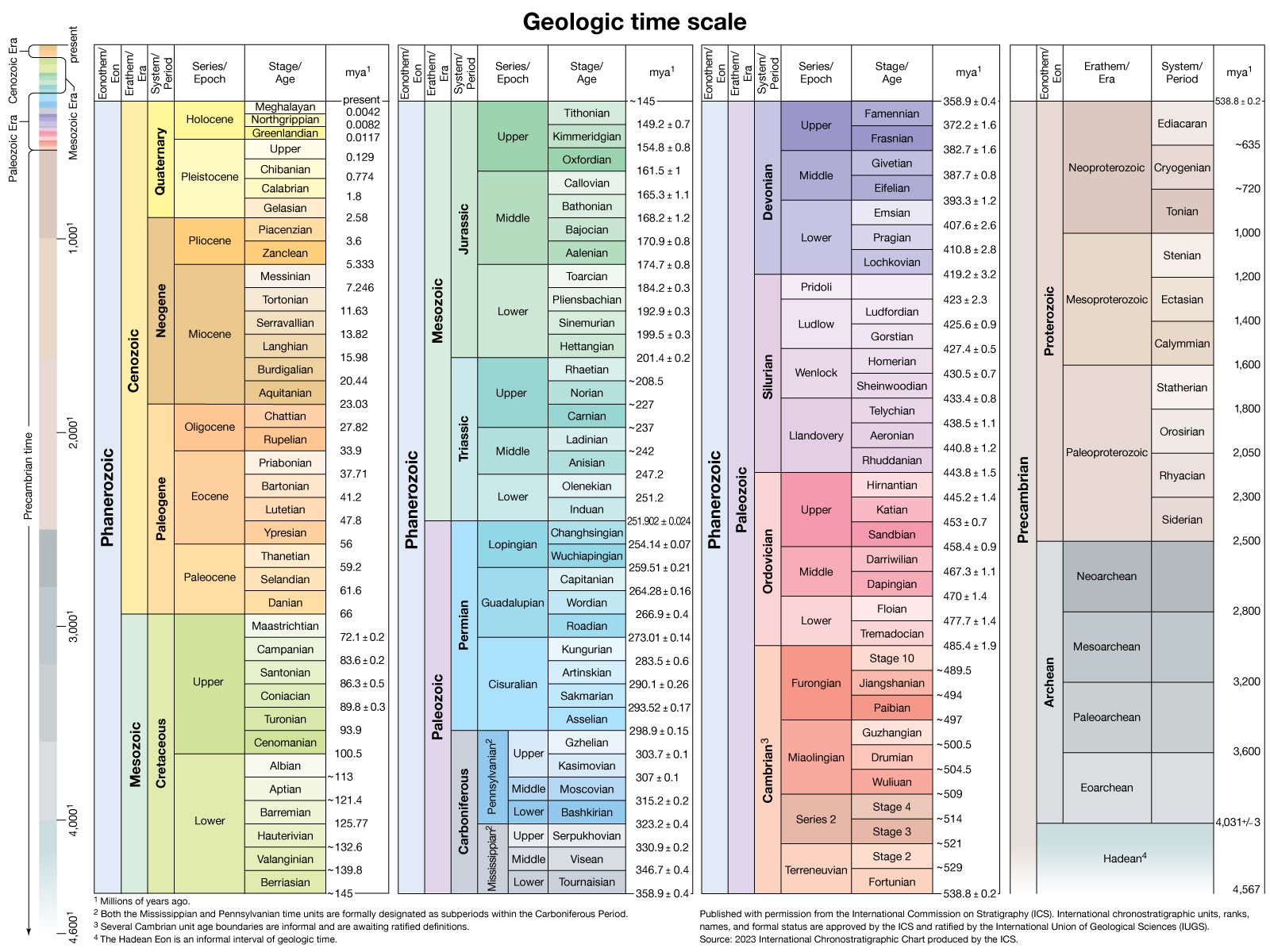
The Triassic Period (252.2 to 201.3 million years ago) was defined by the dominance of the supercontinent Pangea and the transition from crustal stability to…
What major geological events characterized the Triassic Period?
The Triassic Period (252.2 to 201.3 million years ago) was defined by the dominance of the supercontinent Pangea and the transition from crustal stability to active rifting.12
Paleogeography and Tectonics
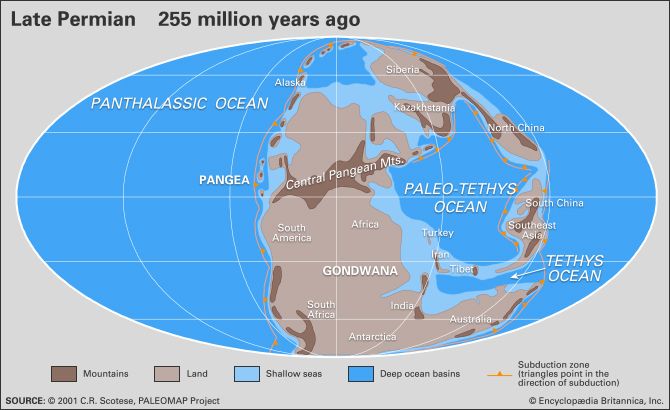
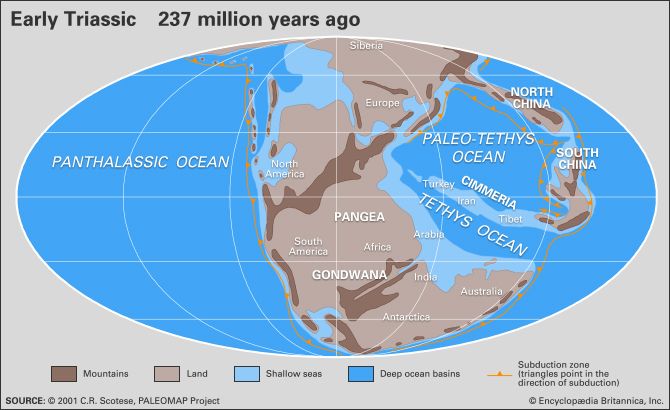
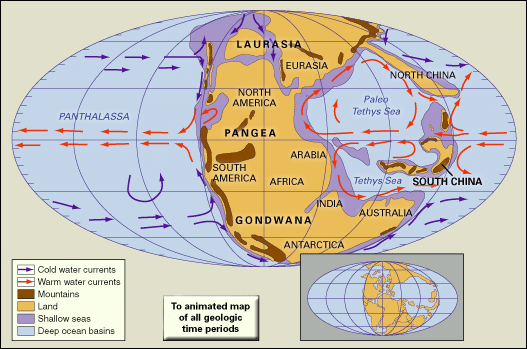
At the start of the period, Earth’s landmasses were consolidated into Pangea, surrounded by the global ocean Panthalassa. While the crust was initially quiescent, the Late Triassic saw the onset of continental rifting, particularly between Laurasia and Gondwana, which initiated the opening of the Tethys Sea. In eastern North America, this rifting caused normal faulting and the formation of grabens (fault-bounded basins) that accumulated thick sediment sequences. Additionally, accretionary tectonics occurred along the western margin of North America, where microcontinents were sutured onto the Cordilleran belt.314
Environmental and Extinction Events
The period was marked by widespread aridity and a monsoonal climate, with no polar ice. Toward the end of the Triassic, intense volcanic activity—associated with the rifting of Pangea—released massive amounts of carbon dioxide. This triggered a significant mass extinction event that decimated marine and terrestrial populations, ultimately clearing ecological niches for the rise of dinosaurs.56
What are the main subdivisions of the Triassic Period in terms of geochronology?
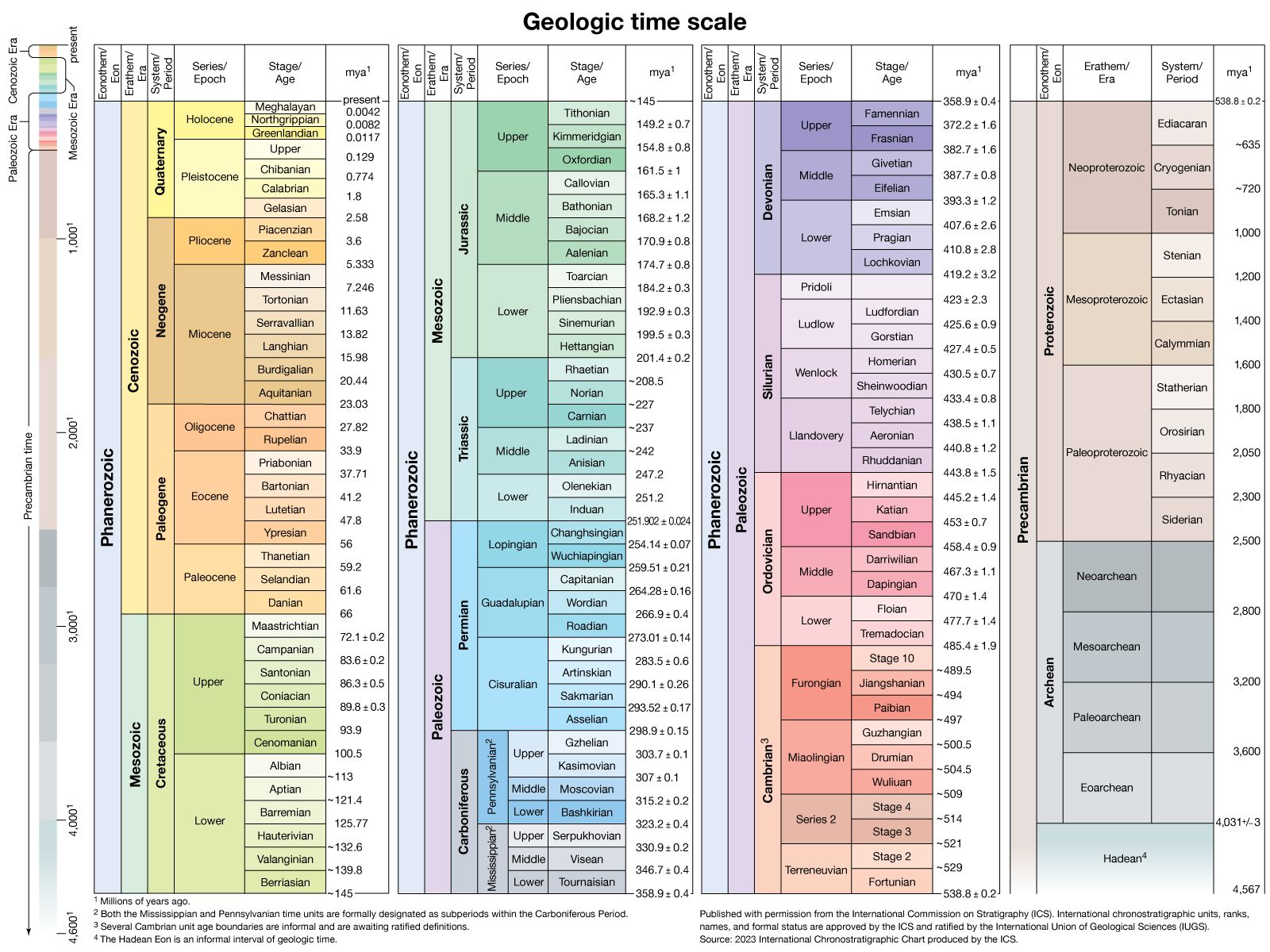
The Triassic Period is geochronologically divided into three primary epochs, which correspond to the Lower, Middle, and Upper series of the Triassic System.7
Epochs and Stages
These epochs are further subdivided into internationally recognized stages based on fossil records, radiometric dating, and magnetic reversals:7
- Early Triassic (252–247 million years ago)
- Middle Triassic (247–235 million years ago)
- Late Triassic (235–201 million years ago)
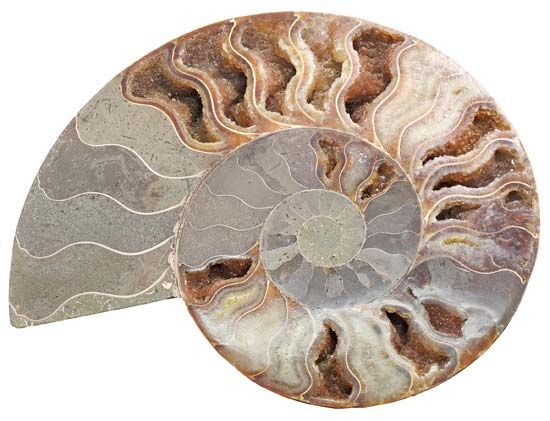
While the Alpine sequence in Europe historically served as the standard for these stages, modern global biostratigraphy relies heavily on a zonal scheme developed in North America, which utilizes ammonoid biozones to correlate rock units worldwide.710
How does the geochronology of the Triassic Period compare to the periods immediately before and after it?
The geochronology of the Triassic Period (252.2 to 201.3 million years ago) is defined by its position as the first period of the Mesozoic Era, sandwiched between the Permian Period and the Jurassic Period.14
The Permian-Triassic Boundary
The transition from the Permian to the Triassic marks the boundary between the Paleozoic and Mesozoic eras. This boundary is characterized by the most severe mass extinction in Earth’s history, which decimated marine and terrestrial life. Geochronologically, this boundary is often marked by a significant hiatus in the rock record, though researchers increasingly look to the first appearance of the conodont Hindeodus parvus as a global marker for the base of the Triassic.111121314
The Triassic-Jurassic Boundary
The end of the Triassic is marked by another mass extinction event, which, while less severe than the Permian-Triassic crisis, resulted in significant reductions in populations such as ammonoids. This boundary serves as the transition into the Jurassic Period, a time defined by the great radiation of dinosaurs.14
Correlation Challenges
Unlike the periods that followed, the Triassic is dominated by sedimentary rocks that often lack reliable radiometric data for absolute dating. Consequently, geologists rely heavily on biochronology—specifically the succession of fossilized life-forms—to correlate strata globally. While the Permian subdivisions are defined by distinct conodont zones, the Triassic relies on a combination of ammonoid biozones and modern stratigraphic techniques to establish its chronological profile.15414
How did the climate change during the Triassic Period?
The climate of the Triassic Period was characterized by relative homogeneity and a lack of polar ice, resulting in less extreme temperature gradients between the equator and the poles compared to the modern day.3
Continental Climate and Aridity
The formation of the supercontinent Pangea played a central role in shaping the period’s environment. Much of the landmass experienced a predominantly warm and dry climate. Evidence for widespread aridity includes the presence of red sandstones, evaporites, and lithified dune deposits.43
Monsoonal Patterns
While the climate was generally arid, there is also significant evidence for strong seasonal precipitation, such as braided fluvial sediments and deltaic deposits. This apparent contradiction is best explained by a monsoonal climate, where cross-equatorial winds brought seasonal rainfall to large areas of Pangea.3
Humid Conditions and Marine Environments
In contrast to the arid interior, high-latitude regions—including parts of Antarctica, Australia, and Canada—show evidence of humid conditions through the presence of coal deposits, which indicate lush vegetation and swampy environments. In the oceans, the vast Panthalassa ocean likely featured simple circulation patterns, while the Tethys sea provided warm, shallow waters that supported the development of coral reefs.3
Sources
- A Journey Through Time Since the Precambrian - Triassic Period: 252.2 million to 201.3 million years ago — Encyclopædia Britannica
- Triassic Period - Significant geologic events — Encyclopædia Britannica
- Triassic Period - Paleoclimate — Encyclopædia Britannica
- Triassic Period — Encyclopædia Britannica
- end-Triassic extinction — Encyclopædia Britannica
- Triassic Period - Paleogeography — Encyclopædia Britannica
- Triassic Period - Major subdivisions of the Triassic System — Encyclopædia Britannica
- Rhaetian Stage — Encyclopædia Britannica
- Induan Stage — Encyclopædia Britannica
- Triassic Period - North American strata — Encyclopædia Britannica
- Triassic Period - Permian-Triassic extinctions — Encyclopædia Britannica
- Triassic Period - The Permian-Triassic boundary — Encyclopædia Britannica
- Triassic Period - Correlation of Triassic strata — Encyclopædia Britannica
- Permian Period - Permian-Triassic boundary — Encyclopædia Britannica
- Permian Period - Major subdivisions — Encyclopædia Britannica
- Permian extinction - Temperature crises — Encyclopædia Britannica
Published on · 4 min read