Paspalum
The Paspalum genus is a large group of annual and perennial plants belonging to the Poaceae family, which comprises the true grasses. Within this diverse…
How does the Paspalum genus fit into the larger family of grasses (Poaceae)?
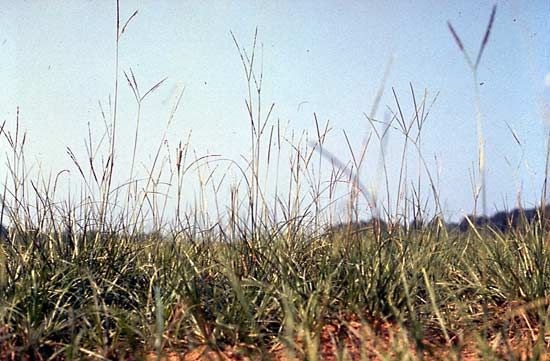
The Paspalum genus is a large group of annual and perennial plants belonging to the Poaceae family, which comprises the true grasses. Within this diverse family—the most economically significant group of flowering plants—Paspalum is distinguished by its adaptation to warm regions and its use of C4 carbon fixation, a specialized photosynthetic pathway that enhances drought tolerance.12
Morphologically, these grasses often feature tufted or creeping growth habits, utilizing rhizomes or stolons to spread. Their inflorescences are characterized by small, reduced flowers arranged in racemes. While some species are cultivated for forage or as millet, others are recognized as invasive species or noxious weeds when introduced outside their native ranges. Like other members of the Poaceae family, they play a vital role in soil formation and ecosystem stability.12
What are some of the most common or important species within the Paspalum genus?
The Paspalum genus includes several species that are ecologically and economically significant, ranging from agricultural crops to common lawn grasses. Notable species include:
- Dallis grass (P. dilatatum): A South American species widely utilized in pastures across Australia and North America for forage.1
- Bahia grass (P. notatum): A perennial tropical American grass that is commonly used as a lawn grass in the southern United States.4
- Vasey grass (P. urvillei): Native to South America, where it is grown for hay; however, it is frequently classified as a noxious weed in other regions.1
- Water couch, or knotgrass (P. distichum): Known for forming dense mats along ditches and shorelines in North America, South America, and Europe. It is also utilized as a lawn grass in Australia.1
- Kodo millet (P. scrobiculatum): An important species grown as a millet crop in parts of Africa and Asia.1
How are Paspalum plants used in agriculture or landscaping?
Paspalum plants are utilized in agriculture and landscaping primarily for their resilience and adaptability to warm climates. Their agricultural and horticultural applications include:
- Forage and Hay Production: Several species are highly valued as livestock feed. Dallis grass (P. dilatatum) is widely cultivated in pastures across Australia and North America, while Vasey grass (P. urvillei) is grown for hay in its native South America.1
- Food Crops: Certain species, such as Paspalum scrobiculatum, are cultivated as millet in parts of Asia and Africa, serving as an important food staple.1
- Landscaping and Turf: Due to their growth habits, which can include creeping stolons or rhizomes, some Paspalum species are used as lawn grasses. For example, water couch (P. distichum) is utilized for this purpose in Australia.1
- Environmental Benefits: Because they utilize C4 carbon fixation, these grasses are notably drought-tolerant, making them effective for ground cover in challenging environments.1
While these plants offer significant utility, it is important to note that some species are considered invasive species or noxious weeds when introduced outside their native ranges, requiring careful management.1
Are there any unique adaptations or features that distinguish Paspalum from other grass genera?
Paspalum grasses are distinguished by several key adaptations that allow them to thrive in warm climates. A primary feature is their use of C4 carbon fixation, a specialized photosynthetic pathway that significantly reduces photorespiration and enhances the plants’ drought tolerance compared to many other grass genera.1
Structurally, the genus exhibits versatile growth habits, appearing as either tufted plants or creeping forms that spread via rhizomes (underground stems) or stolons. Their leaves are typically flat and linear, characterized by a membranous ligule at the base. Additionally, their reproductive structures are unique; the reduced flowers are arranged in specific inflorescences known as racemes.1
These combined traits—efficient carbon fixation and flexible growth strategies—make Paspalum highly successful in diverse environments, though they also contribute to some species becoming invasive species when introduced outside their native ranges.1
Sources
- Paspalum — Encyclopædia Britannica
- grass — Encyclopædia Britannica
- Paspalum — Merriam-Webster
- Bahia grass — Merriam-Webster
- list of plants in the family Poaceae — Encyclopædia Britannica
- Millet — Encyclopædia Britannica
Published on · 3 min read