Piperaceae
The Piperaceae family, commonly known as the pepper family, is a group of plants within the order Piperales that are widely distributed throughout the…
What are the main characteristics of plants in the Piperaceae family?
The Piperaceae family, commonly known as the pepper family, is a group of plants within the order Piperales that are widely distributed throughout the tropics and subtropics.12
Key characteristics of the family include:
- Growth Habit: Members grow as herbs, vines, shrubs, and trees. While some species are woody, the family is characteristically herbaceous.12
- Leaves: The leaves are typically pungent and grow singly, often featuring a sheathing leaf base.12
- Flowers: The plants produce numerous, minute, and inconspicuous flowers that lack sepals and petals. These flowers are bisexual and crowded into dense, slender, spikelike inflorescences.123
- Reproductive Features: The flowers possess a one-celled ovary with one erect ovule per chamber. The prevailing fruit type in the family is the drupe.23
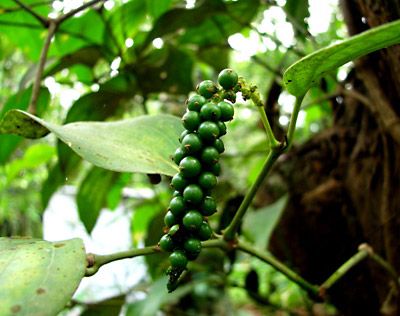
- Chemical Properties: Many species are known for their aromatic herbage and pungent compounds, such as the alkaloid piperine and the resin chavicine, which are found in the genus Piper.13
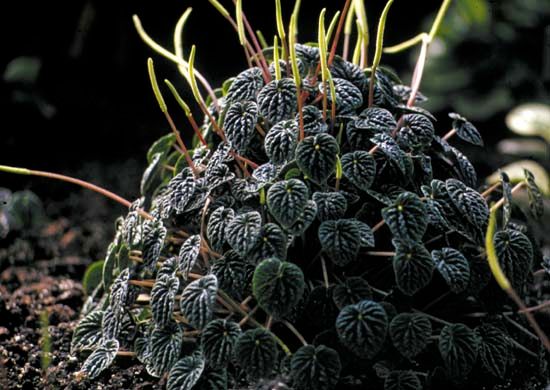
The family comprises about five genera, with Piper and Peperomia being the most significant.1
What is the evolutionary history of the Piperaceae family?
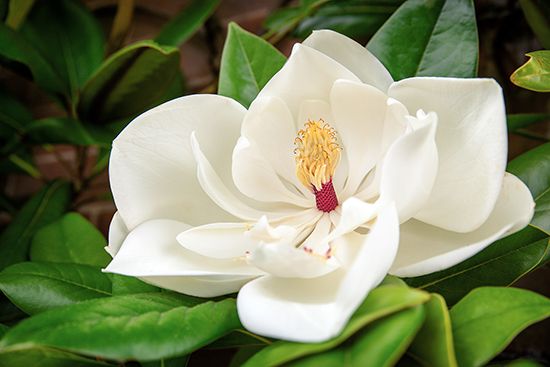
The Piperaceae family, or pepper family, is a significant member of the order Piperales. Evolutionarily, the order Piperales is classified within the magnoliid clade, which represents an early-diverging lineage in the angiosperm (flowering plant) tree of life.3
Within this evolutionary framework, the Piperaceae are closely related to the Saururaceae family. Both families share several primitive or ancestral characteristics, such as minute, inconspicuous flowers that lack sepals and petals, and the presence of a single erect ovule per ovary chamber. While the fossil record for many plant groups is extensive, the specific evolutionary history of the Piperaceae is understood primarily through its placement within the broader magnoliid group, which diverged early from the main line of flowering plant evolution.3
The family is pantropical and includes approximately 3,600 species, with the genera Piper and Peperomia being the most prominent. Their continued success is marked by diverse growth habits, ranging from herbs and shrubs to woody vines and trees, adapted to tropical and subtropical environments.32
How have plants from the Piperaceae family been used traditionally in different cultures?
Plants in the Piperaceae family have been utilized by various cultures for centuries, serving as essential commodities, medicines, and social stimulants.
- Culinary and Trade: Piper nigrum, native to India’s Malabar Coast, is one of the world’s oldest known spices. It became a vital article of international trade, serving as a medium of exchange in ancient Greece and Rome. During the Middle Ages, the European monopoly on the pepper trade was a primary driver for the exploration of eastern sea routes.18
- Stimulants: In the Orient, the leaves of P. betle (betel pepper) are traditionally chewed with betel nut and lime for their mildly stimulating effects. Additionally, the root of P. methysticum is used to prepare kava, a ceremonial drink in Fiji and other Pacific Islands known for its narcotic and sedative properties.1
- Medicinal and Other Uses: Many Piper species are used in traditional medicine. P. cubeba is valued in Southeast Asia for medicinal purposes and as a flavoring for cigarettes and bitters. Black pepper itself has historically been used as a carminative to relieve flatulence and as a stimulant for gastric secretions. Furthermore, the young leaves and stems of P. vividispica are consumed as food in parts of Central and South America.18
How are Piperaceae plants classified within the larger order of Piperales?
Within the modern Angiosperm Phylogeny Group (APG IV) classification system, the family Piperaceae is classified as a member of the order Piperales.23
The order Piperales itself is situated within the magnoliid clade, a group of five orders of basal angiosperms that represent an early evolutionary branch in the flowering plant tree of life. Alongside the Piperaceae, the order Piperales includes two other families:23
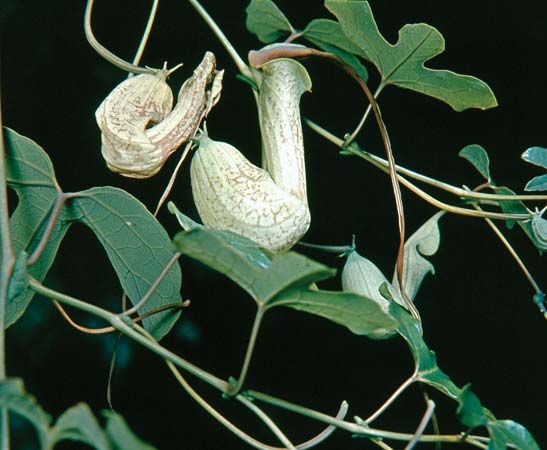
- Aristolochiaceae: A family of woody vines, shrubs, and herbs that includes the former families Hydnoraceae and Lactoridaceae.23
- Saururaceae: A family of aromatic herbs often found in wet areas, which is closely related to the Piperaceae.2
This classification reflects a shift from older systems, such as the Cronquist system, toward a phylogeny-based approach that utilizes molecular techniques and DNA sequencing to organize plant diversity.23
Sources
- Piperaceae — Encyclopædia Britannica
- Piperales — Encyclopædia Britannica
- Piperaceae — Merriam-Webster
- Piperales — Merriam-Webster
- bryophyte - Evolution and paleontology — Encyclopædia Britannica
- Peperomia — Encyclopædia Britannica
- plant - Evolution and paleobotany — Encyclopædia Britannica
- black pepper — Encyclopædia Britannica
- black pepper — Merriam-Webster
- angiosperm - Annotated classification — Encyclopædia Britannica
Published on · 3 min read