Ground Cherry
Ground cherries (genus Physalis) are distinct from sweet cherries (Prunus avium); while sweet cherries are stone fruits in the rose family, ground cherries…
What are the distinctive characteristics of ground cherry plants and their fruits?
Ground cherries (genus Physalis) are distinct from sweet cherries (Prunus avium); while sweet cherries are stone fruits in the rose family, ground cherries are herbaceous plants in the nightshade family (Solanaceae).12
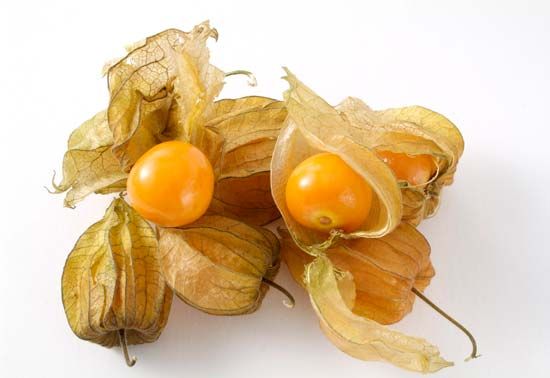
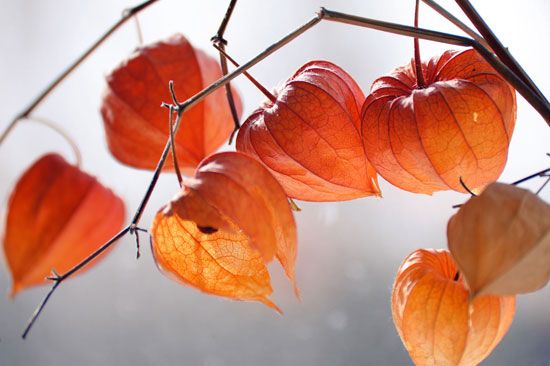
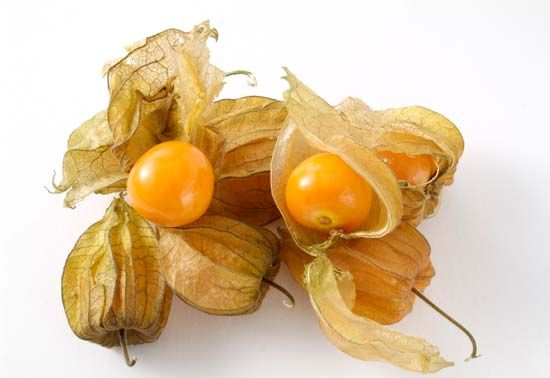
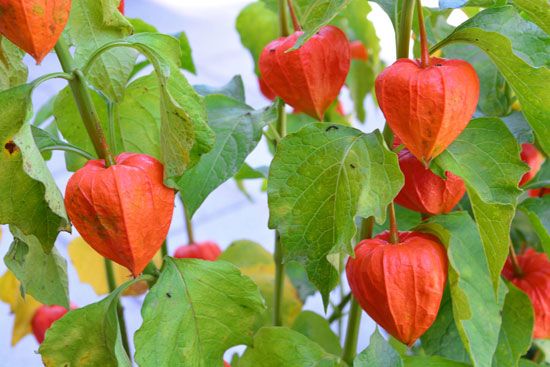
Ground cherries are annuals or perennials characterized by simple leaves with entire or irregularly toothed margins and solitary, bell-shaped flowers. Their most distinctive feature is an inflated, baglike calyx (fused sepals) that encloses the fruit. This calyx sometimes turns a bright orange-red as it matures.13
The fruit itself is a fleshy, globular, 2-celled berry that is typically greenish or yellow when ripe. Several species, such as the Cape gooseberry, husk tomato, and tomatillo, are cultivated for their edible berries, while others like the Chinese lantern are grown primarily for their showy, papery husks.13
How are ground cherries used in culinary applications?
Ground cherries, such as the Cape gooseberry, are versatile fruits known for their bittersweet, slightly tart flavor profile, which features notes of citrus, pineapple, peach, and cherry. Because of this unique taste, they are utilized in a wide variety of culinary applications ranging from sweet desserts to savory dishes.4
Culinary Uses
- Fresh and Cooked: The berries can be consumed raw or prepared through cooking.4
- Sweet Dishes: They are frequently incorporated into baked goods, jams, and chutneys. In Brazil and parts of Europe, they are often dipped in chocolate and served as elegant petits fours. In Andean countries, they are commonly featured in yogurts and ice creams.4
- Savory Dishes: Their acidity makes them suitable for savory sauces. In Hawaii, they are notably paired with couscous and coriander to accompany scallops.4
While the Cape gooseberry is a popular food crop, it is important to note that other members of the genus, such as the Chinese lantern, are grown primarily for ornamental purposes rather than consumption.1
Are there any pests or diseases that commonly affect ground cherry plants?
Sorry, the Britannica knowledge base does not contain this information.
How do ground cherries compare to other closely related plants like tomatillos?
Ground cherries and tomatillos are closely related, as both belong to the genus Physalis within the nightshade family (Solanaceae). In fact, the tomatillo (Physalis philadelphica) is classified as a specific species of ground cherry.156
Both plants share a defining botanical characteristic: after pollination, the calyx of the flower grows to form a thin, papery, baglike husk that encloses the developing berry.15
However, they differ in their typical culinary roles and biological requirements:
- Culinary Use: While many ground cherry species are known for their sweet, fruit-like flavor and are used in desserts or jams, the tomatillo is prized for its tartness and is a staple in savory cooking, most notably as the primary ingredient in salsa verde.156
- Reproduction: Unlike some other ground cherries, tomatillo plants are self-incompatible, meaning they require pollen from a neighboring plant to produce fruit.5
- History: The tomatillo has a long history as a domesticated food crop in Mesoamerica, dating back to the Aztecs around 800 BCE.5
Sources
- ground cherry — Encyclopædia Britannica
- physalis — Merriam-Webster
- Sweet cherry — Encyclopædia Britannica
- Cape gooseberry — Encyclopædia Britannica
- Tomatillo — Encyclopædia Britannica
- Tomatillo: Top Questions — Encyclopædia Britannica
Published on · 3 min read