Penrhyn Atoll
Penrhyn Atoll, also known as Tongareva, is the northernmost of the Cook Islands, a self-governing state in free association with New Zealand located in the…
What is Penrhyn Atoll?
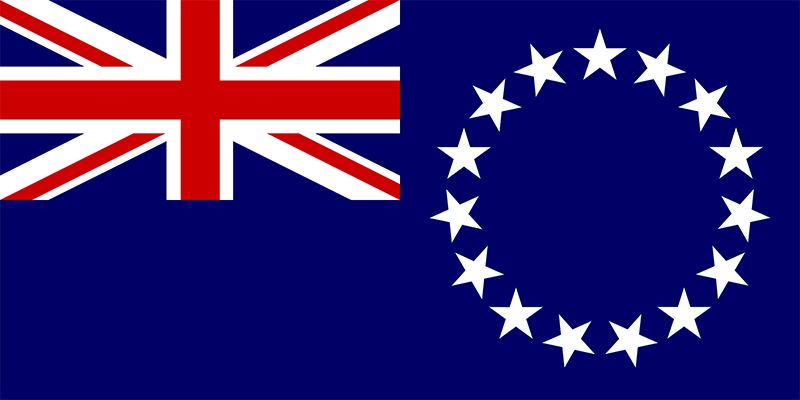
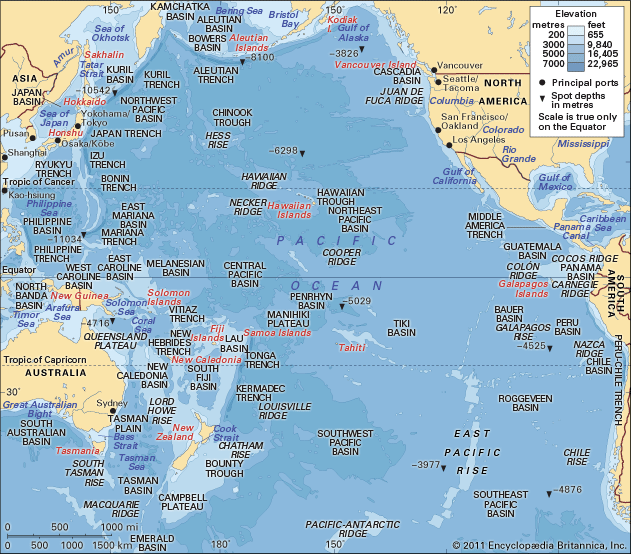
Penrhyn Atoll, also known as Tongareva, is the northernmost of the Cook Islands, a self-governing state in free association with New Zealand located in the South Pacific Ocean1.
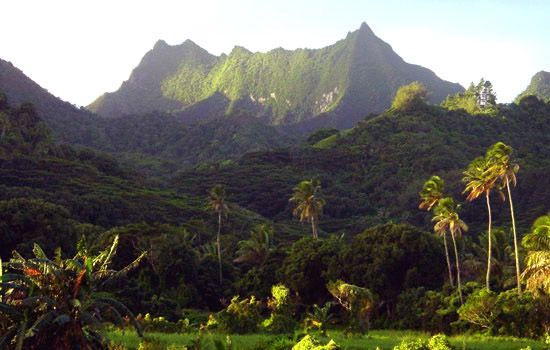
This coral atoll features a 40-mile reef enclosing a vast 108-square-mile lagoon, which provides significant anchorage facilities. While the total land area is only about 3.8 square miles, the island supports a small population that relies on local fishing, coconut, and breadfruit cultivation, supplemented by goods shipped from Rarotonga.1
Inhabited by Polynesians long before its 1788 discovery by the British ship Lady Penrhyn, the atoll was annexed by Great Britain in 1888 before coming under New Zealand administration in 1901. Today, the island maintains essential infrastructure, including schools, a hospital, and an airstrip originally constructed during World War II.1
How are coral atolls formed?
The formation of coral atolls is primarily explained by the subsidence theory, first proposed by Charles Darwin. This process involves several progressive stages:
- Fringing Reef: Initially, coral reefs grow in shallow waters around a volcanic island.
- Barrier Reef: As the volcanic island gradually sinks or subsides, the reef continues to grow upward and outward to remain in the sunlit, shallow water it requires. This creates a barrier reef separated from the island by a lagoon.
- Atoll: Eventually, the volcanic island sinks completely below the surface, leaving behind a ring-shaped reef that encloses a central lagoon.
While subsidence is a primary driver, plate-tectonic theory also plays a role, as the ocean floor naturally subsides while spreading away from oceanic ridges. Additionally, fluctuations in sea level caused by past glacial cycles have influenced the upward growth of many reefs. In some cases, annular reefs can also form through the erosion of uplifted limestone platforms followed by subsequent submergence.
What is the significance of the Cook Islands’ relationship with New Zealand?
The relationship between the Cook Islands and New Zealand is defined by a status of “free association,” established when the islands moved to self-government in 1965. This unique constitutional framework grants the Cook Islands significant autonomy while maintaining formal ties with New Zealand.567
Key aspects of this relationship include:
- Governance: The Cook Islands is a self-governing state with its own unicameral Parliament and prime minister6. While New Zealand is nominally responsible for the islands’ defense and external affairs, the Cook Islands independently establishes diplomatic relations and enters into international treaties.7
- Historical Context: Following annexation by New Zealand in 1901, the islands remained under its administration for decades. During the latter half of the 20th century, the partnership focused on developing infrastructure, social conditions, and the economy, including the growth of tourism.5
- International Standing: This autonomy has allowed the Cook Islands to become a founding member of the Pacific Islands Forum and join international organizations such as UNESCO and the Asian Development Bank as an independent political entity.5
What are some traditional customs of the Polynesian people?
Traditional Polynesian cultures are characterized by a profound connection to the ocean, a complex social hierarchy, and a worldview where the supernatural is an integral part of reality.
Core Beliefs and Social Structure
- Mana and Tapu: Polynesian belief systems center on mana, a sacred supernatural power inherent in all things. To protect this power, societies established tapu (prohibitions or taboos). Violating these rules was believed to result in supernatural punishment, such as illness or bad luck.9
- Kinship and Hierarchy: Social organization was typically based on kinship groups, often structured as a “ramage” or conical clan, where individuals were ranked by their genealogical proximity to a senior line of descent, which was considered to be of divine origin.10
Arts and Performance
- Dance and Oral Tradition: Polynesian dance serves as a visual extension of poetry, used to honor chiefs and recount genealogies or myths. Movements are primarily focused on the arms and hands, with the dancer acting as a storyteller.11
- Tattooing: In many cultures, such as Samoa, tattooing is a significant rite of passage. While colonial influence suppressed this practice in some areas, it has seen a major revival in the late 20th century.12
- Craftsmanship: Traditional arts included wood carving, bark cloth production, and fine mat weaving, each varying by island group.13
Cultural Revival
Despite colonial disruption, there is a strong contemporary effort to maintain these customs. This includes the revival of traditional navigation methods, the promotion of indigenous languages through immersion schools, and the celebration of identity through events like the Festival of Pacific Arts.14
Sources
- Penrhyn Atoll — Encyclopædia Britannica
- atoll — Encyclopædia Britannica
- coral reef - Origin and development of reefs — Encyclopædia Britannica
- volcanism — Encyclopædia Britannica
- Cook Islands - History of the Cook Islands — Encyclopædia Britannica
- Cook Islands - Constitutional framework — Encyclopædia Britannica
- Cook Islands — Encyclopædia Britannica
- New Zealand — Encyclopædia Britannica
- Polynesian culture - Religion of Polynesian culture — Encyclopædia Britannica
- Polynesian culture - Traditional Polynesia — Encyclopædia Britannica
- Polynesian culture - Kinship and social hierarchy — Encyclopædia Britannica
- Polynesian culture - Contemporary Polynesia — Encyclopædia Britannica
- Oceanic music and dance - Polynesia — Encyclopædia Britannica
- Samoa - The arts — Encyclopædia Britannica
- Polynesian culture - Art — Encyclopædia Britannica
Published on · 3 min read