Philippine Crocodile
The Philippine crocodile (Crocodylus mindorensis) is a relatively small, freshwater species of crocodile native to the Philippines, specifically the islands…
What is a Philippine crocodile?
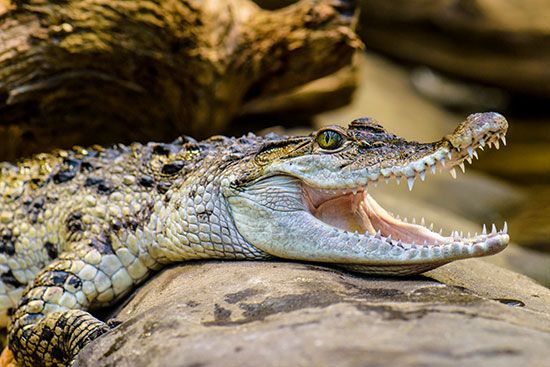
The Philippine crocodile (Crocodylus mindorensis) is a relatively small, freshwater species of crocodile native to the Philippines, specifically the islands of Dalupiri, Luzon, and Mindanao1.
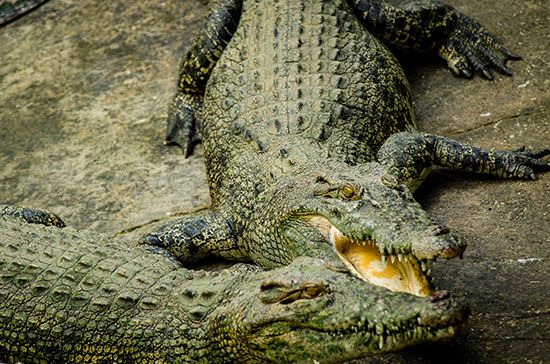
Characterized by a broad triangular snout, these crocodiles typically grow to about 2 meters (6.6 feet) in length, with males generally larger than females. They are distinguished by their brown and gray coloration with black bands, while their mouths are bright yellow inside.1
Currently, the species is classified as critically endangered due to significant population declines caused by habitat loss, hunting, and accidental entanglement in fishing nets. It is estimated that fewer than 150 adults remain in the wild, though captive breeding programs are active in several countries to support their survival. Protecting these animals is a vital conservation priority to prevent the extinction of this unique reptile.1
Where does the Philippine crocodile live?
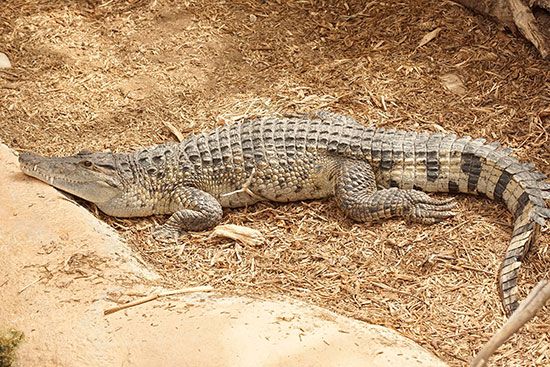
The Philippine crocodile (Crocodylus mindorensis) is found primarily in freshwater rivers, ponds, and marshes within the Philippines.britannica.com/science/marsh) within the Philippines.1
While its historical range once spanned across the Philippine islands, the species’ current distribution is limited to a handful of small, fragmented habitats on the islands of:
These crocodiles typically remain within their wetland environments, alternating between swimming in shallow waterways and basking on the shore or on emergent logs.1
How does the Philippine crocodile look different from other crocodiles?
The Philippine crocodile (Crocodylus mindorensis) is distinguished from many other crocodilians primarily by its smaller size and specific physical features. While some crocodile species can grow to massive lengths, the Philippine crocodile is relatively small, typically reaching about 2 meters (6.6 feet) in length, with a maximum of 3 meters (9.8 feet).1
Key physical differences include:
- Snout Shape: It is characterized by a broad, triangular snout.1
- Coloration: Adults are brown and gray with black bands and patches on their upper bodies, while their undersides are lighter. A unique feature is the inside of the mouth, which is bright yellow.1
- Juvenile Appearance: Young individuals are notably different from adults, appearing golden brown with dark stripes and a near-white underside.1
- Dentition: The mouth contains between 66 and 68 teeth.1
In contrast, other crocodilians vary significantly in scale, tooth count (which can exceed 100 in long-muzzled species), and the arrangement of their bony plates, or scutes. While most crocodiles share a general amphibious body plan, the Philippine crocodile’s specific combination of size, snout shape, and distinct coloration helps set it apart within the order Crocodilia.21
What does the Philippine crocodile eat?
The diet of the Philippine crocodile varies significantly based on the age and size of the individual:
- Young crocodiles: Their diet consists primarily of invertebrates, such as dragonflies, snails, and crustaceans, as well as small fishes.1
- Adult crocodiles: They consume larger prey, including larger fishes, birds, and snakes. They have also been known to attack livestock, such as pigs and dogs.1
Additionally, to assist with buoyancy while swimming in their wetland habitats, these crocodiles are known to consume rocks.1
Sources
- Philippine crocodile — Encyclopædia Britannica
- crocodile - Form and function — Encyclopædia Britannica
- crocodile - Distribution and abundance — Encyclopædia Britannica
Published on · 3 min read