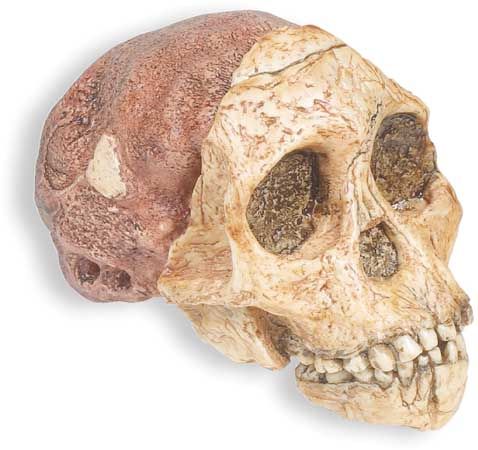
Piltdown Man
The exposure of the Piltdown man as a hoax in 1953–54 was the result of intensive scientific reexamination that revealed the remains were a deliberate…
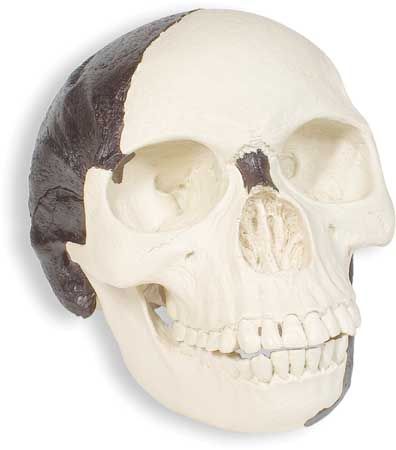
What methods were used to eventually expose the Piltdown man as a hoax?
The exposure of the Piltdown man as a hoax in 1953–54 was the result of intensive scientific reexamination that revealed the remains were a deliberate fabrication.
Key methods used to expose the fraud included:
- Fluorine Dating: Anthropologist Kenneth Oakley applied a fluorine-content analysis to the fossils, which proved the remains were not as ancient as claimed.1
- Chemical Analysis: Tests revealed that the bones had been artificially stained with chromium and iron sulfate to mimic age, neither of which occurred naturally at the site.2
- Microscopic and Physical Examination: Scientists discovered that the teeth had been filed down to simulate human-like wear, and dental putty had been used to bind fragments together.2
- Biological Identification: Analysis confirmed the remains were a composite of a modern human cranium, an orangutan jaw, and a chimpanzee tooth.2
- Radiocarbon Dating: By 1959, carbon-14 dating further confirmed the cranium was only a few centuries old.2
Later investigations in the 21st century utilized spectroscopy and DNA analysis to confirm the specific origins of the fabricated materials.2
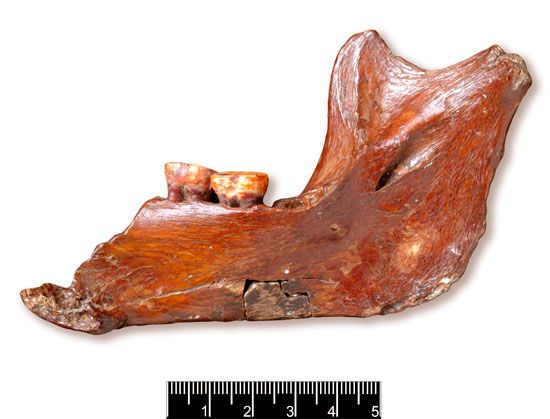
How did the Piltdown man ‘fossils’ differ from genuine human ancestor remains?
The Piltdown man “fossils” differed from genuine human ancestor remains because they were not a single, ancient biological entity, but rather a fraudulent composite of modern and animal parts. While genuine hominin fossils represent the actual evolutionary history of the human lineage, the Piltdown remains were a deliberate fabrication.1
The primary differences included:
- Composition: Instead of being a single extinct species, the “find” was a mixture of a modern human cranium, the jaw and teeth of an orangutan, and a tooth likely from a chimpanzee.1
- Age: While claimed to be 500,000 years old, carbon-14 dating later revealed the cranium was only a few centuries old.1
- Artificial Alterations: Unlike genuine fossils, the Piltdown remains were physically and chemically altered to deceive researchers. This included staining the bones with chromium and iron sulfate to simulate age, filing the teeth to mimic the flat wear patterns of human ancestors, and using dental putty to bind the mismatched fragments together.1
What was the motivation behind creating the Piltdown man hoax?
The motivation behind the Piltdown man hoax remains a subject of historical debate, as no single motive has been definitively proven. However, researchers have proposed several theories regarding the perpetrators’ intentions:
- Professional Ambition: Charles Dawson, the amateur geologist who discovered the remains, is frequently cited as the primary suspect. Scholars suggest he may have been driven by a desire for scientific prestige and a specific ambition to gain election as a fellow of the Royal Society.1
- Personal Vendetta: Evidence discovered in 1996 suggests that Martin A.C. Hinton, a volunteer at the British Museum in 1912, may have orchestrated the hoax to embarrass Arthur Smith Woodward. Hinton had reportedly been rebuffed by Woodward after requesting a paid position, and the hoax may have been a calculated attempt to make the prominent scientist look foolish.1
- Nationalistic Pride: Some historians believe the hoax was eagerly accepted by the British scientific community because it suggested that the British Isles had been a central location for early human evolution.1
Who were the key figures involved in the Piltdown man discovery and subsequent investigation?
The discovery and subsequent investigation of the Piltdown man involved several key figures, ranging from the primary suspects behind the fraud to the scientists who eventually exposed it.
Key Figures in the Discovery
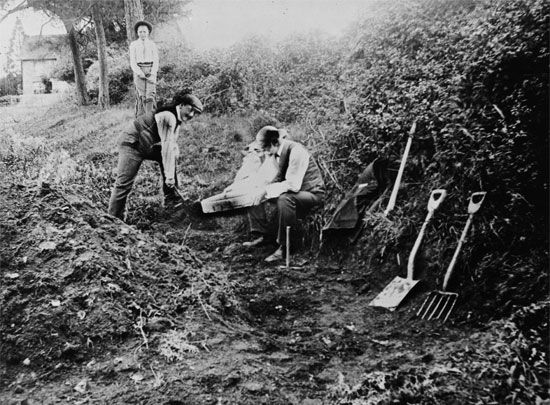
- Charles Dawson: An English lawyer and amateur geologist who discovered the initial fossil fragments between 1910 and 1912. He is widely considered the primary perpetrator of the hoax, as he was the common link at all major discovery sites and possessed the necessary expertise to disguise the remains.1
- Arthur Smith Woodward: The keeper of the British Museum’s paleontology department. He announced the find in 1912 and championed the remains as a “missing link.” While some believe he was a victim of the hoax, others have suggested he may have been a target of a personal vendetta.1
- Martin A.C. Hinton: A museum volunteer in 1912 who later became the keeper of zoology. Evidence found in a trunk in 1996 suggests he may have created the hoax to embarrass Woodward after a professional dispute.1
Key Figures in the Investigation and Exposure
- Kenneth Oakley: A physical anthropologist and paleontologist who played a decisive role in exposing the fraud in 1953. He utilized fluorine dating to prove the remains were not ancient.2
- Brian Gardiner and Andrew Currant: British paleontologists who analyzed the contents of the trunk belonging to Martin A.C. Hinton, providing the first solid evidence regarding the perpetrator’s identity.1
Other figures, such as Pierre Teilhard de Chardin, Sir Arthur Conan Doyle, and Sir Arthur Keith, have also been historically suspected of involvement.1
Sources
- Piltdown man — Encyclopædia Britannica
- Kenneth Oakley — Encyclopædia Britannica
Published on · 4 min read