Petralona Skull
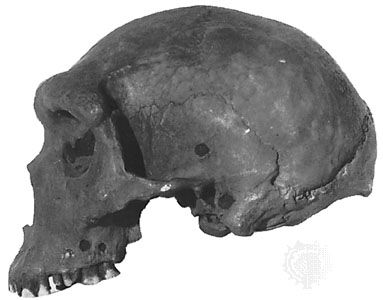
The Petralona skull is an ancient human cranium discovered in 1960 within a cave near Thessaloníki, Greece.
What is Petralona skull?
The Petralona skull is an ancient human cranium discovered in 1960 within a cave near Thessaloníki, Greece.1
While its exact age has been a subject of debate, estimates range from 200,000 to 350,000 years old, supported by associated animal fossils. The specimen is notable for its blend of primitive and advanced features: it possesses Homo erectus-like traits, such as thick braincase bones and prominent browridges, alongside a larger brain capacity characteristic of later species like Homo sapiens and Neanderthals.1
Because it lacks the specific features unique to Neanderthals, many researchers classify the skull as Homo heidelbergensis, a species widely considered a potential common ancestor for both modern humans and Neanderthals. It shares significant morphological similarities with other notable finds, including the Kabwe cranium and specimens from Arago and Bodo.1
Who was Homo heidelbergensis?
Homo heidelbergensis is an extinct species of archaic human within the genus Homo that lived between 600,000 and 200,000 years ago across Africa, Europe, and potentially Asia.2
The species was first identified following the 1907 discovery of the Heidelberg jaw near Heidelberg, Germany. Morphologically, H. heidelbergensis specimens—such as those found at Bodo, Kabwe, and Petralona—exhibit a blend of traits. They possess massive brow ridges and thick vault bones similar to H. erectus, but feature larger braincases that lack the specialized characteristics of Neanderthals.2
Taxonomically, many researchers view H. heidelbergensis as the common ancestor of both Neanderthals and modern humans. This classification helps distinguish the species from the more homogeneous modern H. sapiens and the distinct Neanderthal lineage, suggesting that the transition to modern humans occurred in Africa prior to 300,000 years ago.2
How do scientists determine the age of ancient fossils?
Scientists determine the age of ancient fossils and rocks using a combination of relative and absolute dating techniques within the field of geochronology.4
Relative Dating
Relative dating establishes the chronological order of fossils without providing a specific numerical age.
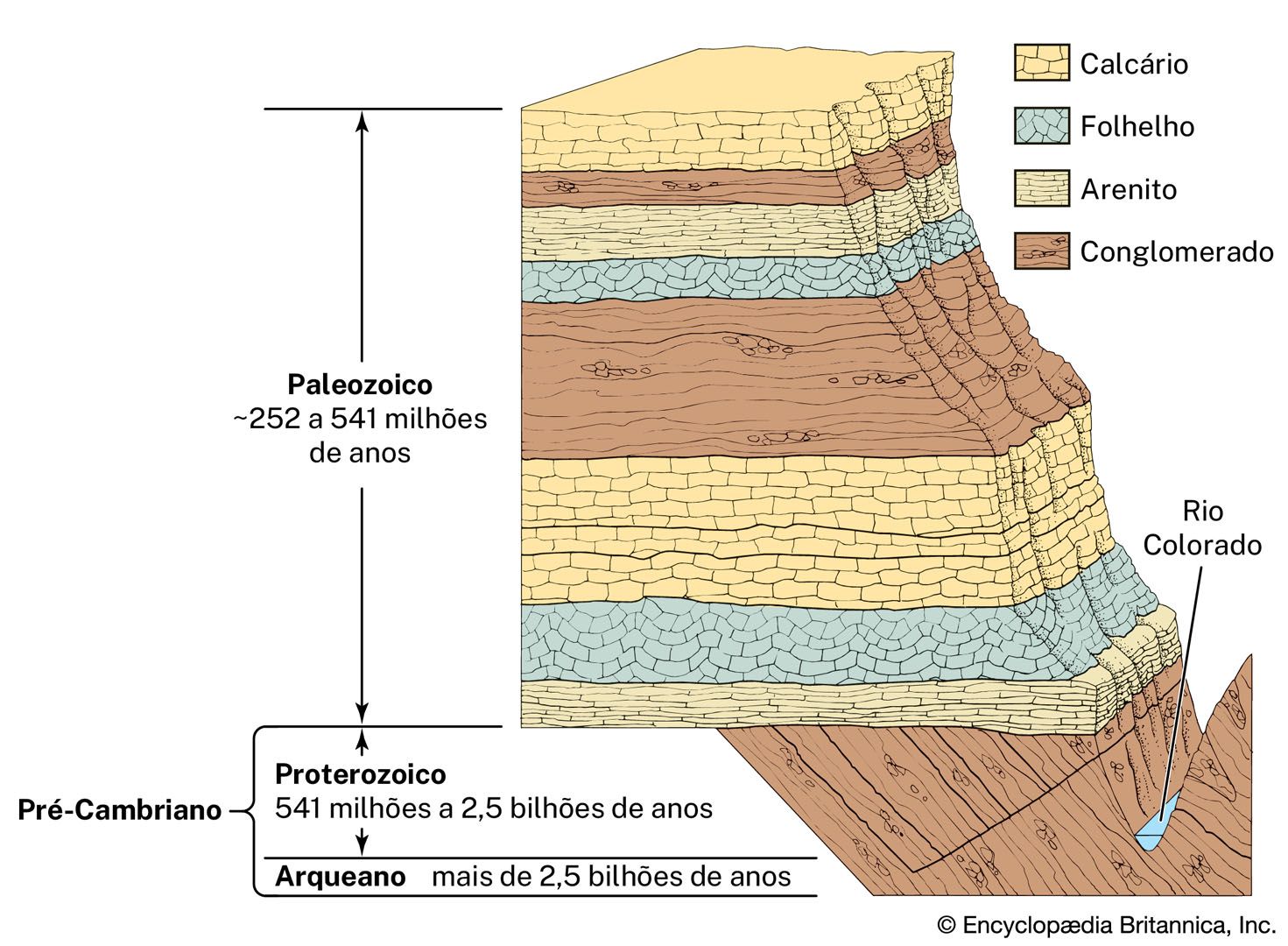
- Stratigraphy: By observing the succession of rock layers, scientists can determine which fossils are older based on their position; generally, deeper layers are older than those above them.5
- Faunal Succession and Index Fossils: This principle relies on the fact that different rock layers contain unique fossil assemblages. Index fossils—distinctive, abundant species that existed for a short time—are used to correlate strata across different geographic locations.67
- Cross Dating: Archaeologists can date undated sites by finding objects from a known culture or period within the same stratigraphic level.5
Absolute Dating
Absolute dating provides a numerical age, often through radiometric methods that measure the decay of radioactive isotopes into stable daughter elements.45
- Radiometric Dating: Techniques like potassium-argon dating and carbon-14 dating measure the ratio of parent isotopes to daughter products. Carbon-14 is effective for organic materials up to 50,000 years old, while other isotopes allow for dating millions of years into the past.815
- Other Techniques: Methods such as dendrochronology (tree-ring counting) and thermoluminescence provide additional absolute chronologies.5
What are the main differences between Neanderthals and modern humans?
The distinction between Neanderthals (Homo neanderthalensis) and modern humans (Homo sapiens) is a subject of ongoing scientific debate, as the two groups share significant genetic and physical similarities while exhibiting clear morphological differences.
Physical and Morphological Differences
When comparing individual specimens, Neanderthals are distinct from modern humans due to a unique constellation of features. Key differences include:11
- Cranium: Neanderthals possessed a low-vaulted cranium with prominent, arched brow ridges, whereas modern humans have a high, rounded, and thin-boned braincase with only modestly pronounced brow ridges.111213
- Face and Jaw: Neanderthals had large nasal and orbital openings, a robust lower jaw with a receding chin, and a space behind the last molar. In contrast, modern humans feature a reduced face, smaller air sinuses, and a complex, distinctive chin.1213
- Body Structure: Neanderthals were robustly built with thick vault bones and a pronounced occipital region to anchor large neck muscles, suggesting they were adapted to colder climates. Modern humans generally possess a more lightly built skeleton.11121413
Genetic and Evolutionary Relationship
Genetic research, including the sequencing of the Neanderthal genome, has revealed that modern humans and Neanderthals interbred, with Eurasians carrying approximately 1–4% Neanderthal nuclear DNA. This evidence suggests that while they are often classified as separate species, they were biologically capable of interbreeding.111512
Behavioral Distinctions
While both groups utilized stone tools, modern humans are associated with a distinct cognitive shift characterized by symbolic behavior, such as complex art, musical instruments, and ritualized burials, which appeared with greater frequency and diversity than in Neanderthal populations. The arrival of behaviorally modern H. sapiens in Europe—often represented by the Cro-Magnons—marked a rapid change in technological innovation and cultural complexity that ultimately led to the replacement of Neanderthal populations.1612
Sources
- Petralona skull — Encyclopædia Britannica
- Homo heidelbergensis — Encyclopædia Britannica
- Homo — Encyclopædia Britannica
- potassium-argon dating — Encyclopædia Britannica
- dating: Top Questions — Encyclopædia Britannica
- carbon-14 dating — Encyclopædia Britannica
- Did you know? — Merriam-Webster
- Archaeology - Dating — Encyclopædia Britannica
- index fossil — Encyclopædia Britannica
- dating - Principles and techniques — Encyclopædia Britannica
- Neanderthal - Neanderthal classification — Encyclopædia Britannica
- Neanderthal - Genetics — Encyclopædia Britannica
- Homo sapiens - Bodily structure — Encyclopædia Britannica
- Neanderthal - First discoveries — Encyclopædia Britannica
- Homo sapiens - Behavioral influences — Encyclopædia Britannica
- Neanderthal - Craniofacial features — Encyclopædia Britannica
Published on · 4 min read