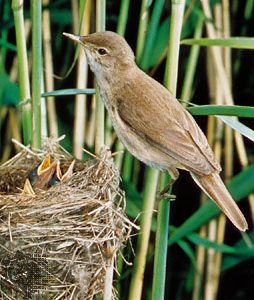
Pipit
A pipit is any of approximately 50 species of small, slender-bodied ground birds belonging to the family Motacillidae within the order Passeriformes. Found…
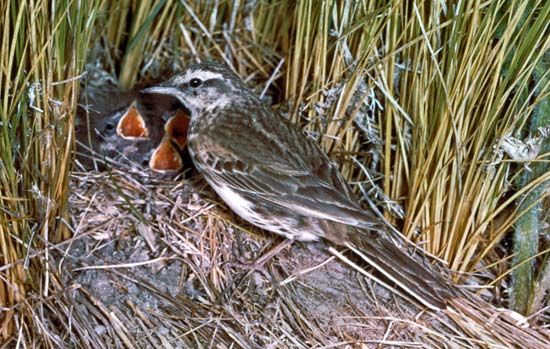
What is Pipit?
A pipit is any of approximately 50 species of small, slender-bodied ground birds belonging to the family Motacillidae within the order Passeriformes. Found globally, except in polar regions, these birds are characterized by their brownish, streaked plumage, thin pointed bills, and elongated hind toes.1
Unlike the colorful, short-tailed pittas (family Pittidae), which are distinct birds often found in tropical forests, pipits are known for their twittering calls and their habit of walking or running rapidly along the ground rather than hopping. They forage for insects and exhibit a strongly undulating flight pattern. They are closely related to wagtails, sharing similar white outer tail feathers that are visible during flight.12
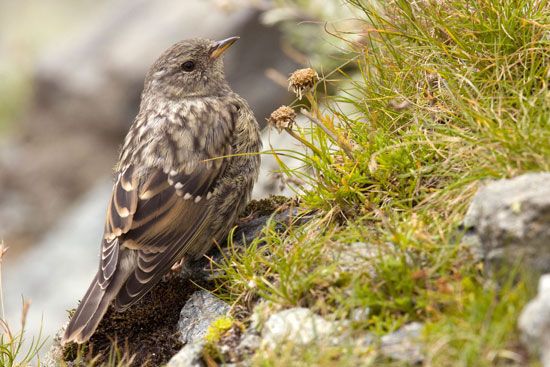
How are pipits different from wagtails?
While pipits and wagtails both belong to the family Motacillidae, they exhibit distinct physical and behavioral differences:
- Appearance: Pipits are generally brownish and streaked, providing camouflage for their ground-dwelling lifestyle. In contrast, wagtails are typically more boldly marked.1
- Behavior: The most notable behavioral difference is that wagtails habitually pump their long tails up and down. Pipits do not exhibit this tail-pumping behavior.13
- Shared Traits: Both groups possess white outer tail feathers that are most visible during flight1. Additionally, both are songbirds that forage for insects on the ground, though pipits are specifically known for their twittering sounds and undulating flight pattern.1
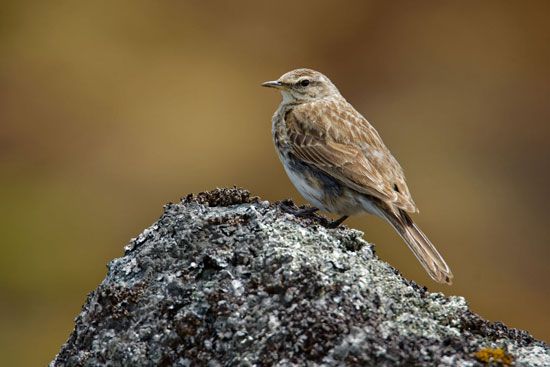
What are some common behaviors of songbirds?
Songbirds, which belong to the suborder Passeri, exhibit a diverse range of behaviors centered on communication, reproduction, and survival.
Vocalization and Communication
The most defining behavior of many songbirds is the use of complex vocalizations produced by a specialized organ called the syrinx. While often referred to as “song,” these vocalizations serve specific functions:
- Territorial Defense: Males use song to advertise their presence, inform rivals of established boundaries, and avoid physical combat.678
- Courtship: Songs are used to attract mates and stimulate them sexually.8
- Duetting: In some species, particularly in the tropics, pairs engage in antiphonal singing to reinforce their pair bond.68
Territoriality and Reproduction
Breeding behaviors vary significantly among species:
- Nesting Strategies: Most songbirds are solitary nesters, defending a territory that includes both the nest and food sources. Others are colonial, defending only the immediate nest site, while some are brood parasites that lay eggs in the nests of other species.9
- Display Arenas: In some polygynous species, males establish leks—specialized display areas where they perform elaborate dances, posturing, and vocalizations to attract females.9
Maintenance and Daily Habits
Songbirds rely on innate behaviors for daily survival:
- Comfort Movements: To maintain their feathers for flight and insulation, birds regularly perform “comfort movements” such as preening, oiling, shaking, and stretching.10
- Feeding: Songbirds have evolved various specializations for foraging, such as gleaning insects from vegetation or probing bark crevices.11
- Migration: Many species engage in seasonal migration to ensure access to abundant food supplies, often following ancestral routes.1213
Why do some birds migrate to higher latitudes during the summer?
Birds migrate to higher latitudes during the summer primarily to exploit seasonal surges in food availability and favorable conditions for breeding.15
In northern regions, such as the Arctic, productivity—including the growth of vegetation and the hatching of insects—reaches very high levels during the summer months. This abundance provides an optimal environment for birds to raise their young, as it ensures sufficient resources to support the energy demands of a growing brood.1516
This behavior is a result of evolutionary adaptation, where natural selection has favored populations that move to take advantage of these temporary, high-productivity “peaks” that would otherwise go unexploited. By nesting in these regions during the summer, birds can maximize their reproductive success before returning to warmer, more stable climates as food sources dwindle and winter approaches.151718
Sources
- Pipit — Encyclopædia Britannica
- Pitta — Encyclopædia Britannica
- motacillid — Merriam-Webster
- Motacillidae — Merriam-Webster
- wagtail — Merriam-Webster
- Passeriform - Sound production — Encyclopædia Britannica
- Passeriform - Territoriality and courtship — Encyclopædia Britannica
- Birdsong — Encyclopædia Britannica
- Songbird — Encyclopædia Britannica
- Bird - Feeding habits — Encyclopædia Britannica
- Migration - Birds — Encyclopædia Britannica
- Migration - Origin and evolution of migration — Encyclopædia Britannica
- Territorial behaviour — Encyclopædia Britannica
- Bird - Behaviour — Encyclopædia Britannica
- How do birds know when to fly south? — Encyclopædia Britannica
- Migration - Ecological significance of migration — Encyclopædia Britannica
- Photoperiodism — Encyclopædia Britannica
- Migration - Physiological stimulus of migration — Encyclopædia Britannica
- Migration - Modes of migration — Encyclopædia Britannica
Published on · 3 min read