Passeriform
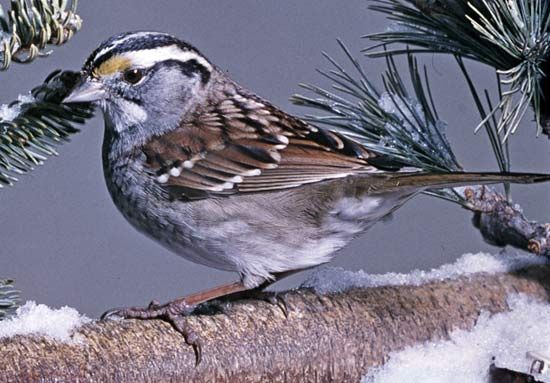
Passeriformes, commonly known as passerines, represent the largest order of birds and include more than half of all avian species. These "true perching…
What are some of the most common passeriform birds people might encounter in their daily lives?
Passeriformes, commonly known as passerines, represent the largest order of birds and include more than half of all avian species. These “true perching birds” are highly adaptable and frequently encountered in human environments, including gardens, parks, and urban areas.12
Some of the most common passeriform birds you might encounter include:
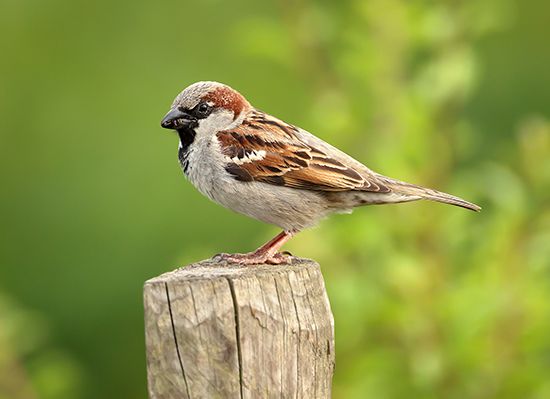
- House Sparrow: One of the most abundant and familiar birds globally, these small, streaked birds are highly successful in urban settings.34
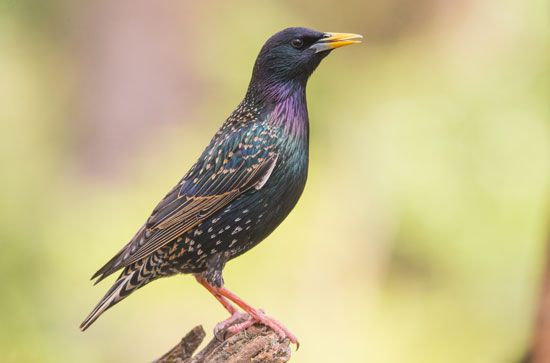
- European Starling: Known for their iridescent plumage, these birds are common in many parts of the world and often nest in buildings or trees.53
- Northern Mockingbird: Famous for their ability to mimic the songs of many other species, they are a frequent sight across the continental United States and Mexico.3
- Blackbirds: This group includes the Old World thrush (Turdus merula) and various New World icterids, such as the red-winged blackbird, often found in fields and gardens.6
- Song Sparrow: A widespread North American species commonly found in woodlands and brushy areas.34
How do passeriform birds contribute to controlling insect populations?
Passeriform birds, or perching birds, play a vital role in ecosystems by consuming vast quantities of insects and other invertebrates. Because the majority of passerine species are insectivorous—at least during certain stages of their lives—they act as significant natural regulators of insect populations.89
These birds have evolved diverse, specialized foraging strategies to locate and capture insect prey across various habitats:
- Aerial feeding: Swallows capture insects while in flight.9
- Hawking: New World flycatchers wait on perches and dart out to snatch insects from the air.9
- Gleaning: Vireos carefully pick insects from foliage and small twigs.9
- Bark foraging: Nuthatches, creepers, and woodcreepers search for insects hidden within tree bark crevices.9
- Ground foraging: Many species actively scratch the ground or sift through leaf litter to find food.9
- Aquatic hunting: Dippers are specialized to hunt for insects in aquatic environments.9
While the exact magnitude of their ecological impact is still being studied, their role as insect predators is fundamental to maintaining balance in terrestrial environments.8
How have humans been influenced by passeriform birds in culture, art, and literature?
Passeriform birds, particularly songbirds, have profoundly influenced human culture, art, and literature for millennia. Their aesthetic appeal—derived from their diverse colors, patterns, and complex vocalizations—has made them enduring subjects of human fascination.12
Cultural and Artistic Significance
Since prehistoric times, birds have been incorporated into folklore, sculpture, and painting. In Renaissance art, for instance, the European goldfinch was frequently used to represent the Passion of Christ. Beyond visual arts, passerines have been kept as cage birds since at least the 5th century BCE, when the Greeks maintained species such as nightingales, thrushes, and starlings.12
Literary and Symbolic Influence
Passerines often serve as powerful symbols in literature and mythology, though their meanings vary widely across cultures:
- Symbolism: While some birds are viewed as positive, others carry darker connotations. The raven, for example, has been depicted as a messenger of the Devil or an evil omen in various traditions.12
- Poetry and Song: The vocal abilities of songbirds have long inspired poets and writers. The European nightingale and the skylark are among the most celebrated subjects in European literature, while the mockingbird is highly regarded in North America for its rich, melodious performance.3
These birds continue to hold a significant place in human life, bridging the gap between scientific interest and deep-seated cultural appreciation.1312
How do the vocalizations of passeriform birds differ from other bird orders, and why are they significant?
Passeriform birds are distinguished from other bird orders primarily by the complexity of their vocal apparatus and the role of learning in song development.
The Syrinx and Vocal Complexity
The primary anatomical difference lies in the syrinx, a specialized vocal organ located at the base of the trachea. While other birds possess vocal structures, the passerine syrinx is highly evolved, particularly in the suborder Passeri (oscines), which typically feature four pairs of intrinsic muscles that allow for sophisticated sound modulation. In contrast, many other bird orders rely on simpler structures or anatomical modifications like elongated tracheae to produce calls. Passerine syringeal morphology is so distinct that it serves as a primary basis for their taxonomic classification.1516
Significance of Song Learning
Unlike many other birds whose vocalizations are largely innate, many passerines—specifically songbirds—must learn their songs through a process of observation and practice. This learning often involves:1714
- Sensitive Periods: Young birds must hear adult songs during specific developmental windows to establish a neural “template”.17
- Refinement: Birds practice their vocalizations to match their output to the learned template, a process that requires auditory feedback.17
- Cultural Transmission: This reliance on learning allows for the development of local “dialects” and individual variation, which are crucial for mate attraction and territorial defense.1714
While some passerines, such as suboscines, produce simpler, more innate sounds, the order as a whole demonstrates a unique evolutionary trajectory toward vocal complexity that facilitates intricate social communication.1815
Sources
- Passeriform — Encyclopædia Britannica
- Passeriform - Annotated classification — Encyclopædia Britannica
- Passeriform - Aesthetic and economic importance — Encyclopædia Britannica
- Blackbird — Encyclopædia Britannica
- Passeriform - Size range and structural diversity — Encyclopædia Britannica
- 15 of the Best Birdsongs (According to Britannica) — Encyclopædia Britannica
- Sparrow — Encyclopædia Britannica
- Passeriform - Ecological importance — Encyclopædia Britannica
- Piciform - Importance to humans — Encyclopædia Britannica
- Passeriform - Anting — Encyclopædia Britannica
- Neonicotinoid: Top Questions — Encyclopædia Britannica
- Bird — Encyclopædia Britannica
- Songbird — Encyclopædia Britannica
- Birdsong — Encyclopædia Britannica
- Passeriform - Sound production — Encyclopædia Britannica
- Passeriform - Syrinx — Encyclopædia Britannica
- Animal learning - Song learning — Encyclopædia Britannica
- Bird - Sound — Encyclopædia Britannica
- Galliform - Vocalizations — Encyclopædia Britannica
Published on · 4 min read