Plagiogyriaceae
Plagiogyriaceae is a small family of ferns belonging to the division Pteridophyta. It consists of a single genus, Plagiogyria, which includes 15 species…
What is Plagiogyriaceae?
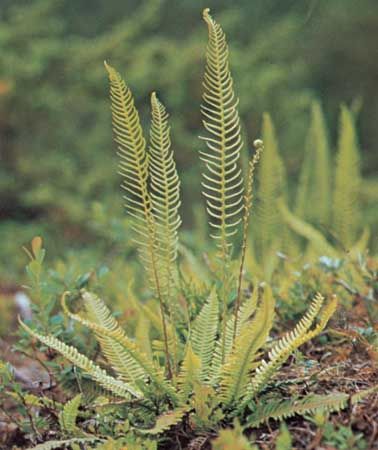
Plagiogyriaceae is a small family of ferns belonging to the division Pteridophyta. It consists of a single genus, Plagiogyria, which includes 15 species found in tropical and warm temperate regions across North America, South America, Asia, and New Guinea), Asia, and New Guinea.1
These terrestrial plants feature short, stout rhizomes with a cluster of leaves at the tip. Their leaves are pinnately compound and dimorphic; the fertile leaves are distinguished by narrow leaflets covered in sporangia on their undersurface. While they may superficially resemble members of the Blechnaceae family, they are believed to be more closely related to tree ferns, such as the Cyatheaceae.1
What are the main differences between terrestrial and tree ferns?
The primary distinction between terrestrial ferns and tree ferns lies in their growth habit and stem structure. While both are ferns, they differ significantly in how they occupy space and support their physical structure.12
Key Differences
- Growth Habit and Stems: Most terrestrial ferns possess rhizomes—stems that grow horizontally upon or just beneath the soil surface. In contrast, tree ferns are characterized by an arborescent (treelike) habit, featuring ascending, vertical trunks that can reach heights of 25 metres (80 feet).31
- Trunk Composition: Unlike the wood and bark found in seed-bearing trees, the trunks of tree ferns are modified rhizomes that grow vertically. These trunks are embedded in a dense mantle of adventitious roots, which provides the necessary structural support for their height.1
- Habitat and Ecology: Terrestrial ferns are diverse and found in various environments, including shaded forests, bogs, and rocky crevices. Tree ferns are primarily found in humid tropical forests. While some terrestrial ferns are widespread colonizers of disturbed habitats, many tree fern species are restricted to small, isolated ranges, such as tropical mountaintops.241
- Structural Adaptations: Both types may utilize scales or hairs for protection, but tree ferns often exhibit specialized features on their petioles, such as scales or sharp spines, to protect their growing tips.13
How do dimorphic leaves help a fern reproduce?
Dimorphic leaves help a fern reproduce by allowing for a functional division of labor between vegetative and reproductive structures. In species with dimorphic leaves, the plant produces two distinct types of fronds:
- Vegetative (Sterile) Leaves: These fronds are typically broader and are primarily responsible for photosynthesis, providing the energy necessary for the plant’s growth and survival.78
- Fertile Leaves: These fronds are often highly modified in form, size, or color and are dedicated to the production of spores. By concentrating the sporangia on specialized leaves—sometimes referred to as fertile fronds—the plant can optimize the release of spores without compromising the photosynthetic surface area required for its overall health.789
This specialization is an evolutionary adaptation that ensures the plant can efficiently manage its energy resources while maximizing its capacity for sexual reproduction and the dispersal of its genetic material into new habitats.9
What are rhizomes and what is their function in plants?
A rhizome is a horizontal, underground plant stem that serves several critical biological functions:
- Storage: Rhizomes act as reservoirs for starches and proteins, providing the energy necessary for the plant to survive unfavorable seasons (perennation).
- Propagation: They enable vegetative (asexual) reproduction, allowing the parent plant to produce new shoot and root systems. This is a primary growth strategy for many species, including bamboos and poplars.
- Structural Support: In certain plants, such as many ferns and water lilies, the rhizome serves as the plant’s only stem, from which leaves and flowers emerge.
- Root Development: Rhizomes often host adventitious roots, which help anchor the plant and facilitate nutrient absorption.1112
Beyond their biological roles, the rhizomes of various species, such as ginger, turmeric, and lotus, are widely valued for their culinary uses.11
Sources
- Plagiogyriaceae — Encyclopædia Britannica
- tree fern — Encyclopædia Britannica
- fern - Size range and habitat — Encyclopædia Britannica
- fern - Stem — Encyclopædia Britannica
- fern - Vascular tissues — Encyclopædia Britannica
- fern - Ecology — Encyclopædia Britannica
- plant reproductive system - Ferns — Encyclopædia Britannica
- Dipteridaceae — Encyclopædia Britannica
- fertile frond — Merriam-Webster
- lower vascular plant - Leaves — Encyclopædia Britannica
- rhizome — Encyclopædia Britannica
- root — Encyclopædia Britannica
Published on · 3 min read