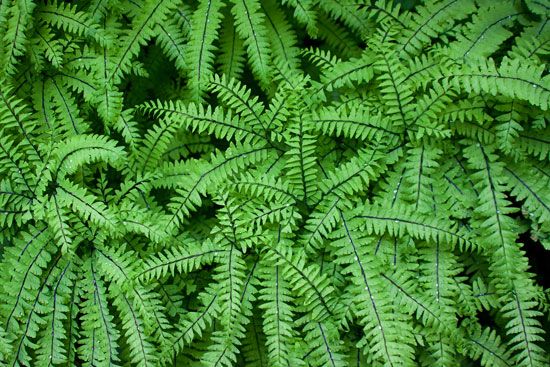
Polypodiaceae
The Polypodiaceae family consists of approximately 56 genera and 1,200 species of ferns, which are primarily found in tropical and subtropical regions as…
What are some of the most common or well-known genera within the Polypodiaceae family?
The Polypodiaceae family consists of approximately 56 genera and 1,200 species of ferns, which are primarily found in tropical and subtropical regions as epiphytes.1
Some of the most well-known and significant genera within this family include:
- Polypodium: Known as the true polypodies, this genus contains about 150 species.1
- Platycerium: Commonly referred to as staghorn ferns, this genus includes 17 species and is popular as an ornamental plant.1
- Pyrrosia: A genus comprising about 100 species.1
- Grammitis: Representing the group formerly classified as the family Grammitidaceae, these “dwarf polypodies” include about 750 species.1
- Microsorium: This genus contains approximately 60 species.1
- Loxogramme: A genus consisting of about 33 species.1
- Pleopeltis: This genus includes between 15 and 50 species.1
Additionally, the family includes unique genera such as Solanopteris and Lecanopteris, which are notable for their swollen, hollow stems that provide habitats for ants.1
How widespread is the Polypodiaceae family, and in what types of environments can they be found?
The Polypodiaceae family is a widely distributed group of ferns, with its members found across the globe. While they are most prevalent in tropical and subtropical regions, they are not restricted to these areas.12
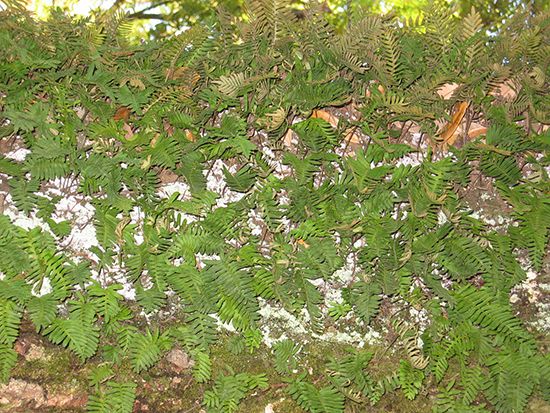
Regarding their environments, members of the Polypodiaceae family are primarily epiphytes, meaning they grow upon other plants—typically on the trunks and branches of trees—rather than rooting in the soil. In addition to this epiphytic habit, they are frequently found growing on rocks (epipetric) and, less commonly, in the soil.12
These ferns have developed various structural adaptations to thrive in these diverse habitats, including the presence of scales on their rhizomes and leaves, which help them manage moisture in potentially dry environments. Because of their ability to disperse via spores, they have successfully established themselves in a variety of ecological niches, ranging from shaded, damp forests to rocky cliff faces and boulders.123
How do ferns in the Polypodiaceae family reproduce, and what makes their life cycle unique?
Ferns in the Polypodiaceae family, like other leptosporangiate ferns, follow a life cycle characterized by an alternation of generations between two distinct phases: the dominant, spore-producing sporophyte and the independent, gamete-producing gametophyte.678
The Life Cycle Process
- Sporophyte Generation: The familiar fern plant is the sporophyte. On the undersurface of its fronds, brown patches called sori develop, containing sporangia (spore cases). Inside these, meiosis occurs to produce haploid spores.78
- Gametophyte Generation: Once released and settled in a suitable site, a spore germinates into a tiny, heart-shaped, photosynthetic structure known as a prothallium. This gametophyte produces sex organs: antheridia (male) and archegonia (female).678
- Fertilization: Sperm require water to swim to the egg. Upon fertilization, a zygote forms, which develops into a new, independent sporophyte, eventually causing the prothallium to wither.68
Unique Features
Unlike seed plants, Polypodiaceae ferns rely on wind-dispersed spores rather than seeds for reproduction. While most are homosporous, some fern species exhibit apogamy, a process where the sporophyte develops directly from the gametophyte without sexual fusion, often involving unreduced spores. Additionally, many Polypodiaceae species reproduce vegetatively through the branching of their rhizomes, allowing them to form large, genetically uniform colonies.89610
How do Polypodiaceae ferns compare to other fern families in terms of size and structure?
The Polypodiaceae family consists of medium-sized and small ferns that exhibit significant structural differences when compared to other fern families.1
Size and Growth Habit
Unlike the massive tree ferns found in families such as Cyatheaceae or Dicksoniaceae, which can reach heights of up to 20–33 meters, Polypodiaceae are generally much smaller. While many other fern families are primarily terrestrial, rooting in the soil, Polypodiaceae are predominantly epiphytic, meaning they grow upon other plants rather than in the ground.12
Structural Distinctions
- Rhizomes: Polypodiaceae are characterized by creeping, rootlike stems (rhizomes) that are typically covered in distinctive scales, a feature that helps distinguish them from other groups.1
- Sori and Indusia: A key diagnostic feature of this family is the arrangement of their spore-producing structures, or sori. In many other fern families, sori are protected by a membranous covering called an indusium; however, in Polypodiaceae, these round or oblong clusters of sporangia usually lack this protective covering.17
- Evolutionary Traits: Despite their smaller stature, they are considered evolutionarily advanced due to their specialized sporangia, which feature an incomplete, vertically arranged band of thick-walled cells known as an annulus.1
Sources
- Polypodiaceae — Encyclopædia Britannica
- fern - Annotated classification — Encyclopædia Britannica
- fern - Distribution and abundance — Encyclopædia Britannica
- fern - Ecology — Encyclopædia Britannica
- Fabales - Distribution and abundance — Encyclopædia Britannica
- fern - Life cycle — Encyclopædia Britannica
- plant - Subclass Polypodiidae — Encyclopædia Britannica
- lower vascular plant - Reproduction — Encyclopædia Britannica
- fern — Encyclopædia Britannica
- spore — Encyclopædia Britannica
- fern - Hybridization — Encyclopædia Britannica
- fern - Size — Encyclopædia Britannica
- plant - Class Polypodiopsida — Encyclopædia Britannica
Published on · 3 min read