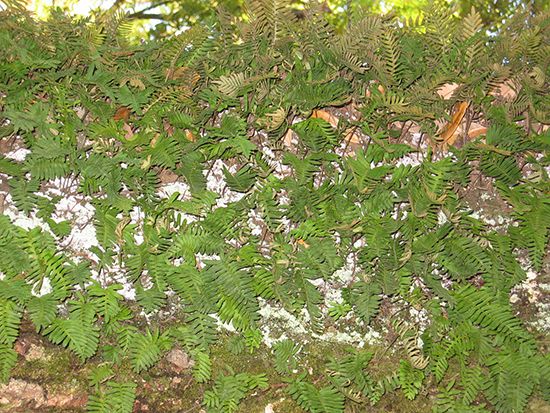
Pteridaceae
Members of the Pteridaceae family, commonly known as the maidenhair fern family, have several notable uses, primarily in horticulture and research.
Are there any notable economic or ecological uses for plants in the Pteridaceae family?
Members of the Pteridaceae family, commonly known as the maidenhair fern family, have several notable uses, primarily in horticulture and research.
- Horticulture: Many species within the family are cultivated as ornamentals for indoor and outdoor decoration. For example, species of Pityrogramma (gold- and silver-backed ferns) are occasionally grown in greenhouses for the colorful farina on their leaves, and Ceratopteris (water ferns) are popular as aquarium and pond plants.1
- Biological Research: Ceratopteris species are frequently used as model organisms in genetics research and education due to their relatively short life cycles and the ease with which mutations can be characterized.21
- Ecological Roles: While not an economic use, members of this family are ecologically diverse, occupying niches ranging from floating aquatic environments to arid rock cliffs. Some species, such as those in the Acrostichum genus, are adapted to saline and brackish coastal swamps, contributing to the biodiversity of those habitats.1
What are some common names for plants in the Pteridaceae family?
Plants in the Pteridaceae family are commonly known as the maidenhair fern family. Because this family is highly diverse, it includes several distinct groups with their own common names:3
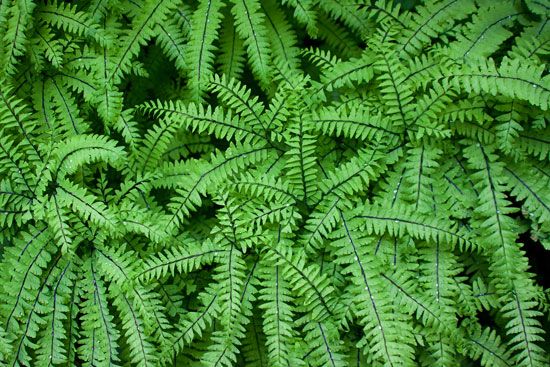
- Maidenhair ferns: Members of the genus Adiantum, which are well-known for their delicate, palmately branched fronds.356
- Brakes: Species belonging to the genus Pteris.3
- Cliff brakes: Species in the genus Pellaea, which often grow on rock ledges. Specific examples include the button fern (Pellaea rotundifolia) and the sickle fern (P. falcata).37
- Lip ferns: Species in the genus Cheilanthes.38
- Shoestring ferns: Species in the genus Vittaria.3
- Gold- and silver-backed ferns: Species in the genus Pityrogramma, named for the colorful farina on their leaves.3
- Parsley ferns: Species in the genus Cryptogramma.3
- Water ferns: Species in the genus Ceratopteris.38
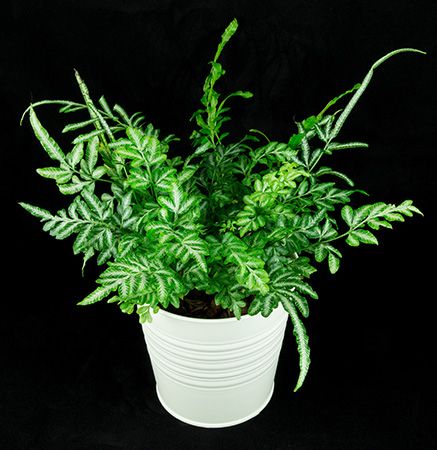
Additionally, some Pteris and Pellaea species are collectively referred to as “table ferns” when used as houseplants.6
In what types of habitats are Pteridaceae plants typically found?
Plants in the Pteridaceae family exhibit remarkable ecological diversity, inhabiting environments that range from aquatic settings to arid landscapes. Their typical habitats include:3
- Rock Cliffs and Ledges: Many species, particularly those in the Cheilanthoid clade such as Pellaea (cliff brakes) and Cheilanthes (lip ferns), are specialized to grow in the fissures and crevices of rock faces, boulders, and taluses.310
- Arid and Seasonally Dry Environments: A significant number of Pteridaceae species are adapted to drought-prone regions. These plants often utilize specialized life cycles, such as apogamy, to reproduce quickly during brief periods of moisture.310
- Aquatic and Wetland Habitats: The family includes floating aquatic plants like Ceratopteris, as well as species like Acrostichum, which are adapted to brackish and saline coastal swamps.3
- Forests and Shaded Areas: While the family is ecologically broad, many members are found in shaded, damp forest environments, including the northern maidenhair (A. pedatum), which thrives in the woods of North America and East Asia.310
How do plants in the Pteridaceae family adapt to different environmental conditions?
Plants in the Pteridaceae family have evolved a diverse array of structural and reproductive strategies to thrive in environments ranging from arid rock faces to aquatic habitats.1012
Morphological Adaptations
To survive in dry or exposed conditions, many species—particularly those in the Cheilanthoid clade like lip ferns and cliff brakes—have developed specialized physical traits:1012
- Protective Surfaces: These plants often possess a thick, waxy cuticle to prevent water loss, as well as dense coverings of hairs, scales, or powdery farina on their leaves.1012
- Drought Response: Many species can curl their leaves during dry periods to conserve moisture, uncurling them rapidly when rain returns.12
- Aquatic Specializations: Floating species like the water fern (Ceratopteris) feature inflated petioles that assist with buoyancy in aquatic environments.3
Reproductive Strategies
Pteridaceae plants often employ unique life cycles to maximize reproductive success in unpredictable climates:10
- Apogamy: Many species in arid regions utilize apogamy, a process that bypasses fertilization. This allows for rapid reproduction during brief damp periods, as it does not require free water for swimming sperm.10
- Rapid Life Cycles: Aquatic species, such as Ceratopteris, complete their life cycles significantly faster than typical land ferns, enabling them to exploit temporary water sources.3
- Vegetative Reproduction: Like many ferns, Pteridaceae rely heavily on rhizomes and other vegetative proliferations to form clones, which often accounts for the bulk of their population growth in stable environments.10
Sources
- fern - Importance to humans — Encyclopædia Britannica
- fern - Size range and habitat — Encyclopædia Britannica
- Pteridaceae — Encyclopædia Britannica
- Thelypteridaceae — Encyclopædia Britannica
- list of ferns — Encyclopædia Britannica
- maidenhair fern — Merriam-Webster
- cliff brake — Encyclopædia Britannica
- houseplant - Ferns — Encyclopædia Britannica
- pteropsid — Encyclopædia Britannica
- fern - Ecology — Encyclopædia Britannica
- southern maidenhair fern — Merriam-Webster
- water fern — Encyclopædia Britannica
Published on · 4 min read