Polar Bear Provincial Park
Polar Bear Provincial Park is a vast wilderness area located in northern Ontario, Canada, situated along the shores of Hudson and James bays. Established in…
What is Polar Bear Provincial Park?
Polar Bear Provincial Park is a vast wilderness area located in northern Ontario, Canada, situated along the shores of Hudson and James bays. Established in 1970, it spans 9,300 square miles (24,087 square km), making it the largest provincial park in Ontario.1
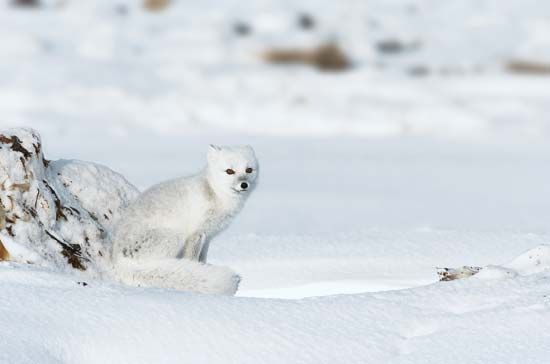
The park is intentionally kept undeveloped and is accessible only by boat or plane. To protect its diverse ecosystem, travel within the park is restricted. The region serves as a vital habitat for numerous species, including polar bears, black bears, bearded seals, white whales, Arctic foxes, caribou, and moose. Additionally, the park is home to various bird species, such as the snow goose, and encompasses the final 20 miles of the Winisk River.1
How do polar bears survive in such a cold climate?
Polar bears have evolved remarkable physiological and physical adaptations to thrive in the extreme cold of the Arctic, where temperatures can drop below –50°F (–45°C).2
Insulation and Heat Retention
- Fur and Skin: While their fur appears white, the hairs are actually hollow and transparent, allowing them to scatter and reflect light. This structure traps air for insulation, while the bear’s black skin beneath absorbs heat from the sun.234
- Fat Layer: Beneath the skin, polar bears possess a thick layer of insulating fat that can reach up to 4 inches in depth, providing essential warmth.24
- Paws: Their broad feet feature hairy soles, which provide both insulation and traction on ice. The uneven skin on the soles further helps prevent slipping.4
Behavioral Adaptations
To maintain the effectiveness of their insulating coat, polar bears keep themselves clean by rolling in snow or swimming. Interestingly, when swimming, they use only their front limbs—a unique aquatic adaptation among four-legged mammals.234
What are the unique challenges of protecting a wilderness park?
Protecting a wilderness park involves navigating a fundamental paradox: while these areas often rely on tourism for their existence and public support, the preservation of their wildlife depends on minimizing human interference.1
Managers face several unique challenges in balancing these competing interests:
- Visitor Management: To protect sensitive ecosystems, authorities often restrict travel to limited areas, allowing visitors to experience the park while minimizing contact with wildlife. Effective management requires accurate assessments of visitor impact to allocate budgets and staff time efficiently.15
- Conflicting Stakeholder Interests: Managers must reconcile the often-opposing needs of diverse groups, including conservationists, hunters, and local populations. For example, a predator may be viewed as a vital part of a balanced ecosystem by a biologist, but as a threat to livestock or human safety by local residents.5
- Ecological Complexity: Maintaining a wilderness requires deep knowledge of species’ life histories. Because changes in a habitat can benefit some species while harming others, managers must carefully plan interventions—such as controlled burns or habitat improvements—to support biodiversity and protect endangered species.5
How does the Hudson Bay ecosystem support so many different species?
The Hudson Bay ecosystem supports a diverse array of species primarily through its high productivity of nutrient salts, which fuel the rapid growth of unicellular algae in the illuminated upper layers of the water. This primary production forms the foundation of a complex food web.8
Key factors supporting this biodiversity include:
- Primary Food Sources: The abundant algae support small, shrimplike crustaceans, which in turn provide a vital food source for a wide range of invertebrates, including mollusks, sea urchins, starfish, and worms.8
- Diverse Habitats: The bay’s environment, characterized by permafrost, marsh-ridden lowlands, and varying ice conditions, provides niches for numerous species. Openings in the sea ice are particularly important, as they allow seals to inhabit the region, which subsequently attracts predators like polar bears.8
- Migratory and Resident Species: The bay hosts a variety of fish, such as cod and halibut, as well as salmon that migrate into rivers to spawn. Additionally, the coasts and islands serve as gathering points for approximately 200 species of birds, while the surrounding lands support herbivorous mammals like caribou and musk oxen.8
Sources
- Polar Bear Provincial Park — Encyclopædia Britannica
- Why are polar bears white? — Encyclopædia Britannica
- polar bear: Top Questions — Encyclopædia Britannica
- polar bear — Encyclopædia Britannica
- hot spot — Encyclopædia Britannica
- national park — Encyclopædia Britannica
- forestry - Recreation and wildlife — Encyclopædia Britannica
- Hudson Bay — Encyclopædia Britannica
- Baffin Bay — Encyclopædia Britannica
- Hudson Bay Lowland — Encyclopædia Britannica
Published on · 3 min read