Polychaete Hypothesis
The term "polychaete hypothesis" in scientific literature refers specifically to a now-largely-discredited theory regarding the evolutionary relationship…
How does the polychaete hypothesis address the evolution of other major animal groups?
The term “polychaete hypothesis” in scientific literature refers specifically to a now-largely-discredited theory regarding the evolutionary relationship between conodonts and polychaete worms, rather than a framework for the evolution of other major animal groups.1
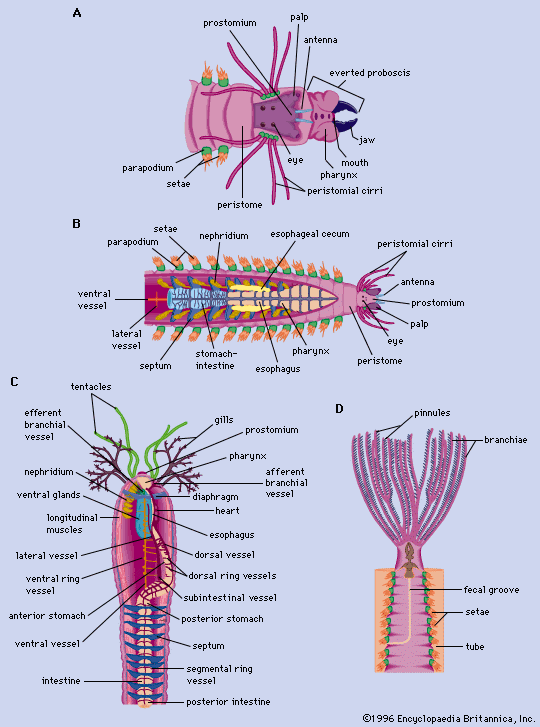
It is important to clarify that the “polychaete hypothesis” regarding conodonts posited that these ancient, toothlike fossils were part of the jaw apparatus of polychaete worms. This theory has been challenged by significant evidence, including the fact that conodonts are composed of calcium phosphate—similar to vertebrate skeletons—whereas polychaete jaws (scolecodonts) are composed of chitin.1
If you are instead referring to the evolutionary significance of polychaetes in the development of other animals, researchers often look to the trochophore larva. This larval stage is considered a characteristic early developmental phase not only for polychaetes but also for other invertebrate groups, including mollusks, sipunculids, and lophophores, suggesting a shared evolutionary history among these lineages.23
How does the polychaete hypothesis compare to other theories about early animal evolution?
The “polychaete hypothesis” is not a broad theory of animal evolution; rather, it is a specific, largely discredited proposal that conodonts—ancient, toothlike fossils—were part of the jaw apparatus of polychaete worms. This hypothesis has been rejected because conodonts are composed of calcium phosphate, similar to vertebrate skeletons, whereas polychaete jaws are made of chitin.2
In contrast, modern theories of early animal evolution focus on phylogenetics, which uses molecular data, comparative anatomy, and embryology to map the “tree of life.” Current debates regarding the origin of multicellular animals (metazoans) include:
- Monophyletic Theory: Suggests a sequence of evolution from unsegmented animals (like flatworms) to segmented forms (annelids and arthropods), and eventually to chordates.1
- Diphyletic Theory: Proposes two distinct lines of descent from an ancient flatworm ancestor: one leading to annelids, arthropods, and mollusks, and another leading to echinoderms and chordates.1
These theories rely on evidence such as the trochophore larva, which suggests a shared evolutionary history among various marine invertebrates.456
What evidence supports the polychaete hypothesis in the fossil record?
The “polychaete hypothesis” is not supported by evidence in the fossil record; rather, it is a largely discredited theory that has been rejected by scientific consensus.
The hypothesis originally proposed that conodonts—minute, toothlike fossils—functioned as the jaw apparatus of polychaete worms. Proponents of this idea pointed to two superficial similarities:
- Morphological resemblance: Conodonts share a general form with the jaws of polychaete worms, known as scolecodonts.2
- Arrangement: Both conodonts and scolecodonts are found in bilaterally symmetrical, paired assemblages.211
However, these similarities are outweighed by significant evidence against the relationship. Scolecodonts are composed of chitin, a horny material, whereas conodonts are composed of calcium phosphate, a mineral characteristic of vertebrate skeletons. Furthermore, while scolecodonts remain relatively stable over time, conodonts exhibit rapid evolutionary change and great morphological variation, making them distinct from the known jaw structures of polychaetes.211
What are some criticisms or challenges to the polychaete hypothesis?
The polychaete hypothesis, which suggests that conodonts served as the jaw apparatus for polychaete worms, faces several significant scientific challenges that have led to its rejection:
- Compositional Differences: The most critical argument against the theory is the material makeup of the structures. Polychaete jaws, known as scolecodonts, are composed of chitin—a resistant, horny material. In contrast, conodonts are composed of calcium phosphate, a mineral characteristic of vertebrate skeletons.2
- Evolutionary Patterns: Scolecodonts are noted for their stability, showing very little change over vast periods of time. Conversely, conodonts exhibit rapid evolution and significant morphological variation, which makes them highly useful for dating geologic time but inconsistent with the evolutionary history of polychaete jaws.212
- Temporal Discrepancies: While polychaete teeth appear in the fossil record starting in the Ordovician period, conodonts have an earlier, undisputed occurrence dating back to the Late Cambrian epoch.2
- Growth Mechanisms: The fundamental differences in how conodonts and polychaete jaws grow provide further evidence that they are not biologically related, despite their superficial resemblance in bilateral symmetry.2
Sources
- annelid - Evolution and paleontology — Encyclopædia Britannica
- Polychaete hypothesis — Encyclopædia Britannica
- annelid - Development — Encyclopædia Britannica
- phylogeny - Evidence for specific phylogenies — Encyclopædia Britannica
- phylogeny - Animal evolution — Encyclopædia Britannica
- trochophore — Encyclopædia Britannica
- Animal - Bilateria: an organ level of organization — Encyclopædia Britannica
- phylogenetics — Encyclopædia Britannica
- annelid - Critical appraisal — Encyclopædia Britannica
- Animal development - The larval stage — Encyclopædia Britannica
- scolecodont — Merriam-Webster
- conodont — Encyclopædia Britannica
Published on · 3 min read